


Soup to Nuts
"A bankrupt inventor's niece and a new manager try to save the shop"
Keys: Space play/pause · ←/→ 10s · F fullscreen · M mute · </> speed
About this film
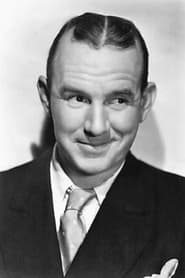
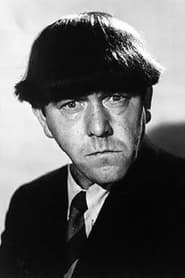
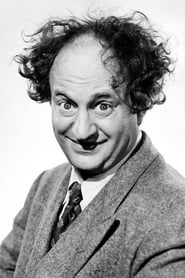
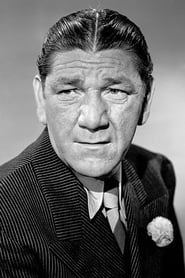
Bankrupt costume-shop owner Mr. Schmidt invents Rube Goldberg contraptions instead of tailoring, prompting creditors to send young manager Tom to impose order. Tom falls for Schmidt's niece Louise, while Schmidt's vaudeville friends Ted, Queenie, and the firemen scramble to save the shop with chaotic routines. The 1930 feature introduced the Three Stooges to screen audiences in supporting roles.
Cast & crew
More Comedy films
View all →






More from Benjamin Stoloff
View all →
More about this film
About the production
Release dateSeptember 28, 1930
BudgetApproximately $250,000 (estimated)
Box officeUnavailable
ProductionFox Film Corporation
Filmed inFox Movietone City, Los Angeles, California, USA
The picture was a significant transition piece for Fox Film Corporation as they navigated the early sound era. It was specifically designed to showcase the popular vaudeville act of Ted Healy and His Stooges. The production was heavily influenced by the involvement of cartoonist Rube Goldberg, who not only wrote the screenplay but also designed the mechanical props used throughout the picture. Director Benjamin Stoloff had to balance the stagy, dialogue-heavy requirements of early 'talkies' with the high-energy physical comedy of the Stooges, leading to a film that feels like a hybrid of a romantic musical and a slapstick short.
Themes
Innovation vs. PracticalityEconomic StruggleRomantic PersistenceIncompetence as Heroism
Themes & topics
Rube Goldberg machineCostume shopFiremenBankruptcySlapstick comedyVaudevillePre-Code
Historical background
Fox's 1930 comedy bridged silent slapstick and early sound staging, capitalizing on Goldberg's famous cartoon machines and vaudeville talent.
Why this film matters
Soup to Nuts is cited in Stooges histories as the team's first film appearance, linking Broadway-style gag spectacle with Depression-era escapist programming.
Making of
The production of 'Soup to Nuts' was fraught with tension between star Ted Healy and his 'Stooges.' Following the picture's release, Fox executives were so impressed with the Stooges' comedic timing that they offered the trio a contract without Healy. Enraged, Healy falsely claimed to the studio that the trio were his legal employees and under exclusive contract to him, causing Fox to withdraw the offer. This incident led to the first major split between the Stooges and Healy, with Moe, Larry, and Shemp forming their own act, 'Howard, Fine & Howard,' and touring the vaudeville circuit independently for two years before eventually reuniting with Healy at MGM.
What critics said
Critics enjoyed the mechanical gags more than the thin plot; later audiences rediscover it primarily for the Stooges' embryonic lineup and Goldberg-inspired devices.
Did you know?
- marks the screen debut of the original Three Stooges: Moe Howard (billed as Harry Howard), Shemp Howard, and Larry Fine.
- Moe Howard is credited as 'Harry Howard,' which was a stage name he used briefly during the early 1930s.
- Rube Goldberg, the famous cartoonist known for his 'invention' drawings, wrote the screenplay and makes a cameo appearance as himself.
- the picture features the only time Shemp Howard appeared in a feature film with the Stooges before his 1932 departure and subsequent 1946 return.
- The Stooges perform their first a cappella song on film, 'You'll Never Know Just What Tears Are,' in this production.
- A fourth 'Stooge,' Fred Sanborn, appears in the picture as a mute, bug-eyed fireman, a role that was later phased out of the act.
- the picture entered the public domain in the United States on January 1, 2026.
- Many classic Stooge gags, such as the 'coin toss' and getting stuck in a doorway, made their first cinematic appearance here.
- The white cat used in the Rube Goldberg burglar alarm scene was actually tied by its tail, a practice that would be heavily restricted by modern animal welfare standards.
Visual style
The cinematography by Joseph Valentine is typical of the early 1930s, featuring static camera setups necessitated by the bulky sound-recording equipment of the era. However, the picture utilizes some creative tracking shots during the fire engine sequences and effectively uses lighting to highlight the intricate details of the Rube Goldberg machines.
Innovations
The primary technical achievement of the picture is the successful integration of complex, functional 'Rube Goldberg' machines into a narrative film. These props required precise mechanical engineering to ensure they worked on cue for the cameras, representing a significant practical effects challenge for 1930.
Music
the picture features a light, orchestral score with several musical numbers, most notably the Stooges' a cappella rendition of 'You'll Never Know Just What Tears Are.' The music was composed by Cliff Friend and James Monaco, prominent songwriters of the Tin Pan Alley era.
Famous quotes
Shemp: 'I'm hungry! I'll have a bowl of soup with some nuts in it!' Moe: 'You think of the funniest things to eat!'
Ted Healy: 'Is everything else all right?' Customer: 'No, the tablecloth is dirty!'
Moe: 'We give you a square deal that time, boy!'
Memorable scenes
- The 'Diner Sequence' where the Stooges and Ted Healy engage in a rapid-fire verbal and physical comedy routine over a meal.
- The demonstration of the Rube Goldberg burglar alarm, involving a cat, a mouse, and a watering can.
- The climactic fire rescue where the Stooges attempt to use a giant mechanical slide to save Louise from her burning apartment.
What audiences thought
Contemporary audiences enjoyed the picture's slapstick elements, though it was not a massive box-office hit. Today, it maintains a cult following among classic comedy enthusiasts and Three Stooges fans who appreciate seeing the 'original' lineup. It is frequently cited by fans as a 'weird but wonderful' entry in the Stooge canon because of its unique musical and romantic subplots.
Film connections
Influenced by
- The vaudeville sketches of Ted Healy
- Rube Goldberg's 'The Inventions of Professor Lucifer Gorgonzola Butts'
- The Keystone Cops
This film influenced
- The Three Stooges short film series (1934-1959)
- Pee-wee's Big Adventure (for its use of Rube Goldberg machines)
- The Hudsucker Proxy
Film restoration
the picture is fully preserved and was recently restored for digital distribution. It is widely available due to its public domain status.
Where to watch
- YouTube (Official Three Stooges Channel)
- Amazon Prime Video
- The Criterion Channel (occasionally as part of comedy retrospectives)
- Public Domain movie sites