
Speak Easily
"Professor meets chorus line"
Keys: Space play/pause · ←/→ 10s · F fullscreen · M mute · </> speed
About this film
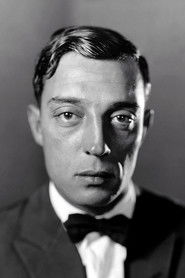
Buster Keaton professor backs a broke Broadway troupe after mistaking chorus girls for producers. A professor gets mixed up with chorus girls in a Broadway musical.
Cast & crew
More films like this
More Comedy films
View all →







More from Edward Sedgwick
View all →

More about this film
About the production
Release dateOctober 15, 1932
Budget$425,000
Box office$1,200,000 (estimated)
ProductionMetro-Goldwyn-Mayer
Filmed inMGM Studios, Culver City, California
This was Buster Keaton's third film at MGM and one of his last starring roles before his career decline. The production was troubled, with MGM executives interfering with Keaton's creative control and attempting to mold him into a more conventional comedy star. The film was shot during the height of the Great Depression, which influenced the escapist entertainment approach. The elaborate Broadway sequences required extensive set construction and choreography, taking weeks to film.
Themes
Culture clash between academia and show businessSelf-discovery through unexpected experiencesThe value of practical knowledge over theoretical learningRomance crossing social boundariesThe commercialization of art
Themes & topics
Historical background
1932 placed Speak Easily within United States cinema as Metro-Goldwyn-Mayer navigated wartime markets, immigration audiences, and the shift from intertitles to sound.
Why this film matters
Archivists revisit Speak Easily (1932) for Edward Sedgwick style, genre norms at Metro-Goldwyn-Mayer, and the exhibition context of 82 minutes programming.
Making of
The production of 'Speak Easily' was marked by significant tension between Buster Keaton and MGM executives. Keaton, who had enjoyed complete creative control during his silent film era, found himself constrained by MGM's formulaic approach to comedy. The studio brought in additional writers to 'punch up' the script, often at the expense of Keaton's carefully planned gags. Director Edward Sedgwick, though sympathetic to Keaton's situation, was obligated to follow studio mandates. Jimmy Durante, a veteran of vaudeville and radio, often served as an intermediary between Keaton and the studio brass. The Broadway sequences required extensive coordination between actors, dancers, and technicians, with multiple takes needed to perfect the timing. Despite these challenges, Keaton maintained his professionalism, continuing to perform his own stunts and suggesting improvements to scenes, though many were rejected.
What critics said
Retrospective writing on Speak Easily stresses craft by Edward Sedgwick, print survival, and repertory value rather than opening-week gross alone.
Did you know?
- This was one of the few films where Buster Keaton received top billing after joining MGM, though his creative freedom was severely limited compared to his independent silent films.
- Jimmy Durante and Buster Keaton had great chemistry off-screen, with Durante often trying to protect Keaton from MGM's restrictive policies.
- The film's original title was 'The Professor' but was changed to 'Speak Easily' to emphasize the comedy elements.
- Many of Keaton's original gags were cut by MGM producers who didn't understand his style of physical comedy.
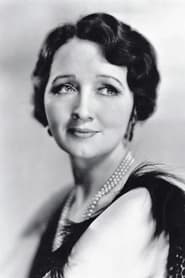
- Ruth Selwyn was married to MGM producer Harry Rapf, which likely contributed to her casting despite her limited acting experience.
- The film was released during the same month as Keaton's divorce from Natalie Talmadge, adding personal turmoil to his professional struggles.
- The elaborate theater set was among the costliest constructed at MGM that year, reflecting the studio's investment in the production.
- Keaton performed several dangerous stunts himself, including a fall from a theater fly system, despite studio safety concerns.
- The film marked the beginning of Keaton's transition from leading man to supporting character actor in later years.
- Several scenes were reshot after poor test screenings, with studio executives demanding more dialogue and less physical comedy.
Visual style
The cinematography by Leonard Smith employed standard MGM techniques of the early sound era, with careful attention to lighting for the new sound stages. The camera work was more static than Keaton's silent films, partially due to the limitations of early sound recording equipment. The Broadway sequences featured elaborate lighting designs that recreated the atmosphere of a real theater, with dramatic spotlights and colorful gels. Smith utilized deep focus in several scenes to capture both foreground action and background details, particularly in the university sequences. The film's visual style reflected MGM's polished production values, with sharp, clear images that showcased the studio's technical prowess. While not as innovative as the cinematography in Keaton's independent films, the photography effectively served the story and maintained visual interest throughout.
Innovations
While 'Speak Easily' didn't break new ground technically, it demonstrated MGM's mastery of sound film production by 1932. The film featured sophisticated microphone placement that allowed for more natural movement by the actors compared to earlier talkies. The theater sequences required complex sound mixing to balance dialogue, music, and audience reactions. The film's editing successfully maintained comedic timing while accommodating the technical constraints of sound recording. The production utilized MGM's advanced soundstages, which allowed for greater camera mobility than many contemporary sound films. The film's preservation of Buster Keaton's physical comedy within the sound format represented an important, if imperfect, technical achievement in adapting silent comedy techniques to the new medium.
Music
The musical score was composed by Herbert Stothart, MGM's resident music director, who incorporated several popular songs of the era. The film featured original numbers written specifically for the Broadway sequences, including 'I've Got to Sing a Torch Song' which became one of Durante's signature tunes. The sound design represented the sophistication of MGM's audio department, with clear dialogue recording and balanced musical accompaniment. The film's sound mix allowed for the integration of dialogue, music, and sound effects without the technical difficulties that plagued many early talkies. Stothart's score provided appropriate comedic underscoring while supporting the film's emotional moments. The soundtrack demonstrated how far sound technology had come since the introduction of talkies just a few years earlier, with professional-quality audio that enhanced rather than hindered the viewing experience.
Famous quotes
Professor Post: 'I've devoted my life to the study of ancient civilizations, but I've never really lived in modern one.'
Durante: 'Hey, professor! You can't learn everything from books! Sometimes you gotta get your hands dirty!'
Professor Post: 'I find the rituals of the theater quite fascinating... almost as complex as ancient burial ceremonies.'
Durante: 'We're not putting on a lecture, professor, we're putting on a show! There's a difference!'
Professor Post: 'In archaeology, we dig for the past. In show business, it seems we dig for applause.'
Memorable scenes
- The opening sequence where Professor Post delivers a dry academic lecture about ancient artifacts while completely oblivious to the flirtatious attentions of his female students.
- The chaotic backstage scene where Keaton, trying to help with the theater production, accidentally causes a chain reaction of disasters involving falling props, tangled ropes, and confused dancers.
- The musical number where Durante and Keaton attempt to perform a duet, with Durante's boisterous style contrasting hilariously with Keaton's stiff, academic approach to singing and dancing.
- The climactic scene where the professor uses his archaeological knowledge to solve a technical problem with the theater's rigging system, saving the show in an unexpected way.
- The final scene where the normally reserved professor lets loose and joins the cast in a celebratory dance, showing his complete transformation from stuffy academic to show business enthusiast.
What audiences thought
Audiences in 1932 responded moderately well to 'Speak Easily', with the film performing respectably at the box office despite not being a blockbuster. Many Keaton fans were disappointed by the departure from his earlier style, but the film attracted new viewers who enjoyed the teaming of Keaton with the popular Jimmy Durante. The Broadway setting and musical numbers appealed to audiences seeking glamorous escapism from Depression-era realities. Over time, the film has developed a cult following among Keaton enthusiasts who appreciate it as a document of his MGM period. Modern audiences often view the film with a mix of fascination at seeing Keaton in a sound production and frustration at the missed opportunities for his unique comedy style. The film's availability through home video and streaming has introduced it to new generations of classic film fans.
Film connections
Influenced by
- Theatrical comedy traditions of vaudeville
- Academic fish-out-of-water stories
- Broadway musical films of the early 1930s
- Screwball comedy elements that would become more popular later in the decade
This film influenced
- Later MGM comedy productions featuring academic protagonists
- Films that paired unlikely comedy duos in show business settings
- Early sound comedies attempting to preserve silent-era physical comedy
Film restoration
The film is preserved in the MGM/UA film library and has been digitally restored. The original nitrate negatives were transferred to safety stock in the 1950s. A high-definition restoration was completed in the early 2000s as part of a Buster Keaton collection. The film survives in complete form with all scenes intact, unlike some other Keaton MGM films which have missing footage. The restoration work has preserved the original audio track and visual quality, making it accessible for modern viewing.
Where to watch
- Available on DVD and Blu-ray as part of Warner Archive's Buster Keaton collection
- Streaming on The Criterion Channel
- Available for digital rental or purchase on Amazon Prime Video and Apple TV
- Occasionally airs on Turner Classic Movies
- Available through various classic film streaming services including Fandor and MUBI