
The Adventurer
"An escaped convict becomes an unlikely rescuer."
Keys: Space play/pause · ←/→ 10s · F fullscreen · M mute · </> speed
About this film
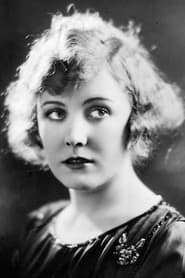
Convict No. 23—nicknamed The Eel—flees prison guards along a rocky coastline, swaps his stripes for a stolen bathing suit, and rescues Edna and her mother from the surf while a cowardly suitor hesitates on the pier. Taken to the Brown family mansion as a supposed hero, he poses as Commodore Slick until the suitor spots his wanted photograph and police chase him through the ballroom.
Cast & crew
More films like this


More Comedy films
View all →







More from Charlie Chaplin
View all →


More about this film
About the production
Release dateOctober 22, 1917
Box officeUnknown (Mutual shorts were highly profitable, typically earning several times their production cost)
ProductionMutual Film Corporation
Filmed inChaplin Studios, Hollywood, California, Santa Monica Beach, California
This was Charlie Chaplin's final film for Mutual Film Corporation before his move to First National. The beach rescue sequences were particularly challenging to film, requiring multiple takes in the ocean water. The elaborate party scene was filmed on constructed sets at Chaplin's studio, featuring intricate choreography of physical comedy and social satire. The film showcases Chaplin's increasing confidence in combining slapstick humor with social commentary, particularly in his parody of upper-class society.
Themes
Social class mobilityRedemption through heroismThe underdog triumphLove transcending social barriersFreedom vs. authority
Themes & topics
escaped convictbeach rescuehigh societymistaken identitychase sequenceromantic rivalryphysical comedysocial satire
Historical background
Production circa 1917 placed The Adventurer within the technical habits of its era—intertitles, studio sets, and regional distribution networks.
Why this film matters
Archivists revisit The Adventurer (1917) for performance styles and craft choices that later releases refined or replaced.
Making of
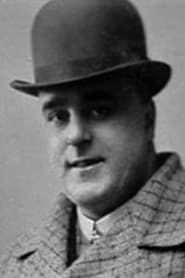
The production of 'The Adventurer' marked the end of Chaplin's incredibly productive period with Mutual Film Corporation, where he created some of his most celebrated shorts. The beach rescue sequences proved particularly difficult, as Chaplin and the cast had to perform in the cold ocean waters of Santa Monica. Chaplin, known for his perfectionism, reportedly required numerous takes to achieve the precise comedic timing he wanted. The mansion party scenes were filmed on elaborate sets constructed at Chaplin's studio, allowing him complete control over the environment for his physical comedy. Eric Campbell, who plays the suitor, was one of Chaplin's favorite supporting actors, and their chemistry is evident throughout the film. Chaplin's growing confidence as a filmmaker is apparent in the sophisticated camera movements and editing techniques employed, which were advanced for the time.
What critics said
Specialist writers today emphasize preservation and access when a viewable copy of The Adventurer survives.
Did you know?
- This was the final film Chaplin made for Mutual Film Corporation, completing his 12-film contract
- The film's beach rescue scenes were actually filmed in the cold Pacific Ocean at Santa Monica in early 1917
- Eric Campbell, who plays the suitor, was one of Chaplin's most frequent collaborators during this period
- The character 'The Eel' was one of Chaplin's few roles where he played an actual criminal rather than his usual Tramp character
- The film features one of Chaplin's most elaborate chase sequences through a mansion
- The original negative was preserved by Chaplin himself and later used for restoration
- This film was released just as Chaplin was becoming a worldwide cultural phenomenon
- The party scenes contain subtle social commentary about class differences
- Chaplin performed many of his own stunts, including the ocean rescue sequences
- The film was originally released with a score composed by Chaplin himself for later re-releases
Visual style
The cinematography, credited to Roland Totheroh and William Daniels, showcases Chaplin's increasingly sophisticated visual style. The beach sequences feature dynamic camera work that captures the chaos of the rescue scenes, while the interior mansion shots demonstrate careful composition and lighting to enhance the comedic action. The film employs tracking shots and varied camera angles that were innovative for the time, particularly during the chase sequences. The contrast between the bright, open beach scenes and the more shadowed, intimate interior shots creates visual variety that enhances the storytelling.
Innovations
The film demonstrates several technical innovations for its time, including sophisticated editing techniques that create seamless transitions between comedy and action sequences. The underwater photography used in the rescue scenes was particularly advanced for 1917. The film's use of location shooting at Santa Monica Beach, combined with studio work, showed Chaplin's ability to blend different production environments effectively. The elaborate chase sequence through the mansion required precise timing and coordination between actors, camera operators, and crew, showcasing the growing sophistication of film production techniques.
Music
As a silent film, 'The Adventurer' was originally accompanied by live musical scores in theaters. For later re-releases and home video versions, Chaplin composed his own musical score, which he did for many of his early films. The typical orchestral accompaniment would have included popular songs of the era, classical pieces, and original compositions tailored to enhance the film's emotional and comedic moments. Modern restorations feature newly recorded scores based on Chaplin's musical intentions.
Famous quotes
(Intertitle) 'Convict No. 23 - The Eel - Escaped!'
(Intertitle) 'A hero in the drawing room - but a convict on the run!'
(Intertitle) 'When love and liberty are at stake!'
(Intertitle) 'The party's over - the guards are here!'
Memorable scenes
- The dramatic beach rescue sequence where Chaplin saves three people from drowning while nearly drowning himself
- The elaborate chase through the mansion where Chaplin uses furniture and decor to evade pursuing guards
- The party scene where Chaplin, as The Eel, charms high society guests with his athletic dancing and clever maneuvers
- The opening prison escape sequence showcasing Chaplin's cleverness in outwitting his captors
What audiences thought
The film was enormously popular with audiences upon its release, drawing large crowds to theaters worldwide. Audiences particularly enjoyed the elaborate chase sequences and Chaplin's heroic yet comic portrayal of The Eel. The film's themes of social mobility and the triumph of the common man resonated strongly with working-class audiences of the period. The romantic subplot between Chaplin and Edna Purviance's characters was also well-received, showcasing Chaplin's ability to create genuine emotional connection within his comedic framework.
Film connections
Influenced by
- Earlier Chaplin Mutual shorts
- Mack Sennett comedies
- French farce traditions
- Harold Lloyd's daredevil comedy style
This film influenced
- Later Chaplin features including 'The Kid' and 'City Lights'
- Buster Keaton's 'The General'
- Harold Lloyd's 'Safety Last!'
Film restoration
The film is well-preserved and has been restored multiple times. The original negatives were carefully preserved by Chaplin himself and are now part of the Chaplin Archive. The film has been included in various DVD and Blu-ray collections, including The Chaplin Collection from MK2/Warner Bros. Recent restorations have used the best surviving elements to create high-quality digital transfers that preserve the film's original visual quality.
Where to watch
- The Criterion Channel
- BFI Player
- The Chaplin Archive official website
- DVD/Blu-ray collections: 'The Chaplin Mutuals' box set
- Various streaming services specializing in classic cinema
- Public domain versions available on YouTube and Internet Archive