
The Big Trail
"Trail to Oregon"
Keys: Space play/pause · ←/→ 10s · F fullscreen · M mute · </> speed
About this film
Raoul Walsh's early talkie wagon train stars John Wayne as scout Breck Coleman on the Oregon Trail. Young scout Breck Coleman leads a wagon train along the dangerous trail to Oregon as he tries to get the affection of the beautiful pioneer Ruth Cameron and plans his revenge on the harsh scoundrels who murdered a friend of his in the past.
Cast & crew
More films like this
More Drama films
View all →







More from Raoul Walsh
View all →

More about this film
About the production
Release dateNovember 1, 1930
Budget$1,250,000 - $2,500,000 (Estimates vary, but it was a major studio gamble for its era)
Box officeSignificant financial failure (Estimated loss of over $1 million)
ProductionFox Film Corporation
Filmed inGrand Canyon National Park, Arizona, Yuma, Arizona, Zion National Park, Utah, Jackson Hole, Wyoming, Grand Teton Pass, Wyoming, Yellowstone National Park, Wyoming, Moiese, Montana (National Buffalo Range), Sequoia National Park, California, Sacramento River, California, Bakersfield, California
The production was a logistical nightmare involving a 4,300-mile trek across seven states. Director Raoul Walsh insisted on absolute authenticity, using 185 authentic wagons, 1,800 head of cattle, 1,400 horses, and 500 buffalo. The film was shot simultaneously in two formats: standard 35mm and the experimental 70mm 'Grandeur' widescreen process. Additionally, five separate versions were filmed with different casts for foreign markets (Spanish, French, Italian, and German) because dubbing technology was not yet viable.
Themes
Manifest Destiny and the settling of the American WestMan vs. Nature and the struggle for survivalFrontier Justice and Personal VengeanceLeadership and the burden of responsibilityThe birth of a new civilization and the loss of the old wilderness
Themes & topics
Oregon TrailWagon TrainPioneerScoutVengeanceWidescreenBuffalo StampedeRiver CrossingFrontier Justice1840s
Historical background
1930 placed The Big Trail within United States cinema as Fox Film Corporation navigated wartime markets, immigration audiences, and the shift from intertitles to sound.
Why this film matters
Archivists revisit The Big Trail (1930) for Raoul Walsh style, genre norms at Fox Film Corporation, and the exhibition context of 122 minutes (70mm version); 108 minutes (35mm version) programming.
Making of
The making of 'The Big Trail' was an epic in itself, characterized by Raoul Walsh's 'cowboy' style of directing. The crew lived in tents and cooked over open fires, mirroring the lives of the pioneers they were portraying. Technical challenges were immense; the 70mm Grandeur cameras were massive, weighing hundreds of pounds and requiring specialized soundproof 'blimps' to dampen the motor noise for the new sound-on-film technology. Because the 70mm lenses could not focus well on close-ups, Walsh and cinematographer Arthur Edeson pioneered a 'deep focus' style that utilized the vast landscape to tell the story through composition rather than editing. The production was also plagued by harsh weather, including real snowstorms and mud, which Walsh incorporated into the film to enhance the realism.
What critics said
Retrospective writing on The Big Trail stresses craft by Raoul Walsh, print survival, and repertory value rather than opening-week gross alone.
Did you know?
- This was John Wayne's first leading role; he was previously a prop man and bit player known as 'Duke' Morrison.
- Director Raoul Walsh discovered Wayne while he was moving furniture on the Fox lot and liked his 'funny walk.'
- The film was a massive box office flop because most theaters could not afford the expensive 70mm projectors during the Great Depression.
- The 70mm 'Grandeur' version was considered lost for decades until a print was found and restored by MoMA in the 1980s.
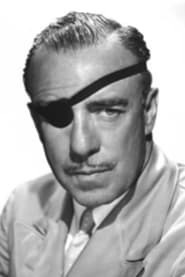
- Tyrone Power Sr. makes his only sound film appearance here as the villainous Red Flack; he died shortly after production.
- The production used 725 Native Americans from five different tribes: Cheyenne, Crow, Shoshone, Blackfeet, and Arapaho.
- John Wayne suffered from a severe case of dysentery during the filming of the grueling river crossing scenes.
- Raoul Walsh jokingly referred to the production as 'The Big Drunk' because of the cast and crew's frequent carousing during the long shoot.
- The famous scene of wagons being lowered down a cliff was filmed without special effects, using actual pulleys and ropes at Hurricane Bluffs.
- Gary Cooper was originally offered the lead role but turned it down, leading Walsh to take a chance on the unknown Wayne.
Awards & recognition
- National Film Registry (Inducted in 2006)
Visual style
The cinematography by Arthur Edeson (70mm) and Lucien Andriot (35mm) is revolutionary. Edeson utilized the 2.10:1 aspect ratio to create 'tableaux' compositions, where multiple actions happen simultaneously in the foreground, middle ground, and background. This reduced the need for close-ups and cutting, creating a sense of scale and continuity that wouldn't be seen again until the advent of CinemaScope. The use of natural light and real locations gives the film a raw, authentic texture that stands in stark contrast to the studio-bound films of the era.
Music
The film features an uncredited score by several composers including R.H. Bassett and Peter Brunelli. As an early 'talkie,' the sound design is notable for its use of ambient outdoor noise—the creaking of wagons, the lowing of cattle, and the rushing of rivers—which was extremely difficult to capture with the primitive microphones of 1930. The dialogue is often delivered in a 'stagey' manner typical of early sound films, but the environmental soundscape is remarkably modern.
Famous quotes
Breck Coleman: 'We're blazing a trail that will be followed by millions. We're building a nation!'
Breck Coleman: 'I've got a little business to settle with a couple of polecats.'
Red Flack: 'There ain't no law west of the Missouri, and south of the North Pole!'
Memorable scenes
- The Descent: A breathtaking sequence where the pioneers use ropes and pulleys to lower entire wagons and livestock down a sheer 300-foot cliff.
- The River Crossing: A chaotic and dangerous scene where the wagon train fords a swollen, muddy river during a storm, filmed with terrifying realism.
- The Buffalo Stampede: A massive, wide-angle shot of hundreds of buffalo charging across the plains, captured in the full majesty of 70mm Grandeur.
- The Final Showdown: Breck Coleman tracks the villains through a heavy snowstorm in a pine forest, culminating in a tense, silent confrontation.
What audiences thought
Initial audiences were largely indifferent, as the vast majority saw the 35mm version which lacked the immersive power of the 70mm Grandeur experience. The film failed to recoup its massive budget, leading to the bankruptcy of William Fox's empire. Today, it has a cult following among cinephiles and Western enthusiasts who appreciate its documentary-like realism and the rare chance to see a young John Wayne before he became a screen icon.
Film connections
Influenced by
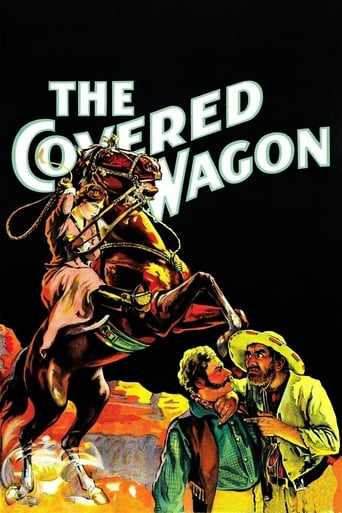
- The Covered Wagon (1923)
- The Iron Horse (1924)
- The California and Oregon Trail (1849 book by Francis Parkman Jr.)
This film influenced
- Stagecoach (1939)
- Red River (1948)
- How the West Was Won (1962)
- Dances with Wolves (1990)
- The Revenant (2015)
Film restoration
The film is fully preserved. The 70mm Grandeur version was meticulously restored by the Museum of Modern Art (MoMA) in conjunction with the Film Foundation and 20th Century Fox in the 1980s. It is now available in high-definition formats.
Where to watch
- Available on Blu-ray/DVD (Criterion-level quality from Fox)
- Streaming on platforms like Amazon Prime Video, Apple TV, and Vudu (Rental/Purchase)
- Frequently aired on Turner Classic Movies (TCM)