


The Blot
"Poverty at the professor's table"
Keys: Space play/pause · ←/→ 10s · F fullscreen · M mute · </> speed
About this film
Professor Griggs earns too little to feed his family while his shoemaker neighbor prospers, until a rich student's love for the professor's daughter exposes the wage gap.
Cast & crew
More films like this
More Drama films
View all →







More from Lois Weber
View all →
More about this film
About the production
Release dateSeptember 4, 1921
BudgetNot documented - typical budget for independent productions of the era was approximately $25,000-50,000
Box officeBox office figures not preserved from 1921, but the film was considered moderately successful and received wide distribution
ProductionLois Weber Productions, Famous Players-Lasky Corporation (distributor)
Filmed inLos Angeles, California, University of Southern California campus (some scenes)
Lois Weber insisted on using natural lighting and real locations to enhance the film's authenticity. The famous dinner scene where the Griggs family shares a single chicken was filmed in one continuous take to emphasize their poverty. Weber cast Claire Windsor after discovering her working as an extra, marking her film debut. The production faced some censorship challenges due to its critical portrayal of American institutions, but Weber's reputation helped secure approval.
Themes
Economic inequalityAcademic freedom and exploitationSocial responsibilityClass consciousnessThe value of education
Themes & topics
povertyeducationsocial inequalityfamily dramaromanceclass strugglemoral dilemmaacademic lifetheftredemption
Historical background
Lois Weber directed this 1921 social drama as part of her run of films addressing class inequality and women's roles.
Why this film matters
Weber's reputation as a director of conscience rests partly on pictures like this that linked domestic drama to economic critique.
Making of
Lois Weber was known for her meticulous preparation and innovative directing techniques. For 'The Blot,' she conducted extensive research into academic salaries and living conditions of college professors. She insisted on shooting in real homes rather than studio sets to enhance authenticity. The famous dinner scene was particularly challenging to film, as Weber wanted to capture the genuine hunger and desperation of the Griggs family. She reportedly had the actors actually fast before shooting the scene to achieve realistic performances. The film's production was marked by Weber's characteristic attention to social detail and her commitment to using cinema as a vehicle for social reform. Weber often worked with a predominantly female crew, which was unusual for the time but reflected her belief in women's capabilities in the film industry.
What critics said
Progressive critics applauded its sincerity; some mainstream reviewers found the moralizing heavy-handed.
Did you know?
- Lois Weber was one of the highest-paid and most influential directors in Hollywood during the silent era, earning over $5,000 per week at her peak
- The film was considered lost for decades until a complete print was discovered in the 1970s in the Netherlands
- Claire Windsor's performance earned her a Photoplay Magazine Medal of Honor, one of the first acting awards in cinema history
- The film's title 'The Blot' refers to the moral stain of poverty and inequality on American society
- Weber used real college professors as consultants to ensure authenticity in depicting academic life
- The famous scene where Mrs. Griggs steals food from her neighbor's kitchen was controversial for its time
- Lois Weber wrote, directed, produced, and edited the film, demonstrating her complete creative control
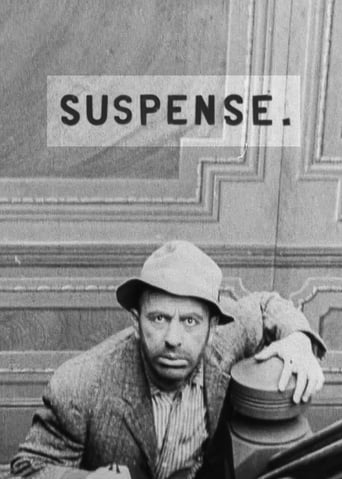
- The film was part of Weber's series of social problem films, including 'Where Are My Children?' and 'Suspense'
- The shoemaker character was based on Weber's observations of working-class immigrants in Los Angeles
- The film's distribution was handled by Paramount Pictures through their Famous Players-Lasky division
Awards & recognition
- Photoplay Magazine Medal of Honor (1921) - awarded to Claire Windsor for her performance
- National Board of Review - Listed as one of the best films of 1921
Visual style
The Blot features innovative cinematography by Glen Gano, utilizing natural lighting and location shooting to enhance realism. Weber employed subtle visual symbolism throughout, particularly in contrasting the dark, cramped Griggs household with the bright, spacious Olsen home. The film uses deep focus composition to emphasize social relationships and power dynamics. Notable techniques include the use of window frames to create visual barriers between characters, and the strategic placement of food as visual metaphors for wealth and poverty. The camera work in the famous theft scene uses careful tracking shots to build tension without intertitles, demonstrating sophisticated visual storytelling typical of Weber's direction.
Innovations
The Blot demonstrated several technical innovations for its time. Weber pioneered the use of location shooting in domestic interiors, moving away from the studio-bound sets typical of the era. The film employed sophisticated editing techniques, including cross-cutting between different social classes to emphasize thematic contrasts. Weber's use of long takes, particularly in the dinner scenes, was unusual for the period and enhanced the film's emotional impact. The film's lighting techniques, utilizing natural light sources to create realistic domestic environments, influenced subsequent filmmakers. The restoration process in the 1970s also set new standards for preserving and reconstructing damaged silent films.
Music
As a silent film, The Blot would have been accompanied by live musical performance during its original run. The score likely consisted of classical pieces and popular songs selected by the theater's music director to match the film's emotional tone. For modern screenings, various composers have created new scores. The most frequently used modern score was composed by Rodney Sauer and performed by the Mont Alto Motion Picture Orchestra, featuring period-appropriate music from the 1910s and 1920s. The restored version available on home video includes a newly commissioned score by Stephen Horne that emphasizes the film's social themes through subtle musical motifs.
Famous quotes
A blot upon the escutcheon of our American institutions - a professor's salary that will not support a family!
It's not the money, it's the principle of the thing - that learning should be so poorly rewarded in this country.
We are not poor because we are not worthy, but because society has forgotten its obligations to those who serve it.
Education is the ladder by which men climb, but sometimes the rungs are too far apart for honest hands to reach.
Memorable scenes
- The dinner scene where the Griggs family shares a single chicken while the Olsen family enjoys a feast next door, filmed without intertitles to emphasize visual contrast
- Mrs. Griggs's midnight theft of food from her neighbor's kitchen, a controversial scene that generated significant public discussion
- Professor Griggs's lecture scene where he passionately defends the value of education despite his personal poverty
- The final confrontation where Phil West confronts the college administration about professorial salaries
- The scene where Amelia Griggs chooses between her wealthy suitor and the poor Reverend Gates, representing class and moral choices
What audiences thought
The Blot resonated strongly with 1921 audiences, particularly middle-class viewers who could relate to its themes of economic struggle. The film generated significant discussion in newspapers and social clubs about academic wages and social responsibility. Contemporary audience reports indicate that many viewers were moved to tears by the dinner scene and the film's emotional climax. The film's popularity helped launch Claire Windsor's career as a major silent film star. Modern audiences at revival screenings have responded positively to the film's timeless themes and sophisticated storytelling, with many noting its surprising relevance to contemporary debates about income inequality and the value of education.
Film connections
Influenced by
- D.W. Griffith's social dramas
- European realist cinema
- Progressive Era social reform literature
- Upton Sinclair's social novels
- Victorian social problem novels
This film influenced
- People on Sunday (1930)
- The Grapes of Wrath (1940)
- Marty (1955)
- The Last Picture Show (1971)
- The Station Agent (2003)
- Winter Bone (2010)
Film restoration
The Blot was considered lost for several decades until a complete 35mm nitrate print was discovered in the Netherlands Film Museum in 1975. The film has since been preserved by the Museum of Modern Art and the Library of Congress. A restored version was released on DVD by Flicker Alley in 2015, featuring a new musical score. The restoration process involved careful digital remastering from the original nitrate elements, though some damage remains visible in certain scenes. The film is now considered well-preserved and accessible through various archival and commercial channels.
Where to watch
- Available on DVD/Blu-ray from Flicker Alley
- Streaming on The Criterion Channel
- Available for viewing at the Museum of Modern Art film archives
- Accessible through the Library of Congress's National Screening Room
- Occasionally screened at film festivals and revival cinemas specializing in silent films
- Available on some educational streaming platforms for classroom use