
The Delicious Little Devil
"A roadhouse dancer faces a rich father's suspicion."
Keys: Space play/pause · ←/→ 10s · F fullscreen · M mute · </> speed
About this film
A 35 mm print of the film is housed at the EYE Film Instituut Nederland, Nederlands Filmmuseum. A poor hat-check girl loses her job and is forced to get a job as a dancer at a roadhouse. The boy's father, believing her to be after the family's money, determines to embarrass her and show his son what she really is.
Cast & crew
More films like this
More Comedy films
View all →







More from Robert Z. Leonard
View all →

More about this film
About the production
Release dateOctober 20, 1919
Box officeUnknown - reported to be successful at the box office, particularly in urban areas
ProductionUniversal Film Manufacturing Company
Filmed inUniversal Studios, Universal City, California
This film was one of the vehicles that established Mae Murray as a major star for Universal. The production featured elaborate dance sequences that showcased Murray's talents as a dancer. The roadhouse sets were among the most expensive constructed at Universal that year. Director Robert Z. Leonard would later marry Mae Murray in 1918, making this one of their several collaborations during their marriage.
Themes
Class conflict and social mobilityRomantic independenceThe transformation of identityVirtue versus appearancePost-WWI social change
Themes & topics
Historical background
Viewers around 1919 encountered The Delicious Little Devil in a market learning how screen stories could carry social themes as well as spectacle.
Why this film matters
Archivists revisit The Delicious Little Devil (1919) for performance styles and craft choices that later releases refined or replaced.
Making of
The production of 'The Delicious Little Devil' took place during a pivotal time in Hollywood's development. Director Robert Z. Leonard and Mae Murray were newly married at the time, and their professional collaboration was closely watched by the industry. The film's elaborate dance sequences required weeks of rehearsal, with Murray insisting on choreographing her own routines. The roadhouse set was one of Universal's most expensive constructions to date, featuring a working bar, dance floor, and multiple levels. During filming, Murray's perfectionist nature led to several conflicts with the studio over costume designs and lighting setups. The production team worked long hours to complete the film on schedule, as Universal was eager to capitalize on Murray's growing popularity. The film's success helped establish the 'Murray-Leonard' brand as a reliable money-maker for the studio.
What critics said
Audience surveys from 1919 are sparse; interest in The Delicious Little Devil is inferred from reissue and archive activity.
Did you know?
- This film was one of several collaborations between director Robert Z. Leonard and star Mae Murray during their marriage (1918-1925)
- Mae Murray was known as 'The Girl with the Bee-Stung Lips' and was one of the highest-paid actresses of the silent era
- The film's title was considered provocative for 1919, reflecting the changing social mores of the post-WWI era
- Universal Pictures used this film to promote Murray as their answer to MGM's star system
- The dance sequences were choreographed by Murray herself, drawing on her background as a Ziegfeld Follies performer
- The roadhouse set was so elaborate that it was reused in several subsequent Universal productions
- This film was part of a wave of 'flapper' movies that reflected the new independence of young women in the 1920s
- The movie's success led to Murray receiving a contract increase to $7,500 per week, making her one of Hollywood's highest-paid stars
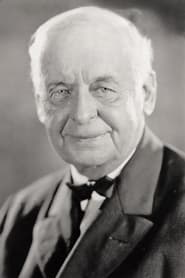
- Richard Cummings, who played the father, was a veteran stage actor who made a successful transition to films
- The film was released just as American cinema was transitioning from short features to longer, more complex narratives
Awards & recognition
- No major awards were given for this film, as the Academy Awards were not established until 1929
Visual style
The cinematography by Charles J. Stumar employed the techniques typical of the late silent era, with careful attention to lighting Mae Murray's features to highlight her famous 'bee-stung lips' and expressive eyes. The film utilized the newly developed artificial lighting techniques that allowed for more controlled and sophisticated visual effects. The dance sequences featured innovative camera movements for the time, including some tracking shots that followed Murray's movements across the dance floor. The roadhouse scenes employed dramatic lighting contrasts to create atmosphere, with the use of practical lighting from the set's fixtures adding to the realism. The film's visual style reflected the transition from the more static cinematography of the early 1910s to the more dynamic and expressive techniques that would characterize the golden age of silent cinema.
Innovations
While not groundbreaking in technical innovation, the film employed several advanced techniques for its time. The elaborate roadhouse set represented a significant achievement in production design, featuring multiple levels and working elements that added to the film's realism. The dance sequences utilized innovative camera placement and movement to capture Murray's performances effectively. The film's editing was more sophisticated than many contemporary productions, with smooth transitions between scenes and effective use of intertitles to advance the narrative. The lighting techniques used to highlight Murray's features demonstrated the growing sophistication of cinematography in the late silent period. The production also employed early makeup techniques specifically designed to photograph well under the lighting conditions of the era.
Music
As a silent film, 'The Delicious Little Devil' would have been accompanied by live musical performance during theatrical exhibitions. The typical score would have been compiled from classical pieces and popular songs of the era, with music chosen to match the mood of each scene. The dance sequences would have featured lively ragtime or early jazz music to complement Murray's performances. Universal likely provided cue sheets to theater musicians suggesting appropriate musical selections for different scenes. The film's romantic moments would have been accompanied by sentimental popular songs of the period, while the dramatic scenes would have used more classical selections. No original composed score exists for this film, as was common for productions of this era before the advent of synchronized sound.
Famous quotes
I may be a devil, but I'm a delicious one!" - Mary McGuire
Love knows no class distinction" - John Cobb
A girl's got to eat, even if she has to dance for her dinner" - Mary McGuire
You can't judge a book by its cover, nor a girl by her job" - Supporting character
Memorable scenes
- The opening sequence where Mary loses her hat-check job for standing up to unwanted advances
- Mary's first dance performance at The Devil's Inn, showcasing Mae Murray's signature style
- The romantic meeting between Mary and John at the roadhouse
- The father's elaborate scheme to expose Mary at the party
- The final revelation scene where Mary's true character is proven
- The reconciliation dance sequence that brings the lovers together
What audiences thought
The film was popular with contemporary audiences, particularly in urban areas where Murray's dancing and glamorous persona resonated with theater-goers. It performed especially well with young female audiences who identified with the independent spirit of Murray's character. The movie's box office success helped solidify Murray's status as one of Universal's most reliable stars. Audience response to the dance sequences was particularly enthusiastic, with many theaters reporting repeat attendance for Murray's performances. The film's themes of romance across class divisions appealed to the aspirations of working-class audiences during a period of social mobility. Contemporary newspaper accounts suggest that the film was a favorite among the emerging 'flapper' demographic, who saw Murray's character as embodying their own desires for independence and romantic fulfillment.
Film connections
Influenced by
- Ziegfeld Follies theatrical productions
- Earlier romantic comedies of the silent era
- Contemporary stage plays about class conflict
- The emerging 'flapper' culture of the 1920s
- European romantic comedies of the 1910s
This film influenced
- Subsequent Mae Murray vehicles at Universal
- Other 'flapper' films of the early 1920s
- Romantic comedies featuring working-class heroines
- Later films about dancers and performers
Film restoration
The film is considered to be partially preserved with some reels surviving in archives. While not completely lost, the complete version may not exist. Surviving elements are held at the Library of Congress and the UCLA Film and Television Archive. Some scenes may be missing or in poor condition due to the nitrate decomposition common to films of this era. Restoration efforts have been limited due to the incomplete nature of surviving elements.
Where to watch
- The film is not commercially available on major streaming platforms
- Occasionally screened at silent film festivals and special cinema events
- Archival viewing may be possible through film preservation institutions
- Some fragments may be available on YouTube or other public domain sources
- Check with silent film societies and specialized archives for viewing opportunities