
The First Seven Years
"Coogan kids duel for Mary Ann"
Keys: Space play/pause · ←/→ 10s · F fullscreen · M mute · </> speed
About this film
Jackie Coogan duels with rival suitor over Mary Ann in Our Gang comedy short. The First Seven Years (1930) belongs to early sound Little Rascals era.
Cast & crew
More films like this
More Comedy films
View all →







More from Robert F. McGowan
View all →

More about this film
About the production
Release dateMarch 1, 1930
BudgetApproximately $30,000 (Estimated for Hal Roach two-reelers of the era)
ProductionHal Roach Studios, Metro-Goldwyn-Mayer (MGM)
Filmed inHal Roach Studios, Culver City, California, Cheviot Vista Place, Los Angeles, California
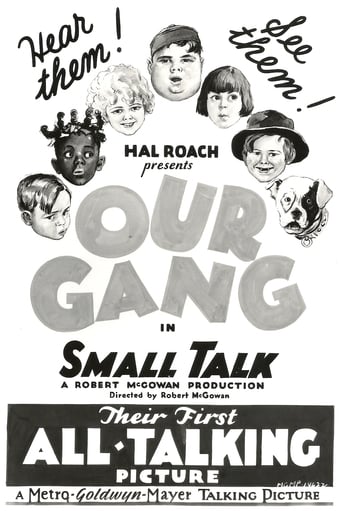
The film was produced during the critical transition period from silent to sound cinema. Director Robert F. McGowan was known for his 'megaphone' style of directing, where he would shout instructions to the children during takes, a technique that became much more difficult with the advent of synchronized sound. This short was filmed between October 28 and November 16, 1929, and was one of the early 'all-talking' entries in the series. It was also produced in a Spanish-language version titled 'Los Pequeños Papas' to cater to international markets, a common practice for Hal Roach at the time.
Themes
Themes & topics
duelsword fightchildhood crushOfficer Kennedyneighborhood brawlLittle Rascals1930s comedy
Historical background
The First Seven Years (1930) belongs to Roach Our Gang after Coogan's feature stardom peak.
Why this film matters
Our Gang sound shorts preserved kid comedy franchise through Depression matinees.
Making of
Directing the 'Our Gang' children was notoriously exhausting for Robert F. McGowan, who frequently suffered from health issues due to the stress of managing a cast of toddlers and animals. During the filming of 'The First Seven Years,' the production had to balance the technical limitations of early sound equipment—which required actors to stay near hidden microphones—with the natural, energetic movements of the children. The sword fight scene required careful choreography to ensure the children's safety while maintaining the appearance of a 'deadly' duel. Additionally, the use of Pete the Pup required a trainer on set at all times, often hiding just out of frame to guide the dog's actions.
What critics said
Family audiences laughed; series historians catalog it in early sound season.
Did you know?
- the production is notable for being one of the few 'Our Gang' shorts that was occasionally withdrawn from television packages due to the intensity of the sword-fighting scenes.
- The scene featuring Wheezer and Pete the Pup rolling down a hill in a metal pipe was filmed at Cheviot Vista Place in Los Angeles.
- Jackie Cooper was under a contract earning $50 a week during the production of the production.
- The film was edited for television in later years to remove certain segments of racial humor that were common in the 1930s but deemed inappropriate for modern audiences.
- Speck Haines' character, the bully, was a recurring archetype in the series, often serving as the primary antagonist to Jackie or Spanky.
- The 'rolling down the hill' gag was a favorite of the Roach studio and was reworked in several later shorts.
- Jackie Cooper's performance in this and other 1930 shorts led to his casting in the feature film 'Skippy', for which he became the youngest Best Actor Oscar nominee.
- The film features Edgar Kennedy, a 'slow burn' comedian, in his recurring role as Officer Kennedy.
Awards & recognition
- None (Short films in this era rarely received formal awards outside of industry recognition)
Visual style
The film utilizes standard static camera setups typical of early sound films, as the heavy soundproofing 'blimps' on cameras made movement difficult. However, the outdoor sequence of the pipe rolling down the hill shows an early attempt to bring dynamic action to the sound era.
Innovations
One of the early 'all-talking' two-reelers, it successfully integrated dialogue-driven comedy with the physical slapstick that had made the silent 'Our Gang' shorts famous. It also utilized early location sound recording for the outdoor scenes.
Music
The film features a synchronized musical score and sound effects, though it lacks the elaborate orchestral themes found in later 1930s shorts. The sound is primarily focused on the dialogue and the clashing of the 'swords' during the duel.
Famous quotes
Speck Haines: 'Gee, you're a keen looking chick. Will you marry me?' Mary Ann: 'Uh uh. I wouldn't marry any man.'
Wheezer: 'If you're gonna get killed, will you let me have your knife?' Jackie: 'Yeah, you can have it. Hey if I don't get killed, I want that knife back.' Wheezer: 'Well, I hope you get killed.'
Jackie: 'Give me back my knife. I didn't get killed.' Wheezer: 'Aw gee, I never get a break.'
Memorable scenes
- The Duel: Jackie and Speck dress in makeshift armor (including trash can lids and colanders) and engage in a sword fight that results in the destruction of neighborhood property.
- The Pipe Roll: Wheezer and Pete the Pup are trapped inside a large metal pipe that Jackie accidentally pushes down a steep Los Angeles hill.
- The Finale: A massive brawl breaks out involving the kids, Speck's father, and Jackie's feisty grandmother, who ends up punching the father in the nose.
What audiences thought
Audiences in 1930 embraced the film, as the 'Our Gang' shorts were among the most popular supporting features in cinemas. The relatable theme of 'first love' and the slapstick violence of the duel made it a favorite among both children and adults.
Film connections
Influenced by
- The chivalric romances of the Middle Ages (parodied in the duel)
- Silent slapstick comedies of the 1920s
This film influenced
- A Lad An' A Lamp (1932)
- The Little Rascals (1994 remake)
- The Sandlot (1993)
Film restoration
The film has been professionally restored by ClassicFlix from original nitrate elements as part of 'The Little Rascals: The ClassicFlix Restorations, Volume 1' (2021). It is fully preserved and available in high definition.
Where to watch
- The Little Rascals: The ClassicFlix Restorations DVD/Blu-ray
- Amazon Prime Video (via various classic film collections)
- YouTube (Public Domain uploads)