The General
"His whole life was a comedy. Then the war came."
Keys: Space play/pause · ←/→ 10s · F fullscreen · M mute · </> speed
About this film
During America’s Civil War, Union spies steal engineer Johnny Gray's beloved locomotive, 'The General'—with Johnnie's lady love aboard an attached boxcar—and he single-handedly must do all in his power to both get The General back and to rescue Annabelle.
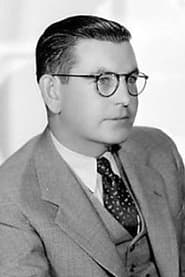
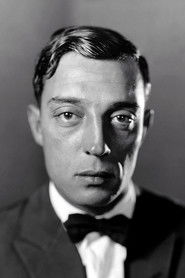
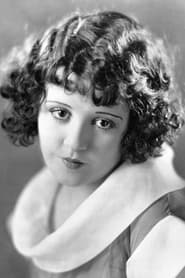
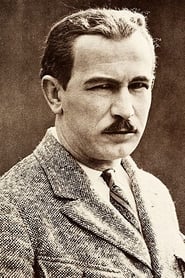
Cast & crew
More films like this

More Action films
View all →
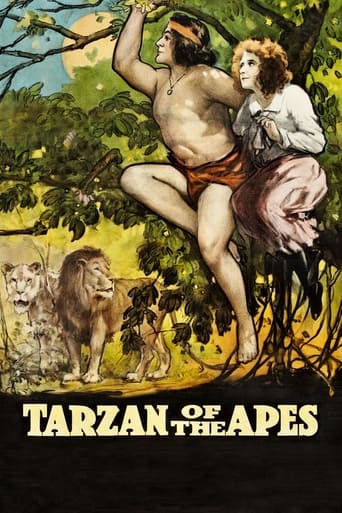
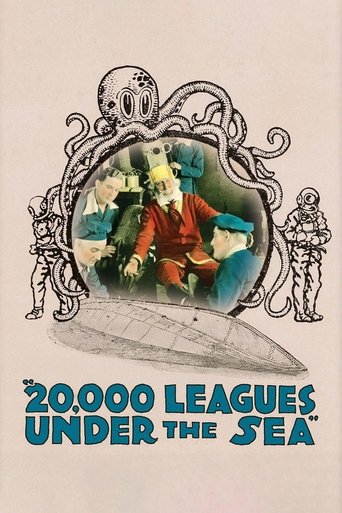
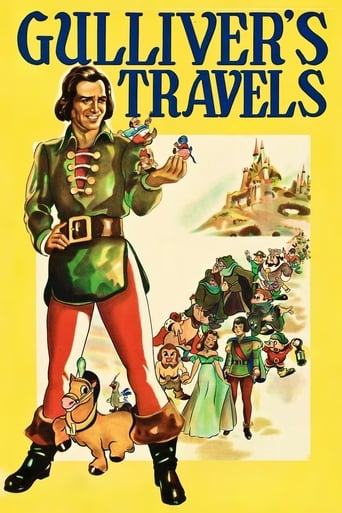
More from Clyde Bruckman
View all →

More about this film
About the production
Release dateDecember 31, 1926 (premiere), February 5, 1927 (general release)
Budget$750,000 (enormous for its time, making it among the costliest silent films ever produced)
Box office$470,000 (initial release, considered a commercial disappointment at the time)
ProductionBuster Keaton Productions, United Artists
Filmed inCottage Grove, Oregon, Willamette National Forest, Oregon, Siskiyou Mountains, Oregon
The production used two authentic 1860s steam locomotives ('The General' and 'The Texas') that were purchased from logging companies. The famous bridge collapse scene required building a full-scale trestle bridge over the Row River, which was then destroyed in a single take - among the costliest single shots in silent film history. The film required coordinating hundreds of extras, multiple trains, and complex stunts simultaneously. Keaton insisted on performing his own stunts, including riding on the front of moving trains and narrowly avoiding being crushed. The entire production took over a year to complete due to the complexity of the railroad sequences and the need for precise timing.
Themes
Persistence and determinationThe individual against overwhelming oddsLove and loyaltyThe romance of technology and progressWar as both tragedy and adventure
Themes & topics
traincivil warchaselocomotivespiesrescueengineerstuntssilent filmactionadventureromancebattlerailroadbehind enemy lines
Historical background
Silent-era production in 1926 relied on intertitles, live accompaniment, and studio systems that were rapidly consolidating into national industries.
Why this film matters
The General remains part of the screen heritage of its era, offering evidence of prevailing genres, production methods, and audience tastes. Later revivals, archive screenings, and digitization have kept such titles accessible to researchers and dedicated viewers long after their first commercial runs.
Making of
The making of 'The General' was an epic undertaking that pushed the boundaries of silent filmmaking. Keaton and his team spent months scouting locations in Oregon to find suitable railroad tracks and landscapes that could pass for Civil War-era Georgia. The production involved coordinating two full-size steam locomotives, miles of track, and hundreds of extras. Keaton's perfectionism led to multiple takes of complex sequences, particularly the famous chase scenes. The bridge collapse sequence required building a 200-foot trestle bridge and timing its destruction perfectly with the train's passage. Marion Mack, playing Annabelle, suffered from exhaustion during the grueling outdoor shoots and was nearly seriously injured during one sequence. The film's massive budget and extended production time caused significant stress with United Artists, who had expected a typical comedy. Keaton's insistence on historical accuracy extended to authentic uniforms, weapons, and railroad equipment, much of which had to be specially built or located.
What critics said
Trade and newspaper reviews from the silent period for The General survive only in fragments, making precise reception history difficult to reconstruct. Modern assessment tends to emphasize historical value, craft, and cultural context rather than box-office performance.
Did you know?
- The film was based on the true story of the Great Locomotive Chase of 1862, where Union spies stole a Confederate train
- Buster Keaton performed all his own stunts, including the scene where he sits on the connecting rods of a moving train
- The famous bridge collapse cost $42,000 to film (equivalent to over $600,000 today) and was done in one take
- The locomotive 'The General' was actually built in 1855 and was 71 years old when filming began
- Keaton purchased both trains used in the film for $25,000 and later sold them for scrap when they became obsolete
- The film was shot in sequence, which was unusual for the time, to maintain continuity with the changing seasons
- Over 500 Oregon National Guard soldiers were used as extras for the battle scenes
- Keaton's co-star Marion Mack was nearly killed when a railroad tie came loose and hit her in the head
- The film's initial poor reception led Keaton to lose his artistic independence and sign with MGM
- In 1989, 'The General' was selected for preservation in the National Film Registry
Awards & recognition
- National Film Registry selection (1989)
- AFI's 100 Greatest American Movies (1998 - ranked #100)
- AFI's 100 Funniest American Movies (2000 - ranked #18)
- AFI's 10 Top 10 - ranked #1 in the Epic genre category (2008)
- Sight & Sound Critics' Poll - ranked #34 in 2012
Visual style
The cinematography by Bert Haines and Devereaux Jennings was revolutionary for its time, featuring extensive location photography and complex tracking shots that followed moving trains. The film utilized multiple cameras to capture action from various angles simultaneously, a technique that was still relatively new in 1926. The camera work often placed the viewer in precarious positions, creating vertiginous perspectives that enhanced the tension of the chase sequences. The cinematography successfully captured the massive scale of the railroad operations while maintaining intimate focus on Keaton's performance. The battle sequences employed wide shots to show the scale of the conflict, then cut to close-ups for emotional impact. The film's visual style influenced action cinematography for decades, particularly in how it integrated actors with large-scale mechanical action. The photography of the Oregon landscape created a convincing substitute for Civil War-era Georgia, with the natural scenery adding to the film's epic quality.
Innovations
The General featured groundbreaking technical achievements that set new standards for action filmmaking. The film's most spectacular technical feat was the destruction of a full-scale railroad bridge, which required precise engineering and timing. The production pioneered techniques for filming moving trains, including cameras mounted on locomotives and special tracks for camera dollies. The film's complex chase sequences required unprecedented coordination between multiple trains, extras, and camera units. Keaton's team developed innovative methods for creating convincing train crashes and derailments while maintaining safety standards for the performers. The film's use of long takes in action sequences demonstrated remarkable planning and execution. The battle scenes employed hundreds of extras and practical effects, including controlled explosions and simulated gunfire. The technical achievements extended to the restoration of authentic 19th-century locomotives and railroad equipment, which had to be modified for filming while maintaining historical accuracy. These innovations influenced action filmmaking for decades and remain impressive even by modern standards.
Music
As a silent film, The General was originally presented with live musical accompaniment that varied by theater. The suggested score included classical pieces like 'Dixie' and 'The Battle Hymn of the Republic' to establish the Civil War setting. Modern restorations have featured new scores by composers such as Carl Davis and Robert Israel. These contemporary scores attempt to balance the film's comedic and dramatic elements, using period-appropriate instrumentation while maintaining cinematic sweep. The music must constantly adapt to the film's changing tones, from slapstick comedy to tense chase sequences to romantic moments. The sound design in modern versions includes carefully synchronized sound effects for the trains, creating an immersive experience that enhances the mechanical action. The absence of dialogue forces the music to carry emotional weight, making the score particularly crucial to the film's impact. Various versions exist with different musical interpretations, each offering a unique perspective on Keaton's vision.
Famous quotes
Johnny Gray: 'I'm no good to you as a soldier, but I can drive a locomotive.'
Annabelle Lee: 'Johnny, you're the bravest man in the world.'
Union Officer: 'That man's either crazy or the bravest man I've ever seen.'
Johnny Gray: (after being rejected by the army) 'They won't take me because I'm more valuable as an engineer.'
Annabelle Lee: 'I thought you were a coward, Johnny. I was wrong.'
Memorable scenes
- The spectacular bridge collapse sequence where a burning train crashes into the river below - among the costliest single shots in silent film history
- Keaton sitting on the connecting rods of a moving train, rising and falling with the pistons in a display of incredible physical comedy
- The final battle scene where Johnny uses a railroad tie as a cannon to fire back at Union troops
- The moment when Johnny realizes his beloved locomotive has been stolen and begins his desperate pursuit
- The scene where Johnny must clear a railroad tie from the tracks while the train approaches at high speed
- The romantic moment where Johnny and Annabelle share a tender scene while hiding in the locomotive's tender
What audiences thought
Contemporary audiences in 1927 largely rejected The General, finding it too serious for a comedy and too comedic for a war film. The film's poor box office performance was a major disappointment for Keaton and United Artists. Audiences expecting the rapid-fire gags of his earlier shorts found the deliberate pacing and dramatic elements jarring. However, as decades passed, audience perception transformed dramatically. Modern audiences now appreciate the film's sophisticated blend of genres and its spectacular action sequences. The film has become a cult classic and is regularly screened at film festivals and revival houses worldwide. Audience scores on platforms like IMDb and Letterboxd consistently place it among the highest-rated films of all time. The film's reputation has grown through home video releases and television broadcasts, introducing new generations to Keaton's genius. Today, The General is celebrated by audiences as both a thrilling adventure and a work of cinematic art.
Film connections
Influenced by
- The Great Train Robbery (1903)
- The Birth of a Nation (1915)
- Charlie Chaplin's The Kid (1921)
- Harold Lloyd's Safety Last! (1923)
- D.W. Griffith's Intolerance (1916)
- William S. Hart's westerns
- Actual historical accounts of the Andrews Raid
This film influenced
- The Great Escape (1963)
- The Bridge on the River Kwai (1957)
- Star Wars: A New Hope (1977)
- Indiana Jones and the Last Crusade (1989)
- Back to the Future Part III (1990)
- The Lone Ranger (2013)
- Mad Max: Fury Road (2015)
- Unstoppable (2010)
Film restoration
The General is well-preserved with multiple high-quality restorations available. The original nitrate negatives were lost, but excellent 35mm copies survived. The film was restored by the Cohen Film Collection in 4K resolution, preserving the original aspect ratio and frame rate. The Library of Congress holds preservation copies, and the film is part of the National Film Registry. The actual locomotive 'The General' survived filming and is now preserved at the Southern Museum of Civil War and Locomotive History in Kennesaw, Georgia. Multiple versions exist with different musical scores, but the visual content remains consistent across all releases. The film's preservation status is considered excellent, with no lost footage or significant deterioration.
Where to watch
- The Criterion Collection (Blu-ray/DVD)
- Kino Lorber (Blu-ray)
- The Criterion Channel (streaming)
- HBO Max (streaming)
- Amazon Prime Video (rental/purchase)
- iTunes/Apple TV (rental/purchase)
- YouTube Movies (rental/purchase)
- FilmStruck (archive)
- TCM (Turner Classic Movies - periodic broadcasts)
- Various public domain versions available online