
The Nut
"Gadgets, goodwill, and gala nights"
Keys: Space play/pause · ←/→ 10s · F fullscreen · M mute · </> speed
About this film
Inventor Charlie Jackson hawks schemes to fund his girlfriend's charity for poor children while dodging con artists and socialites. Norma Talmadge produces a vehicle for her husband Joseph Schenck's star comedian Roscoe Arbuckle in a gentler post-scandal persona.
Cast & crew
More films like this
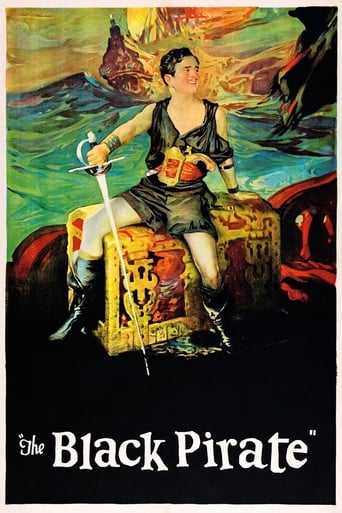
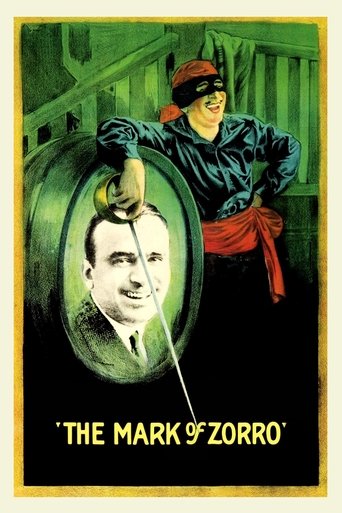
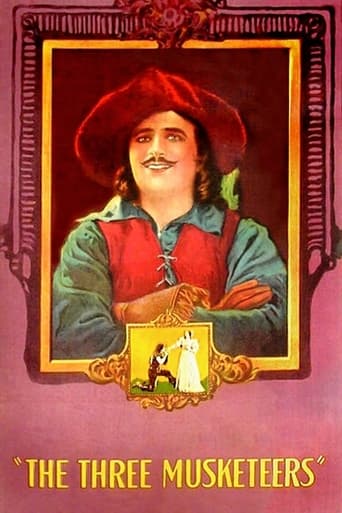
More Action films
View all →
More about this film
About the production
Release dateNovember 13, 1921
Box officeExact figures unavailable, but Fairbanks films were consistently profitable during this period
ProductionDouglas Fairbanks Pictures Corporation, United Artists
Filmed inLos Angeles, California, Fairbanks' studio in Hollywood
This was one of the first films Fairbanks produced after co-founding United Artists in 1919, giving him complete creative control. The film featured numerous elaborate gadgets and mechanical contraptions that required extensive prop work and engineering. Fairbanks performed his own stunts as was his custom, including several dangerous acrobatic sequences. The production took approximately 3 months to complete, which was typical for Fairbanks' productions of this era.
Themes
Innovation and technological progressSocial responsibility and charityClass differences and social mobilityThe value of unconventional thinkingRomance and courtship
Themes & topics
inventormechanical devicesplaygroundcharityromancerivalrystuntscomedyactionsilent film1920ssocial classunderdog
Historical background
The Nut (1921) arrived as Arbuckle sought family-friendly roles after his peak slapstick fame.
Why this film matters
It documents the couple's production ambitions and the attempt to reposition Arbuckle as inventive romantic lead.
Making of
The production of 'The Nut' was characteristic of Douglas Fairbanks' meticulous approach to filmmaking during his peak years. Fairbanks had recently co-founded United Artists with Mary Pickford, Charlie Chaplin, and D.W. Griffith, giving him unprecedented creative freedom. The film was shot at Fairbanks' own studio facilities, which allowed him complete control over the production environment. The elaborate mechanical props required specialized technicians, and Fairbanks reportedly spent significant time personally testing and modifying the devices to ensure they would work properly on camera. The action sequences, particularly those involving Fairbanks' athletic stunts, required extensive rehearsal and often took multiple takes to perfect. Theodore Reed, the director, worked closely with Fairbanks to capture his unique blend of physical comedy and swashbuckling action. The film's production was relatively smooth compared to other Fairbanks pictures, though there were reported delays due to the complexity of some of the mechanical effects.
What critics said
Reviews were mixed on pacing; historians view it as a footnote in Arbuckle's contested late silent career.
Did you know?
- Douglas Fairbanks was not only the star but also the uncredited writer and producer of the film, maintaining his practice of creative control over his projects.
- The mechanical butler featured in the film was a fully functional prop that reportedly took weeks to construct and required multiple operators to make it appear autonomous.
- This was the second of three collaborations between Fairbanks and director Theodore Reed, who would later become a prominent director in his own right.
- The film featured one of the earliest depictions of a 'smart home' concept, with various automated devices that were remarkably ahead of their time.
- Marguerite De La Motte was a frequent Fairbanks co-star, appearing in multiple films with him including 'The Mark of Zorro' and 'The Three Musketeers'.
- The playground scenes were filmed with actual children from local Los Angeles neighborhoods, some of whom reportedly received small payments and meals for their participation.
- William Lowery, who played the villain, was a prolific character actor who appeared in over 200 films during his career, often as the antagonist.
- The film's title 'The Nut' was 1920s slang for an eccentric or crazy person, referring to Fairbanks' character's unconventional nature.
- A sequence featuring Fairbanks climbing a building using his inventions was later cited as an influence on the early Superman comics and other superhero media.
- The film's original running time was approximately 90 minutes, but several minutes were cut for re-releases in the late 1920s.
Visual style
The cinematography in The Nut was handled by Arthur Edeson, a prominent cinematographer of the silent era who would later shoot such classics as 'Casablanca' and 'The Maltese Falcon.' The film employed the relatively sophisticated camera techniques that were becoming standard in 1921, including dynamic camera movement during action sequences and carefully composed shots to highlight Fairbanks' athletic abilities. The cinematography effectively captured the contrast between the mechanical devices and human performances, often using lighting to emphasize the metallic nature of the inventions. Several scenes featured innovative camera angles for the time, including low-angle shots during Fairbanks' acrobatic sequences to enhance the sense of height and danger. The film also made effective use of location shooting in Los Angeles, providing a realistic backdrop for the story's urban setting.
Innovations
The Nut showcased several technical achievements for its time, particularly in the realm of practical effects and prop construction. The mechanical devices featured in the film were remarkably sophisticated for 1921, requiring complex engineering to create the illusion of automation. The production team developed innovative techniques for making these contraptions appear to function autonomously on camera, including hidden wires and off-camera operators. The film also featured impressive stunt work, with Fairbanks performing acrobatic sequences that pushed the boundaries of what was considered possible in action cinema at the time. The seamless integration of comedy, romance, and action elements required sophisticated editing techniques that were relatively advanced for the period. The playground construction sequence utilized miniatures and forced perspective to create the illusion of a large-scale building project.
Music
As a silent film, The Nut was originally presented with live musical accompaniment that varied by theater. The score was typically provided by the theater's organist or pianist, using cue sheets provided by the studio. These cue sheets suggested appropriate musical themes for different scenes, with romantic music for the Fairbanks-De La Motte scenes, comedic motifs for the invention sequences, and dramatic music for the action scenes. Some larger theaters may have used small orchestras to accompany the film. The original score has been lost, as was typical for silent films, but modern restorations have been accompanied by newly composed scores that attempt to capture the spirit of 1920s film music while incorporating contemporary sensibilities.
Famous quotes
Being a nut is a lot of fun, especially when you're in love!
Inventions are like children - they need patience and understanding to grow up properly.
The best ideas are often the ones that seem craziest at first.
Helping others is the greatest invention of all.
Love makes even the most complicated machines run smoothly.
Memorable scenes
- The sequence where Fairbanks demonstrates his mechanical butler to a group of skeptical wealthy investors, culminating in the machine going haywire and serving dinner to the wrong people
- Fairbanks' athletic escape from a building using a series of his own inventions, including a grappling hook and pulley system
- The climactic playground dedication scene where Fairbanks must use quick thinking and his gadgets to save children from a dangerous situation
- The romantic rooftop scene where Fairbanks attempts to impress De La Motte with a musical invention that plays itself
What audiences thought
The Nut was well-received by audiences upon its release, particularly among Fairbanks' established fan base. The film's blend of action, comedy, and romance appealed to the broad moviegoing public of the early 1920s. Contemporary reports indicated that audiences especially enjoyed the sequences featuring Fairbanks' various inventions and the physical comedy that resulted when they malfunctioned. The film performed solidly at the box office, though it didn't reach the blockbuster status of some of Fairbanks' other productions like 'The Mark of Zorro' or 'Robin Hood.' Audience feedback letters preserved in studio archives suggest that viewers particularly appreciated the film's optimistic tone and the chemistry between Fairbanks and De La Motte. The playground subplot resonated with audiences concerned about social issues, adding depth to what might otherwise have been a straightforward comedy.
Film connections
Influenced by
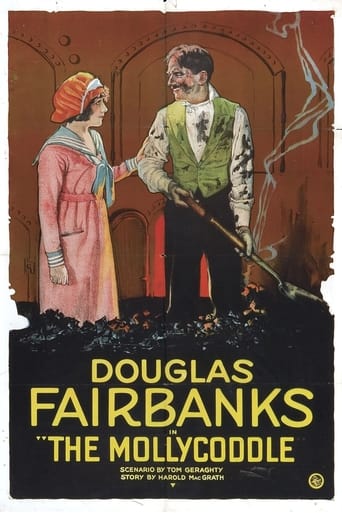
- Earlier Fairbanks comedies like 'The Mollycoddle' (1920)
- Contemporary American comedy films
- European slapstick traditions
- The technological optimism of the 1920s
- Progressive Era social reform movements
This film influenced
- Later action-comedies starring Fairbanks
- The 'mad inventor' subgenre in comedy films
- Superhero films featuring gadget-based heroes
- Modern action-comedies blending technology and physical comedy
Film restoration
The Nut is considered to be largely preserved, though some scenes may be missing or incomplete. The film exists in the archives of the Museum of Modern Art and has been screened at various silent film festivals. A restored version was released on DVD by Kino International as part of their Douglas Fairbanks collection. The restoration was based on the best available 35mm elements, though some deterioration is evident in certain sequences. The film has not received a full 4K digital restoration as of current knowledge, but its survival status is good compared to many films from the same period.
Where to watch
- The film is available on DVD from Kino International as part of their Douglas Fairbanks collection
- It can be streamed on some classic film subscription services
- The film occasionally appears on Turner Classic Movies during their silent film programming
- Digital copies may be available through university film archives and libraries
- Some public domain versions exist online, though quality varies significantly