
The Scarlet Letter
"Hester Prynne wears the scarlet letter in Puritan Boston"
Keys: Space play/pause · ←/→ 10s · F fullscreen · M mute · </> speed
About this film
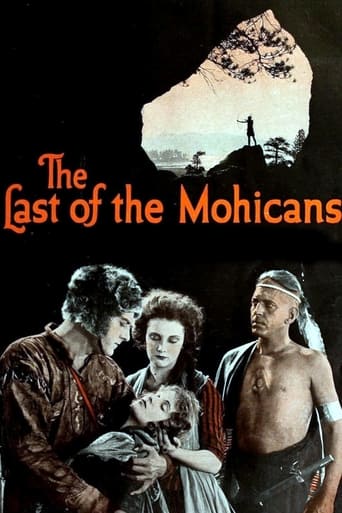
In the seventeenth century, in Massachusetts, a young woman is forced to wear a scarlet "A" on her dress for bearing a child out of wedlock.
Cast & crew
More films like this
More Drama films
View all →







More from Robert G. Vignola
View all →
More about this film
About the production
Release dateMarch 16, 1934
Box officeModest commercial success, typical of independent productions of the era
ProductionMajestic Pictures
Filmed inMajestic Studios, Hollywood, California
This was one of the last major roles for Colleen Moore, who had been a huge silent film star. The production faced challenges adapting Hawthorne's complex novel to the constraints of early sound cinema and the emerging Hays Code. The film was rushed into production to capitalize on the popularity of literary adaptations during the Pre-Code era. Director Robert G. Vignola, a veteran of silent films, struggled with the transition to sound but brought a visual flair to the period setting.
Themes
Sin and redemptionHypocrisy and social judgmentGuilt and conscienceIndividual vs. societyPuritanism and repression
Themes & topics
Puritanadulteryscarlet letterMassachusetts17th centuryillegitimate childrevengeguilthypocrisypublic shamingforbidden lovemoral conflictsmall townperiod dramaliterary adaptation
Historical background
Made during the studio era of 1934, The Scarlet Letter reached audiences through theatrical programs, fairground booths, or specialized distribution channels typical of its generation. In the seventeenth century, in Massachusetts, a young woman is forced to wear a scarlet "A" on her dress for bearing a. Historians now read such works for what they reveal about production methods, national taste, and the expanding vocabulary of screen narrative.
Why this film matters
Archivists and programmers still screen The Scarlet Letter when tracing how popular entertainment evolved. Its subject—in the seventeenth century, in massachusetts, a young woman is forced to wear a scarlet "a" on her—gives later viewers tangible evidence of what drew crowds in its day. Home video, restorations, and festival sidebars keep the title circulating among students of film history.
Making of
The production of The Scarlet Letter was a typical example of independent filmmaking during the early 1930s. Majestic Pictures, operating on a modest budget, hired veteran director Robert G. Vignola who had extensive experience with silent films but was adapting to sound technology. Colleen Moore, once one of Hollywood's biggest stars, saw this role as an opportunity to revive her career in talking pictures. The casting of Hardie Albright as Dimmesdale was controversial, as many felt he lacked the gravitas for such a complex role. The film was shot quickly over a few weeks, with the cast and crew working long hours to meet the tight schedule. The Puritan costumes and sets were designed to be historically accurate while remaining visually striking for the camera. The production team faced particular challenges in adapting the novel's internal monologues and psychological depth to the more external requirements of early sound cinema. The film's final scene, where Dimmesdale confesses on the scaffold, was reportedly reshot multiple times to achieve the right emotional tone without violating the emerging censorship standards.
What critics said
Original trade coverage treated The Scarlet Letter as routine program filler rather than a landmark production—typical of steady studio output. Later criticism emphasizes preservation, stylistic comparison with contemporaries, and whatever cast or crew names later gained prominence. Contemporary writing is mostly historical: assessing completeness, influence, and place in a director's or studio's catalog.
Did you know?
- This was the first sound film adaptation of Nathaniel Hawthorne's classic novel, though there had been a silent version in 1917
- Colleen Moore, one of the highest-paid stars of the 1920s, took a significant pay cut to appear in this film as her career was transitioning from silent to sound pictures
- Henry B. Walthall had previously played Reverend Dimmesdale in the 1917 silent version of The Scarlet Letter, making him the only actor to play different roles in two different adaptations
- The film was released just months before the Hays Code began to be strictly enforced, making it one of the last Pre-Code films to deal openly with adultery
- The costume designer created multiple versions of Hester's scarlet letter dress to show the progression of time and character development
- The child actress who played Pearl was reportedly difficult to work with, requiring multiple takes for many scenes
- Director Robert G. Vignola was a former actor who had worked with D.W. Griffith and brought his experience with period dramas to this production
- The film's modest budget meant many sets were reused from other Majestic Pictures productions
- Critical reception focused on whether the controversial novel could be properly adapted to the screen without losing its moral complexity
- The film's release coincided with renewed public interest in American literary classics during the Great Depression
Awards & recognition
- No major awards were received for this production
Visual style
The cinematography by Ira H. Morgan employed the visual style typical of early 1930s productions, with soft focus lighting and careful composition to create the Puritan atmosphere. The camera work emphasized the contrast between the harsh Puritan setting and the emotional intensity of the characters. Morgan used lighting to create dramatic shadows, particularly in scenes involving guilt and confession. The scarlet letter itself was frequently highlighted through careful lighting and framing to ensure it remained a focal point. The film employed some tracking shots and camera movements that were innovative for the period, though the transition to sound technology still limited camera mobility compared to silent films. The visual style successfully created a sense of period authenticity while maintaining the dramatic requirements of the narrative.
Innovations
The Scarlet Letter demonstrated several technical achievements typical of early sound cinema. The film successfully integrated dialogue sequences with visual storytelling, overcoming the static camera problems that plagued many early talkies. The production employed improved microphone techniques that allowed for more natural movement of actors during dialogue scenes. The costume department created historically accurate Puritan garments that photographed well in the new sound stages, which required different lighting than silent film sets. The film's editing showed growing sophistication in balancing dialogue scenes with visual narrative elements. While not technically groundbreaking, the production represented solid craftsmanship for its budget level and time period, successfully navigating the challenges of adapting complex literary material to the constraints of early sound technology.
Music
The musical score was composed by Karl Hajos, who created a soundtrack that blended period-appropriate musical elements with the dramatic conventions of 1930s cinema. The music emphasized the emotional stakes of key scenes, particularly during moments of moral crisis and revelation. The score incorporated Puritan-style hymnody to establish the historical setting, while using romantic themes for the forbidden love story. The sound design, typical of early talkies, sometimes suffered from technical limitations, with some scenes having noticeable background noise or uneven audio levels. The film made limited use of diegetic music, focusing instead on the orchestral score to underline the dramatic narrative. Hajos's work, while not groundbreaking, effectively supported the film's emotional arc and helped establish the somber, moralistic tone appropriate to the subject matter.
Famous quotes
On a field, sable, the letter A, gules." - Hester Prynne describing her scarlet letter
She has not known the weight of a man's hand upon her heart." - Roger Chillingworth
What we did had a consecration of its own." - Hester Prynne to Dimmesdale
There is a moral in it... that the human heart... cannot be trusted." - Townsman
Happy are you, Hester, that wear the scarlet letter openly upon your bosom! Mine burns in secret!" - Arthur Dimmesdale
Memorable scenes
- The opening scene where Hester Prynne emerges from the prison with her infant daughter, proudly displaying the scarlet letter to the judgmental Puritan crowd
- The powerful scaffold confession scene where Dimmesdale finally reveals his sin to the town before dying in Hester's arms
- The tense confrontation between Hester and Chillingworth in the forest where he reveals his identity as her husband
- The emotional scene where Hester removes the scarlet letter in the forest with Dimmesdale, symbolizing their brief moment of freedom
- The final scene where Hester and Pearl leave the town, with Hester voluntarily returning years later to resume wearing the scarlet letter
What audiences thought
The Scarlet Letter received moderate audience reception upon its release in 1934. While not a blockbuster hit, it performed adequately for an independent production. Audiences were drawn by Colleen Moore's star power and the familiarity of Hawthorne's classic story, though some viewers found the adaptation too sanitized compared to the novel's intensity. The film's timing - released just before stricter censorship took effect - meant it attracted viewers interested in more mature themes. In subsequent decades, the film developed a cult following among classic film enthusiasts and scholars interested in Pre-Code cinema. Modern audiences who discover the film often appreciate it as a historical artifact rather than as a definitive adaptation of the novel. The film's availability through revival screenings and home video has introduced it to new generations of viewers interested in early sound cinema and literary adaptations.
Film connections
Influenced by
- Nathaniel Hawthorne's 1850 novel 'The Scarlet Letter'
- 1917 silent film adaptation of 'The Scarlet Letter'
- Pre-Code Hollywood films dealing with controversial themes
- 1930s trend of literary adaptations
This film influenced
- 1973 television adaptation of 'The Scarlet Letter'
- 1995 film adaptation starring Demi Moore
- Various television mini-series adaptations of Hawthorne's novel
- Later films dealing with Puritan themes such as 'The Crucible'
Film restoration
The Scarlet Letter (1934) survives in complete form and has been preserved by major film archives. While not as widely circulated as some other classic films, it exists in the collections of the Library of Congress and the UCLA Film & Television Archive. The film has undergone some restoration work, though print quality varies depending on the source material. Some surviving prints show signs of deterioration typical of films from this period, but the movie is not considered lost or in danger of being lost. The preservation status reflects the film's historical importance as an early sound adaptation and Pre-Code production rather than its artistic reputation.
Where to watch
- The film is available on DVD through some specialty classic film distributors
- Can be found on streaming platforms specializing in public domain or classic films
- Occasionally airs on classic movie cable channels like TCM
- Available for viewing through some university film libraries and archives
- Can be purchased or rented through online classic film retailers
- Sometimes shown at film festivals or revival screenings featuring Pre-Code cinema