
The Strange Love of Martha Ivers
"Three friends share a secret that poisons every marriage."
Keys: Space play/pause · ←/→ 10s · F fullscreen · M mute · </> speed
About this film
Three childhood friends, Martha, Walter and Sam, share a terrible secret. Over time, the ambitious Martha and the pusillanimous Walter have married. She is a cold businesswoman; he is the district attorney: a perfect combination to dominate the corrupt city of Iverstown at will. But the unexpected return of Sam, after years of absence, deeply disturbs the life of the odd couple.
Cast & crew
More films like this
More Drama films
View all →







More from Lewis Milestone
View all →
More about this film
About the production
Release dateJuly 24, 1946
Budget$1,250,000
Box office$2,500,000 (estimated domestic)
ProductionHal Wallis Productions, Paramount Pictures
Filmed inParamount Studios, Hollywood, Los Angeles, California, Iverstown (fictional town) - sets constructed on studio backlot
The film was originally titled 'Love Lies Low' based on John Patrick's unpublished story. Producer Hal Wallis bought the rights specifically as a vehicle for Barbara Stanwyck. Kirk Douglas was so nervous during his screen test that he couldn't stop sweating, but Wallis saw potential in his intensity and gave him the role despite his lack of film experience. The production faced challenges with the Hays Code due to its dark themes and moral ambiguity, requiring careful scripting to avoid censorship issues.
Themes
Guilt and its psychological consequencesCorruption of powerThe inescapability of the pastMoral ambiguityManipulation and control
Themes & topics
murderblackmaildistrict attorneychildhood traumafemme fatalecorruptioncover-uppsychological thrillerfilm noirsecret pastguiltmanipulationsmall townpower couplereturn home
Historical background
By 1946, The Strange Love of Martha Ivers was shaped by wartime and postwar filmmaking technology, distribution, and audience expectations.
Why this film matters
The Strange Love of Martha Ivers (1946) helps trace genre evolution, performer careers, and exhibition practices of its period.
Making of
The production was marked by tension between Barbara Stanwyck and Kirk Douglas during their scenes together. Stanwyck, an established star, initially resented sharing screen time with the newcomer, but their on-screen chemistry ultimately enhanced the film's psychological tension. Director Lewis Milestone encouraged improvisation during key scenes, particularly in the confrontations between Martha and Walter. The famous opening sequence with the aunt's murder was filmed in one continuous take to emphasize its dramatic impact. The film's distinctive noir lighting was achieved through the use of low-key lighting techniques pioneered by cinematographer Victor Milner, who used minimal fill light to create deep shadows that reflected the characters' moral ambiguity.
What critics said
Modern notes on The Strange Love of Martha Ivers emphasize preservation, stylistic choices, and its place within director or studio filmographies.
Did you know?
- This was Kirk Douglas's film debut, though he received fourth billing despite having a substantial role
- Barbara Stanwyck was paid $200,000 for her performance, making her one of the highest-paid actresses in Hollywood at the time
- The original story 'Love Lies Low' by John Patrick was written specifically for the screen and never published
- Director Lewis Milestone was chosen for his experience with psychological dramas and his ability to handle complex character relationships
- The film's title was changed from 'Love Lies Low' to 'The Strange Love of Martha Ivers' during production to emphasize Stanwyck's character
- Lizabeth Scott was discovered by Hal Wallis and this was only her second film role
- The cane used in the opening murder scene was specifically designed to look heavy and imposing, weighing nearly three pounds
- The film was shot in just 36 days, unusually quick for a major production of its era
- Paramount considered changing the ending to a happier one but test audiences preferred the darker conclusion
- The success of this film helped establish the film noir genre in post-WWII American cinema
Awards & recognition
- Academy Award for Best Writing, Original Motion Picture Story - John Patrick (winner)
Visual style
Victor Milner's cinematography employed classic noir techniques with dramatic low-key lighting, deep shadows, and high-contrast black-and-white imagery. The visual style emphasized the psychological states of the characters through lighting choices - Martha often appeared in harsh, unforgiving light that highlighted her cold nature, while Walter was frequently shown in softer, more diffused lighting that reflected his weak character. The film used Dutch angles and unconventional camera placements to create a sense of unease and moral disorientation. The opening murder sequence was particularly notable for its use of shadows and silhouette to suggest violence without explicitly showing it. The cinematography also made effective use of architectural elements like staircases and window frames to trap characters visually, reflecting their psychological imprisonment.
Innovations
The film was notable for its sophisticated use of sound design to create psychological tension. The production team developed innovative techniques for recording dialogue in scenes with multiple characters speaking simultaneously, creating a more naturalistic sound that enhanced the film's realism. The film's lighting setup was also technically advanced for its time, using multiple light sources to create complex shadow patterns that reflected the characters' psychological states. The production design team created detailed sets that could be filmed from multiple angles without revealing their artificial nature, allowing for more dynamic camera movements. The film's editing rhythm was carefully calibrated to build suspense gradually, with longer takes in emotional scenes and quicker cuts during moments of tension.
Music
Miklós Rózsa composed the film's score, creating a haunting musical landscape that enhanced the noir atmosphere. The music employed leitmotifs for each main character - Martha's theme was sharp and dissonant, Walter's was hesitant and fragmented, and Sam's was more straightforward and melodic. Rózsa used a reduced orchestra to create an intimate, tense sound that never overwhelmed the dialogue. The score featured prominent use of strings and woodwinds to create psychological tension, with brass instruments reserved for moments of high drama. The musical themes were developed throughout the film to mirror the characters' psychological journeys. Rózsa's work on this film was particularly notable for its subtlety and psychological insight, avoiding the melodramatic tendencies common in film scores of the era.
Famous quotes
Martha Ivers: 'I'm not afraid of anything. Not even you.'
Walter O'Neil: 'Some people can't stand prosperity. I'm one of them.'
Sam Masterson: 'You can't get away with murder, Martha. Not even in Iverstown.'
Martha Ivers: 'I've been running away from something all my life. Now I'm going to run toward it.'
Walter O'Neil: 'We're not criminals, Sam. We're just people who made a mistake.'
Toni Marachek: 'Some people are born lucky, and some people are born unlucky. I was born unlucky.'
Memorable scenes
- The opening sequence where young Martha kills her aunt with the cane, shot in dramatic silhouette with shadows dominating the frame
- The tense confrontation between Martha and Sam in her mansion, where she tries to manipulate him while maintaining her composure
- Walter's breakdown scene in his office where he confesses his fears and weaknesses to Sam
- The final confrontation on the staircase where all the characters' secrets are revealed
- The scene where Martha and Walter discuss their marriage and their arrangement to control the town
What audiences thought
The film was a commercial success upon its release, particularly attracting audiences who were drawn to its suspenseful plot and star power. Moviegoers responded positively to the chemistry between the leads and the film's tense atmosphere. The film's box office performance exceeded Paramount's expectations, leading to increased interest in psychological thrillers and noir films. Over the decades, the film has developed a cult following among classic film enthusiasts and noir aficionados. Modern audiences continue to discover the film through revivals and home video releases, with many praising its timeless themes and sophisticated storytelling. The film's reputation has grown over time, with many contemporary viewers considering it superior to many more famous noir films of the era.
Film connections
Influenced by
- Double Indemnity (1944) - similar themes of murder and cover-up
- The Maltese Falcon (1941) - noir aesthetic and moral ambiguity
- Laura (1944) - psychological thriller elements
- German Expressionist cinema - visual style and lighting techniques
- Hard-boiled detective fiction by Dashiell Hammett and Raymond Chandler
This film influenced
- Out of the Past (1947) - similar noir themes and structure
- The Big Sleep (1946) - complex plot and character relationships
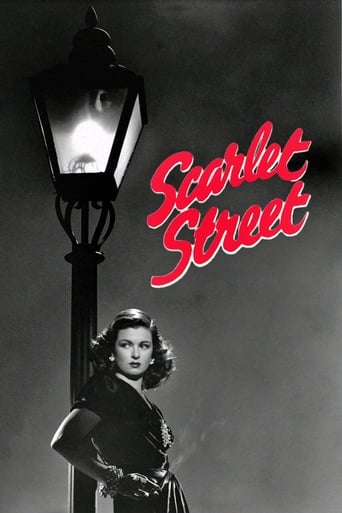
- Scarlet Street (1945) - themes of psychological manipulation
- The Killers (1946) - past crimes catching up to characters
- Ace in the Hole (1951) - media manipulation and corruption themes
Film restoration
The film is well-preserved in the Paramount Pictures archives and has been restored multiple times. The original camera negative is maintained in optimal condition. The film entered the public domain in some regions due to copyright renewal issues, which has led to numerous home video releases of varying quality. The Criterion Collection released a restored version in 2020 with a new 4K digital transfer from the original nitrate negative. The film is also preserved in the Library of Congress's National Film Registry for its cultural and historical significance.
Where to watch
- The Criterion Channel (streaming)
- Amazon Prime Video (for purchase/rent)
- Apple TV/iTunes
- Google Play Movies
- Vudu
- DVD and Blu-ray from Criterion Collection
- Turner Classic Movies (occasional broadcasts)
- Public domain versions on YouTube and Internet Archive (variable quality)