
The Vanishing American
"The Vanishing American (1925)"
Keys: Space play/pause · ←/→ 10s · F fullscreen · M mute · </> speed
About this film
American silent Western film produced by Famous Players–Lasky and distributed through Paramount Pictures. The film was directed by George B.
Cast & crew
More films like this
More Western films
View all →

More from George B. Seitz
View all →
More about this film
About the production
Release dateNovember 23, 1925
Box officeThe film was a commercial success, though exact figures are not recorded. It reportedly earned over $1 million at the box office, making it one of Paramount's profitable releases of 1925
ProductionParamount Pictures, Famous Players-Lasky Corporation
Filmed inMonument Valley, Arizona/Utah, Navajo Reservation, Arizona, Bishop, California, Paramount Studios, Hollywood, California
The film was one of the first major Hollywood productions to feature extensive location shooting in the American Southwest. Director George B. Seitz and his crew spent weeks filming on the Navajo reservation, working with actual tribal members as extras. The production faced significant challenges due to the remote locations, including extreme weather conditions and logistical difficulties in transporting equipment. The film's battle scenes were particularly ambitious for their time, involving hundreds of extras and complex choreography. Notably, the production hired several Native Americans as consultants to ensure cultural accuracy, though modern standards would still find many aspects problematic.
Themes
Cultural identity and assimilationGovernment corruption and exploitationThe conflict between tradition and modernityRacial prejudice and discriminationThe myth of the 'vanishing race'
Themes & topics
NavajoReservationIndian AgentWorld War ICultural conflictCorruptionWesternSilent filmSocial justiceRomanceBattleEducationAssimilationNative AmericanZane Grey adaptation
Historical background
The Vanishing American (1925) emerged during late silent cinema and the transition toward sound, when exhibition habits and national film industries were still taking shape.
Why this film matters
The Vanishing American remains accessible through digital archives, giving modern viewers a direct link to 1925 screen culture.
Making of
The production of 'The Vanishing American' was groundbreaking in many ways for its time. Director George B. Seitz insisted on extensive location shooting to capture the authentic beauty of the American Southwest, a relatively unusual practice in 1925 when most films were shot on studio backlots. The crew spent nearly two months on location in Monument Valley and the Navajo reservation, living in tents and dealing with harsh desert conditions. The relationship between the film company and the Navajo people was complex - while many tribe members were employed as extras and paid wages, there were also tensions about cultural representation. The film's star, Richard Dix, spent time with the Navajo to prepare for his role, though modern critics note the problematic nature of a white actor playing a Native American character. The battle sequences, depicting both tribal warfare and World War I combat, required elaborate planning and coordination. The production employed several technical innovations, including the use of long lenses to capture sweeping landscape shots that would influence future Western cinematography.
What critics said
Retrospective notes on The Vanishing American emphasize its value as a transitional sound-era artifact rather than blockbuster reception.
Did you know?
- Based on the 1925 novel 'The Vanishing American' by Zane Grey, which was originally published as a serial in Ladies' Home Journal
- Was one of the first major Hollywood films to feature a Native American protagonist and present a sympathetic view of Native American issues
- Over 500 Navajo tribe members were used as extras during the location filming in Arizona
- The film's original running time was 140 minutes, but it was cut to 110 minutes for theatrical release
- Richard Dix, who played the Native American lead, was actually of Swedish and Scottish descent - a common practice of the era known as 'redface'
- The film sparked controversy upon release for its critical portrayal of the U.S. government's treatment of Native Americans
- A sequel titled 'The Red Frontier' was planned but never produced due to the transition to sound films
- The film's battle sequences were considered groundbreaking for their realism and scale in 1925
- Noah Beery's performance as the villainous agent Booker was so convincing that he received death threats from viewers who couldn't separate the actor from the character
- The film was selected for preservation in the National Film Registry in 1995 for its cultural significance
Awards & recognition
- Photoplay Medal of Honor (1925) - Winner
- National Board of Review - Top Ten Films of 1925
- Academy Film Archive - Selected for preservation (1995)
Visual style
The cinematography by James Wong Howe was revolutionary for its time, particularly in its use of location shooting to capture the majesty of the American Southwest. Howe employed innovative techniques including deep focus photography and extensive use of natural lighting, which gave the film a documentary-like authenticity that was rare in 1925. The sweeping landscape shots of Monument Valley, filmed with newly developed wide-angle lenses, created a sense of epic scale that would influence countless future Westerns. The battle sequences were shot with a dynamic, almost newsreel-like quality that enhanced their impact. Howe's use of contrast and shadow in the interior scenes created a film noir-like atmosphere that was ahead of its time. The cinematography earned special praise from contemporary critics, with Photoplay magazine calling it 'the most beautiful photography of the American West ever captured on film.'
Innovations
The Vanishing American pioneered several technical innovations that would influence future filmmaking. The production was among the first to use extensive location shooting for a narrative feature, demonstrating the dramatic potential of authentic outdoor settings. The film employed innovative camera techniques including crane shots for the sweeping landscape sequences and handheld cameras for the battle scenes, creating a sense of immediacy and realism. The makeup department developed new techniques for creating realistic Native American appearances, though these would later be criticized as part of 'redface' practices. The film's editing, particularly in the action sequences, was unusually dynamic for its time, using rapid cuts and cross-cutting to build tension. The production also utilized new lighting equipment that could be transported to remote locations, allowing for filming during the 'magic hour' to capture the desert landscape at its most beautiful.
Music
As a silent film, The Vanishing American originally featured a musical score composed by Hugo Riesenfeld, one of the era's most prominent film composers. Riesenfeld's score incorporated traditional Native American musical themes alongside classical orchestral arrangements, creating a unique sound that reflected the film's cultural themes. The score was performed live in theaters by house orchestras, with cue sheets provided to ensure consistency across venues. For the film's more dramatic moments, Riesenfeld used leitmotifs to represent different characters and themes, particularly a recurring melody associated with Nophaie's cultural conflict. The original score has been lost, but modern screenings of restored versions often feature newly commissioned scores that attempt to recreate Riesenfeld's blend of Western and Native American musical elements.
Famous quotes
We are not vanishing. We are changing, but we will not disappear.
The white man's ways are not always better, just different.
You cannot own the land. The land owns us.
In war, I fought for your country. In peace, I must fight for my people.
Education without understanding is just another form of oppression.
Memorable scenes
- The opening sequence showing the vast beauty of Monument Valley with the Navajo people living traditionally before white encroachment
- Nophaie's emotional return from boarding school, struggling to reconnect with his family and traditions
- The climactic battle scene where Nophaie leads his people against the corrupt agent's forces
- The World War I trench sequence, starkly contrasting with the earlier tribal warfare
- The final confrontation between Nophaie and Agent Booker on the edge of the canyon
- The romantic scene between Nophaie and Marian Warner by the desert spring, highlighting their cultural differences
What audiences thought
The Vanishing American was a significant commercial success upon its release, resonating strongly with audiences of its time. Many viewers were moved by its sympathetic portrayal of Native American characters and its critique of government corruption. The film's battle sequences and romantic subplot also appealed to mainstream moviegoers. Contemporary newspaper accounts report that audiences often gave the film standing ovations, and it played to packed houses in major cities across the country. The film generated considerable discussion about Native American rights, with some audience members reportedly inspired to join reform movements. However, some viewers, particularly in Western states, objected to what they saw as an unpatriotic criticism of the U.S. government. Despite some controversy, the film's box office success demonstrated that audiences were ready for more socially conscious content in their entertainment.
Film connections
Influenced by
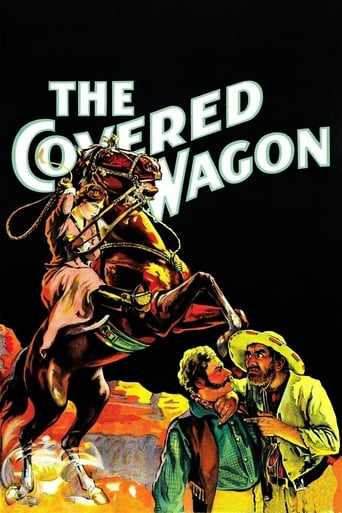
- The Covered Wagon (1923)
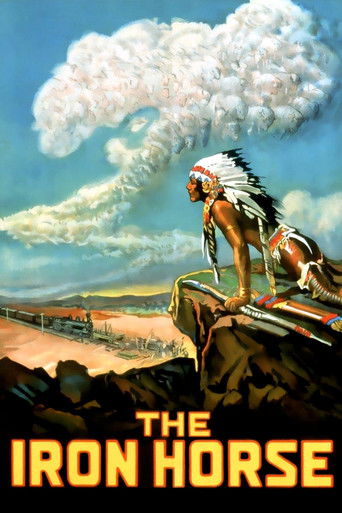
- The Iron Horse (1924)
- Zane Grey's novels
- D.W. Griffith's Westerns
- Documentary footage of Native American life
- Contemporary newspaper reports about reservation conditions
This film influenced
- Stagecoach (1939)
- Fort Apache (1948)
- Broken Arrow (1950)
- Dances with Wolves (1990)
- Smoke Signals (1998)
- The New World (2005)
Film restoration
The Vanishing American has been partially preserved, though it exists in an incomplete form. The original 140-minute version is considered lost, with only the 110-minute theatrical cut surviving. The film was preserved by the Museum of Modern Art and the UCLA Film and Television Archive in the 1970s. In 1995, it was selected for preservation in the United States National Film Registry by the Library of Congress for being 'culturally, historically, or aesthetically significant.' A restored version was released in 2005 with newly created intertitles to replace missing footage. Some scenes, particularly from the original longer cut, exist only as still photographs or written descriptions. The surviving footage shows some deterioration but remains largely viewable, with the color tinting sequences particularly well-preserved.
Where to watch
- The Criterion Collection (Blu-ray/DVD)
- Kino Lorber (DVD release)
- The Library of Congress National Film Registry screenings
- Museum of Modern Art film collection
- UCLA Film & Television Archive
- Turner Classic Movies (occasional broadcasts)
- Various public domain streaming sites (quality varies)
- Film archives and cinematheques worldwide