
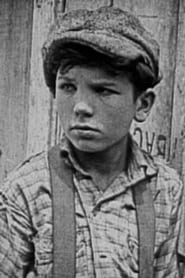
Three's a Crowd
"A lonely man spies love through a telescope"
Keys: Space play/pause · ←/→ 10s · F fullscreen · M mute · </> speed
About this film
Harry, The Odd Fellow, is a tenement worker who lives alone in a shack alongside a warehouse and longs for the companionship of a wife and children like other men. One day he spies a pretty girl in his telescope and sends her by carrier pigeon a note that, alas, is received by th.
Cast & crew
More films like this

More Comedy films
View all →






More from Harry Langdon
View all →
More about this film
About the production
Release dateMarch 12, 1927
Box officeUnknown - modest performance reported
ProductionHarry Langdon Corporation
Filmed inLos Angeles, California, Hollywood Studios
This was one of the first films Harry Langdon directed himself after his famous split with collaborators Frank Capra and Harry Edwards. The production was notably troubled, with Langdon struggling to balance directing duties with his performance requirements. The snowstorm sequences were created using artificial snow made from cotton and salt, a common technique in silent film production. The shack set was built on a studio backlot and designed to look authentically dilapidated while still allowing for camera movement and lighting.
Themes
Loneliness and isolationUnrequited loveSelf-sacrificeThe illusion of familyUrban poverty
Themes & topics
silent comedylonely manmistaken identitysnowstormChristmasbabyshacktelescopecarrier pigeonunrequited lovepovertysacrificefrozenpathos
Historical background
Silent-era audiences encountered Three's a Crowd around 1927, as studios refined cross-cutting and star-driven storytelling.
Why this film matters
Three's a Crowd shows how silent filmmakers conveyed plot through gesture, title cards, and editing.
Making of
The production of 'Three's a Crowd' marked a critical juncture in Harry Langdon's career, representing his attempt to prove he could succeed without his former collaborators. Langdon invested much of his own money into the project, convinced that his unique comedic vision could translate to directing. The set design was particularly important to Langdon, who personally oversaw the construction of the shack to ensure it reflected the character's poverty while still being visually interesting. The snowstorm sequences presented significant technical challenges, requiring the crew to develop new methods for creating realistic winter conditions on an indoor set. Cast members reported that Langdon was a demanding director who often required multiple takes to achieve his precise comedic timing, particularly for scenes involving physical comedy. The film's emotional ending was controversial among studio executives who feared it was too bleak for a comedy, but Langdon insisted on keeping it as written.
What critics said
Press notices for Three's a Crowd (1927) are sparse in digitized sources; interest today rests on preserved prints and comparison with related titles.
Did you know?
- This was Harry Langdon's directorial debut, marking a significant turning point in his career after his break with Frank Capra
- The film's original working title was 'The Odd Fellow' before being changed to 'Three's a Crowd'
- The carrier pigeon used in the film was actually trained and performed the scene in one take
- Harry Langdon performed his own stunts, including the frozen scene which required him to remain motionless for extended periods
- The baby in the birth scene was played by twins to accommodate filming schedules
- The film was shot in just three weeks, an unusually short schedule even for the era
- Langdon's characteristic 'baby face' expression was enhanced with special makeup techniques developed specifically for
- The Christmas Eve sequence was filmed during July with artificial snow and cooling systems for the actors
- was part of a three-picture deal Langdon had with First National Pictures
- The telescope prop was custom-made and actually functional, allowing Langdon to see the set from a distance
Visual style
The cinematography, credited to William Williams, employed techniques characteristic of late silent era filmmaking while serving Langdon's specific comedic needs. The camera work emphasizes Langdon's expressive face through careful lighting and composition, particularly in scenes requiring emotional subtlety. The snowstorm sequences utilized innovative lighting techniques to create the illusion of falling snow while maintaining visibility for the camera. The cramped shack set presented challenges for camera movement, leading to creative solutions involving mirrors and strategically placed windows. The telescope shots were accomplished using special lenses that created a distorted perspective, enhancing the voyeuristic quality of those scenes. The film's visual style balances the artificiality of studio sets with naturalistic lighting in key emotional moments, creating a visual language that supports both comedy and pathos. The Christmas Eve sequence features particularly effective use of shadow and light to create a mood that transitions from festive to melancholic.
Innovations
While not groundbreaking in technical innovation, 'Three's a Crowd' employed several notable techniques for its time. The film's use of multiple camera angles in the confined shack set was more sophisticated than typical for comedies of the era. The snowstorm effects, created using a combination of cotton, salt, and wind machines, were considered quite realistic for 1927. The film also featured some early examples of match cutting between Harry's actions and their emotional consequences, a technique that would become more common in sound films. The telescope shots required special optical equipment to create the desired distortion effect. The frozen ending sequence involved innovative makeup techniques to create the appearance of frostbite while allowing Langdon's eyes to remain mobile for the final gag. The film's editing, particularly in the rapid-fire comedic sequences, demonstrated a sophisticated understanding of rhythm and timing that enhanced the humor.
Music
As a silent film, 'Three's a Crowd' would have been accompanied by live musical performance during its original theatrical run. The typical score would have been compiled from popular classical pieces and mood music from the era, with specific themes for different characters and situations. The lonely scenes featuring Harry's character would likely have been accompanied by melancholic piano or violin pieces, while the comedic sequences would have used more upbeat, ragtime-inspired music. The snowstorm scenes would have featured dramatic, percussive music to enhance the sense of danger and isolation. Modern restorations of the film have featured newly composed scores by silent film accompanists, typically using piano or small ensemble combinations. These contemporary scores attempt to capture the emotional range of the film while respecting the musical conventions of the silent era. The Christmas Eve sequence, being particularly emotional, would have received special musical attention in both original and modern presentations.
Famous quotes
Intertitle: 'Even the loneliest man dreams of a family'
Intertitle: 'Love knows no boundaries - even carrier pigeons can carry it'
Intertitle: 'Christmas Eve - when miracles happen to everyone but me'
Intertitle: 'Sometimes being good means being forgotten'
Intertitle: 'Frozen in time, but not in heart'
Memorable scenes
- Harry watching the girl through his telescope with longing expression
- The carrier pigeon delivering the love note to the wrong recipient
- The dramatic birth scene in the tiny shack during the snowstorm
- Harry working multiple jobs simultaneously to support the mother and child
- The Christmas Eve scene where Harry prepares to play Santa while the family reunites
- The final iconic shot of Harry frozen on the doorstep with only his eyes moving
What audiences thought
Audience response in 1927 was generally positive, though the film didn't achieve the box office success of Langdon's earlier collaborations with Frank Capra. Moviegoers appreciated Langdon's trademark 'baby face' antics and the film's emotional moments, though some found the ending too bleak for a comedy. The film performed better in urban areas where its themes of loneliness and urban isolation resonated more strongly. In subsequent decades, as silent films became less accessible to general audiences, 'Three's a Crowd' developed a cult following among silent film enthusiasts who discovered it through revivals and film society screenings. Modern audiences who have seen the film through restoration projects have often expressed surprise at its emotional complexity, with many noting that it challenges preconceptions about the simplicity of silent comedy. The film has particularly found appreciation among viewers interested in the more melancholic side of silent comedy, offering a contrast to the more upbeat works of Langdon's contemporaries.
Film connections
Influenced by
- The films of Charlie Chaplin (particularly the blend of comedy and pathos)
- Harold Lloyd's everyman character
- Buster Keaton's deadpan expression
- Earlier Langdon films directed by Frank Capra
- Stage melodramas of the 19th century
- Vaudeville comedy traditions
This film influenced
- Later Langdon films as director
- Jacques Tati's character comedies
- Jerry Lewis's more sentimental films
- Jim Carrey's dramatic comedy roles
- The sentimental comedies of the 1930s
Film restoration
The film survives in its complete form and has been preserved by several film archives including the Library of Congress and the UCLA Film & Television Archive. A restored version was released in the 1990s with a new musical score. While the original nitrate prints have deteriorated, several 35mm copies exist in various archives worldwide. The film has been digitized for preservation purposes and is occasionally screened at silent film festivals and special events.
Where to watch
- Available on DVD from specialty silent film distributors
- Streaming on The Criterion Channel (periodically)
- Available for viewing at the Library of Congress Packard Campus
- Occasionally screened at silent film festivals
- Accessible through some university film archives and libraries
- Available on YouTube through authorized uploads from archives