
Untamed
"fate and in collide"
Keys: Space play/pause · ←/→ 10s · F fullscreen · M mute · </> speed
About this film
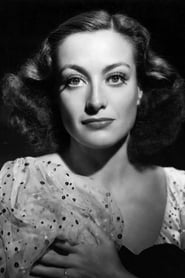
Following Jazz Age life, in her first Talkie, Joan Crawford plays Bingo, a jungle-raised oil heiress, who turns Manhattan upside down in her hunt for Andy McAllister, the man of her dreams. Unfortunately for Bingo, Andy is penniless and refuses to agree to the match until he can provide for the wild, ric
Cast & crew
More films like this
More Drama films
View all →







More from Jack Conway
View all →
More about this film
About the production
Release dateNovember 23, 1929
Box officeUnknown
ProductionMetro-Goldwyn-Mayer (MGM)
Filmed inMGM Studios, Culver City, California
This was Joan Crawford's first talking picture, a significant milestone in her career. The production faced the typical challenges of early sound films, including bulky microphone equipment that limited camera movement. The jungle sequences were created on studio sets rather than on location. Crawford had to undergo voice coaching to ensure her speaking voice was suitable for sound films, as many silent film stars struggled with the transition to talkies.
Themes
Wealth and class conflictCivilization vs. naturePersonal pride vs. loveCultural adaptationGender roles in society
Themes & topics
oil heiressjungle upbringingfirst talkieromanceclass differencesManhattan settingpennyless suitorfamily oppositionfish out of waterwealthy protagonist
Historical background
Made in 1929, Untamed belongs to the Jazz Age and carries the visual and narrative habits of its time. The script was adapted by Sylvia Thalberg and Frank Butler, with dialogue by Willard Mack, from a story by Charles E. Scoggins.
Why this film matters
For collectors of early and classic cinema, Untamed illustrates the range of subjects and styles that reached theaters in 1929.
Making of
The production of 'Untamed' took place during a revolutionary period in Hollywood history - the transition from silent films to talkies. MGM invested significantly in sound technology, and this film was part of their strategy to convert their successful silent stars to sound. Joan Crawford, who had been a major silent film star, underwent extensive voice training to prepare for her speaking debut. The studio was initially concerned about her vocal qualities, but her performance proved successful. Director Jack Conway had to adapt his directing style to accommodate the technical limitations of early sound recording, which required microphones to be hidden in set pieces and restricted camera movement. The cast had to learn to project their voices naturally while avoiding the exaggerated acting styles common in silent films. The jungle sets were among the most expensive elements of the production, designed to create an exotic backdrop for the character's backstory.
What critics said
Critics writing near 1929 focused on how Untamed compared with rival titles in the same season.
Did you know?
- This was Joan Crawford's first talking film, marking her successful transition from silent pictures to sound cinema.
- The film was released just days after the stock market crash of 1929, which may have affected its box office performance.
- Joan Crawford's character was originally written to be more comedic, but was rewritten to be more dramatic to showcase Crawford's serious acting abilities.
- The film's title 'Untamed' referred both to the character's jungle upbringing and her wild, uninhibited personality.
- Robert Montgomery and Joan Crawford would later star together again in 'Our Blushing Brides' (1930).
- Early sound technology required actors to stand relatively still while speaking, which influenced the film's staging.
- Ernest Torrence, who played Uncle Ben, died shortly after completing this film, making it one of his final performances.
- The jungle sequences were considered quite elaborate for their time, featuring detailed set designs and exotic props.
- MGM heavily promoted the film as Crawford's 'talkie debut' in their marketing campaigns.
- The film's screenplay was based on an original story by Charles E. Whittaker.
Visual style
The cinematography of 'Untamed' reflects the transitional period of early sound cinema, when cameras were often confined to soundproof booths to prevent microphone interference. Cinematographer Oliver T. Marsh had to work within these technical constraints while still creating visually interesting scenes. The film features the high-key lighting typical of MGM productions of the era, with careful attention to lighting Crawford's face to maximize her star appeal. The jungle sequences utilize creative set design and lighting to create an exotic atmosphere, contrasting with the more sophisticated urban settings of New York. The camera work is more static than in late silent films, a necessary adaptation to early sound recording equipment, but Marsh manages to maintain visual interest through composition and lighting variations.
Innovations
As one of MGM's early sound productions, 'Untamed' represented several technical achievements for the studio. The film successfully demonstrated that silent film star Joan Crawford could make the transition to sound pictures, validating MGM's investment in her career. The production utilized the latest sound recording technology available in 1929, including improved microphone placement techniques that allowed for slightly more camera movement than in very early talkies. The jungle set designs incorporated innovative techniques for creating exotic environments within studio limitations. The film's sound mixing, while primitive by modern standards, was considered advanced for its time, successfully balancing dialogue, music, and sound effects. The technical team managed to overcome many of the challenges of early sound recording to create a coherent and engaging audio-visual experience.
Music
The film's musical score was composed by William Axt, who was one of MGM's primary composers during the late 1920s and early 1930s. As an early sound film, 'Untamed' featured both synchronized music and dialogue, typical of the hybrid productions of the transition period. The score included romantic themes for the love scenes, more exotic-sounding music for the jungle sequences, and lighter comedic pieces for the film's humorous moments. The soundtrack also included diegetic music, such as background music in social scenes. The sound quality reflects the technical limitations of 1929 recording technology, with some hiss and limited dynamic range, but was considered quite good for its time. The musical elements helped smooth the transition between scenes and enhanced the emotional impact of key moments.
Famous quotes
Bingo: 'I'm not civilized! I'm untamed! That's what they call me, and that's what I am!'
Andy: 'I won't marry you until I can support you properly. It's a matter of pride.'
Uncle Ben: 'That young man is after your money, Bingo. All of them are.'
Bingo: 'In the jungle, we take what we want. Here, I want you!'
Andy: 'You're the wildest, most wonderful girl I've ever met, but you're also the richest!'
Memorable scenes
- The opening sequence introducing Bingo's jungle upbringing, complete with exotic animals and tribal influences, establishing her wild nature before she arrives in civilization.
- Bingo's dramatic entrance at a high society party, where her unconventional behavior and clothing shock the sophisticated guests.
- The scene where Bingo attempts to cook for Andy in her apartment, resulting in comedic chaos as her jungle skills prove useless in a modern kitchen.
- The emotional confrontation between Bingo and Uncle Ben where he reveals his opposition to her relationship with Andy.
- The final reconciliation scene where Andy finally accepts Bingo's love despite their class differences.
What audiences thought
Audiences in 1929 responded positively to 'Untamed,' particularly fans of Joan Crawford who were eager to hear their favorite star speak. The film performed reasonably well at the box office, considering the timing of its release during the early days of the Depression. Moviegoers were fascinated by the novelty of sound films and were drawn to stories featuring glamorous stars in romantic situations. Crawford's portrayal of the wild, untamed heiress resonated with audiences seeking escapist entertainment during increasingly difficult economic times. The film's mix of romance, comedy, and drama appealed to broad audiences, and the chemistry between Crawford and Montgomery was particularly well-received. While not as financially successful as some of MGM's other productions of the period, the film solidified Crawford's status as a bankable star in the sound era.
Film connections
Influenced by
- The Jazz Singer (1927) - as an early sound film
- Silent film romantic dramas
- Theatrical drawing-room comedies
- Jungle adventure films of the 1920s
This film influenced
- Our Blushing Brides (1930) - reuniting Crawford and Montgomery
- Possessed (1931) - another Crawford drama
- Early sound romantic comedies
Film restoration
The film is preserved in the MGM/UA film library and has been archived at the Turner Entertainment Company. While not widely available on modern home media formats, copies exist in film archives and have been occasionally shown on classic film channels. The sound elements are intact, making it a valuable example of early sound cinema. The film has not undergone a major restoration, but existing prints are generally in good condition for a film of its age.
Where to watch
- The film is occasionally broadcast on Turner Classic Movies (TCM)
- Available through some classic film streaming services
- Can be found in specialty film archives and libraries
- May be available through Warner Bros. Archive Collection on DVD
- Some public domain versions may exist on online platforms