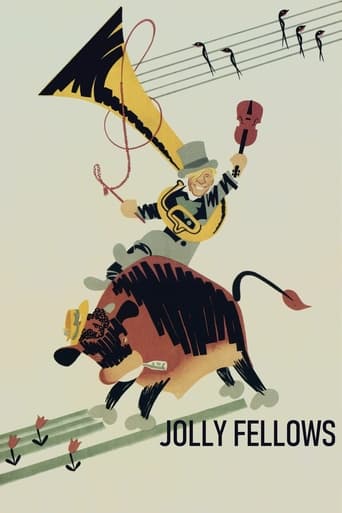
Volga - Volga
"When widely changes everything"
Keys: Space play/pause · ←/→ 10s · F fullscreen · M mute · </> speed
About this film
Not far from pre-war life, widely claimed to be Joseph Stalin's favorite movie, this classic musical comedy is a must-see. The action takes place on a steamboat on the iconic Volga River, as two groups of performers travel to Moscow to perform in the Moscow Musical Olympiad.
Cast & crew
More films like this
More Comedy films
View all →







More from Grigori Aleksandrov
View all →

More about this film
About the production
Release dateApril 24, 1938
BudgetApproximately 2 million Soviet rubles (a substantial budget for its time)
Box officeExtremely successful - became one of the highest-grossing Soviet films of the 1930s with over 20 million tickets sold in the first year alone
ProductionMosfilm Studios
Filmed inMoscow, Russia, Volga River locations, Mosfilm Studios soundstages
The production was a massive undertaking for Soviet cinema at the time, requiring elaborate set constructions of steamboats and riverside villages. The film featured over 3,000 extras in the final musical sequences. Director Grigori Aleksandrov, who was married to star Lyubov Orlova, spared no expense in creating lavish musical numbers that rivaled Hollywood productions. The famous steamboat was built specifically for the film at Mosfilm studios, complete with working engines and detailed interiors. The production faced challenges with Soviet censorship regarding certain comedic elements, but Stalin's personal approval helped smooth these issues.
Themes
The triumph of authentic folk art over pretentious professionalismThe power of music to unite people across social divisionsThe celebration of Soviet optimism and collective achievementThe journey from provincial simplicity to metropolitan sophisticationThe tension between bureaucracy and genuine creativity
Themes & topics
Historical background
The 1938 premiere of Volga - Volga coincided with broader shifts in pre-war culture, from technology to social norms. It centres on a group of amateur performers on their way to Moscow to perform in a talent contest called the Moscow Musical Olympiad. Most of the action takes place on a steamboat travelling on the Volga River.
Why this film matters
Volga - Volga has outlived its original run as a document of pre-war popular entertainment and craft. Volga-Volga (Russian: Волга-Волга) is a Soviet musical comedy directed by Grigori Aleksandrov, released on April 24, 1938.
Making of
The making of 'Volga - Volga' was a monumental undertaking that represented the pinnacle of Soviet musical cinema. Director Grigori Aleksandrov, who had studied filmmaking techniques in Hollywood under Sergei Eisenstein, brought American musical sensibilities to Soviet cinema. The production took nearly two years to complete, with extensive location shooting along the actual Volga River combined with massive studio sets. Lyubov Orlova, already established as Soviet cinema's premier musical star, underwent months of rigorous training for her role, learning traditional folk dances and practicing her vocal performances daily. The film's elaborate musical numbers required choreography for hundreds of performers, and the famous sequence on the steamboat deck took weeks to perfect. Interestingly, the film's political undertones about the triumph of common people over bureaucrats were carefully balanced to avoid offending Soviet authorities, while still delivering a subtle message about artistic authenticity versus pretentiousness. The production team faced numerous challenges, including limited film stock and technical equipment, but overcame these obstacles through innovative techniques and sheer determination.
What critics said
Re-evaluation in film journals has kept Volga - Volga in circulation among enthusiasts who track pre-war releases.
Did you know?
- Joseph Stalin reportedly watched the film over 100 times and kept a personal copy in his Kremlin office, calling it his favorite movie
- The song 'The Volga flows' became especially popular songs in Soviet history and is still recognized throughout Russia today
- Lyubov Orlova performed all her own singing and dancing in the film, showcasing her remarkable talents as Stalin's favorite actress
- The film was submitted for an Academy Award for Best Original Score in 1939, though it did not receive a nomination
- The steamboat used in filming was named 'Seagull' and was actually a floating set built on a platform in the Mosfilm studio tank
- Director Grigori Aleksandrov originally wanted to make a film about American jazz musicians but was persuaded to create a Soviet musical comedy instead
- The film's success led to Orlova and Aleksandrov receiving the Order of Lenin, the Soviet Union's highest civilian honor
- Many of the background performers were actual folk musicians recruited from villages along the Volga River
- The film was one of the few Soviet productions of its era to be exported and shown in multiple countries, including the United States
- Stalin allegedly personally intervened to ensure the film received the best possible distribution and promotion throughout the USSR
Awards & recognition
- Stalin Prize (1941) - First Class for Grigori Aleksandrov and Lyubov Orlova
- Order of Lenin awarded to Grigori Aleksandrov for the film's cultural significance
- Order of Lenin awarded to Lyubov Orlova for her performance
- Venice Film Festival - Special Mention (1938)
- Best Soviet Film of 1938 by Soviet Film Critics Association
Visual style
The cinematography by Vladimir Nikolaev was groundbreaking for Soviet cinema, employing innovative techniques that rivaled Hollywood productions. The film featured elaborate tracking shots along the Volga River, using cranes and dollies to create fluid, dynamic movements that enhanced the musical sequences. The lighting design was particularly sophisticated, with carefully orchestrated illumination that highlighted Orlova's performances and created dramatic contrasts between the sunny outdoor scenes and intimate interior moments. The steamboat sequences presented unique challenges, requiring the cinematography team to work in confined spaces while maintaining visual interest and capturing the energy of the musical numbers. The film's use of deep focus and composition techniques borrowed from German Expressionism added visual depth to even the simplest scenes. The color sequences, though limited, were technically impressive for the time, using experimental Soviet color processes that created vibrant, memorable images. The final musical performance at the Olympiad featured complex multi-camera setups that captured both the grand scale of the production and intimate character moments simultaneously.
Innovations
The film represented numerous technical breakthroughs for Soviet cinema, particularly in the realm of musical production. The Mosfilm studios constructed one of the largest water tanks in Europe for the river sequences, complete with wave-making machines and complex lighting rigs. The steamboat set was a marvel of engineering, featuring working engines, multiple decks, and the ability to rock realistically to simulate river travel. The film employed innovative sound recording techniques to capture the musical numbers, using multiple microphones and early mixing equipment to balance vocals with orchestral accompaniment. The cinematography team developed new camera movement systems to create fluid tracking shots that could keep pace with dancers and musicians. The film's special effects, while subtle by modern standards, were impressive for their time, including matte paintings that extended the river scenes and seamless transitions between location and studio footage. The production team also pioneered techniques for recording large musical numbers with hundreds of performers, solving acoustic challenges through innovative microphone placement and sound mixing methods.
Music
The film's soundtrack, composed by Isaak Dunayevsky with lyrics by Vasily Lebedev-Kumach, represents one of the greatest achievements in Soviet film music. The score seamlessly blends classical Russian folk traditions with contemporary popular music, creating a sound that was both familiar and innovative. The film's most famous song, 'The Volga flows' (Волга-Волга), became an instant classic and remains one of Russia's most beloved songs. Other memorable numbers include 'The Heart of a Sailor' and 'If the People Are Happy,' each showcasing different aspects of Soviet musical culture. The orchestration was particularly sophisticated, employing a full symphony orchestra augmented with traditional Russian folk instruments like balalaikas and accordions. The musical numbers were carefully integrated into the narrative, with each song advancing the plot or revealing character motivations. The recording quality was exceptional for the period, with clear vocals and well-balanced orchestral arrangements that held up well over time. The soundtrack was so popular that it was released as a separate album, a rarity for Soviet films of the era, and sold millions of copies throughout the USSR.
Famous quotes
The Volga flows, flows, flows, to the left, to the right! My song flows, flows, flows, to the left, to the right!
If the people are happy, then the government is good!
Art belongs to the people, not to the bureaucrats!
Every person has a song in their heart, you just need to help them find it!
The Volga is not just a river, it's the soul of Russia!
Memorable scenes
- The opening sequence where Dunya delivers mail while singing and dancing through her village, establishing her character's infectious energy
- The elaborate musical number on the steamboat deck where both performance groups compete with increasingly spectacular routines
- The final performance at the Moscow Musical Olympiad, featuring hundreds of performers in a grand celebration of folk art
- The tender scene where Captain Kuzma teaches Dunya a traditional folk song by the riverbank at sunset
- The comedic sequence where the pompous Byvalov attempts to conduct an orchestra despite having no musical ability
What audiences thought
The film was an unprecedented box office success in the Soviet Union, with millions of citizens attending multiple screenings. Audiences were particularly enchanted by Lyubov Orlova's performance and the film's memorable musical numbers, many of which became popular songs that people would sing in their daily lives. The film's humor and optimistic tone provided welcome relief from the grim realities of life during the Great Purge, making it a form of cultural escape for Soviet citizens. Reports from the time described packed theaters with audiences singing along to the musical numbers and applauding enthusiastically. The film's popularity extended beyond major cities to rural areas, where traveling projectionists would screen it in collective farms and village squares. Even decades after its release, the film remained beloved, with older generations introducing it to their children and grandchildren. The enduring affection for the film was demonstrated during the 1956 de-Stalinization period, when despite Stalin's association with the film, audiences continued to cherish it for its artistic merits rather than its political connections.
Film connections
Influenced by
- American musical comedies of the 1930s
- Busby Berkeley's elaborate musical numbers
- Russian folk theater traditions
- Soviet socialist realist art principles
- Hollywood's studio system production methods
- German Expressionist cinematography techniques
This film influenced
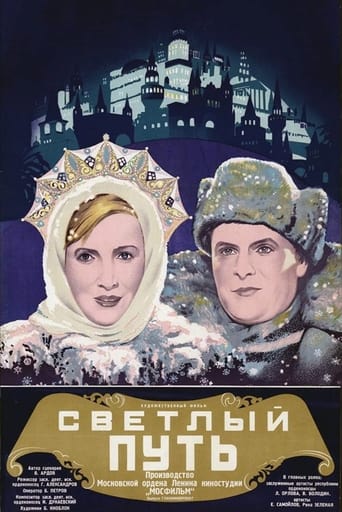
- The Bright Path
- another Aleksandrov-Orlova collaboration
- Kuban Cossacks
- Ivan Pyryev's musical epic
- Meeting on the Elbe
- influenced by its international themes
- Carnival Night
- Soviet comedy with musical elements
- The Irony of Fate
- referenced in this Soviet classic
Film restoration
The film has been excellently preserved by the Gosfilmofond, the Russian state film archive. Multiple high-quality prints exist, including the original camera negative. The film underwent a complete digital restoration in 2005 by Mosfilm, with color correction and sound enhancement that brought new life to the classic. The restored version was released on DVD and Blu-ray with English subtitles, making it accessible to international audiences. The soundtrack has been separately remastered and is available in high-quality digital formats. The film is considered part of Russia's cultural heritage and receives regular maintenance and preservation attention to ensure its survival for future generations.
Where to watch
- Available on streaming platforms with classic film collections
- Mosfilm's official YouTube channel occasionally features the film with English subtitles
- DVD and Blu-ray releases from Criterion Collection and other specialty distributors
- Available for purchase or rental on Amazon Prime Video
- Can be found on various classic movie streaming services
- Screenings at film festivals specializing in classic cinema
- Available through university film studies departments and libraries
- Some Russian cultural centers abroad maintain copies for public screenings