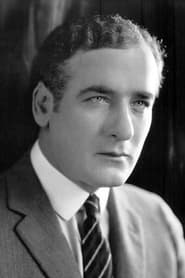

When a Man Loves
"A seminarian abandons the church for forbidden love."
Keys: Space play/pause · ←/→ 10s · F fullscreen · M mute · </> speed
About this film
A nobleman studying for the priesthood abandons his vocation in 18th Century France when he falls in love with a beautiful, but reluctant, courtesan.
Cast & crew
More films like this

More History films
View all →


More from Alan Crosland
View all →
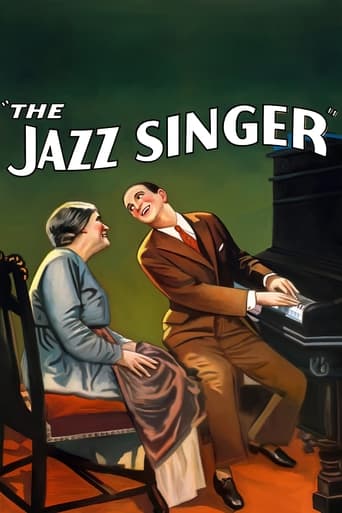

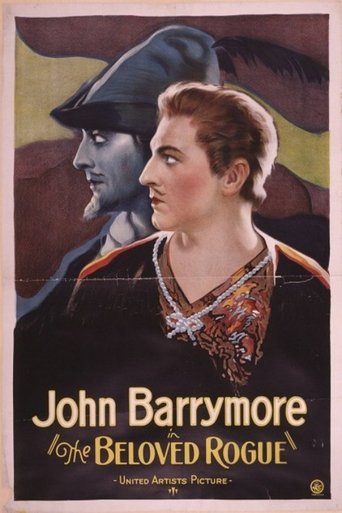
More about this film
About the production
Release dateMarch 5, 1927
Budget$378,000
Box office$1,100,000 (domestic)
ProductionWarner Bros. Pictures, The Vitaphone Corporation
Filmed inWarner Bros. Studios, Burbank, California
This was one of Warner Bros.' early Vitaphone productions, featuring a synchronized musical score and sound effects, though it was still essentially a silent film. The production was rushed to capitalize on Barrymore's success in 'Don Juan' (1926), another Vitaphone feature. The elaborate 18th-century costumes and sets were among the most expensive elements of the production, with period-accurate details that required extensive research.
Themes
Religious devotion vs. romantic loveCorruption of innocenceClass differences and social mobilityThe destructive power of greedRedemption through suffering
Themes & topics
18th century Francepriesthoodcourtesanforbidden lovetragedybetrayaldeportationaristocracyParisLouisianasacrificeredemption
Historical background
By 1927, When a Man Loves was shaped by late silent cinema technology, distribution, and audience expectations.
Why this film matters
When a Man Loves (1927) helps trace genre evolution, performer careers, and exhibition practices of its period.
Making of
The production marked a significant moment in cinema history as one of the early experiments with synchronized sound. Director Alan Crosland, who had also helmed 'Don Juan', worked closely with Warner Bros.' technical team to integrate the Vitaphone system. The recording process required actors to perform to playback of the pre-recorded musical score, a challenging technical feat for the time. John Barrymore, known for his theatrical background, adapted his acting style for the more intimate camera work required by the new technology. The relationship between Barrymore and Costello that developed during filming became Hollywood gossip, as both were married to other people when they began their affair. The production faced challenges with the cumbersome sound recording equipment, which limited camera movement and required innovative solutions from the cinematography team.
What critics said
Trade coverage around 1927 discussed When a Man Loves in terms of craft and audience appeal rather than blockbuster scale.
Did you know?
- This was the second film to use the Vitaphone sound-on-disc system, following 'Don Juan' (1926), also starring John Barrymore
- Dolores Costello and John Barrymore fell in love during filming and married in 1928, though their marriage ended in divorce in 1935
- The film is based on the 1731 novel 'L'Histoire du chevalier des Grieux et de Manon Lescaut' by Abbé Prévost
- Warner Oland, who plays Manon's brother, would later become famous as Charlie Chan in the 1930s film series
- The film's synchronized score was composed by Louis F. Gottschalk and included classical pieces adapted for the film
- A young Myrna Loy appears in an uncredited role as one of Manon's friends
- The film was shot in the early days of Technicolor Process 2, though the released version was entirely black and white
- Barrymore's performance was praised for its restraint compared to his more theatrical earlier silent work
- The Louisiana sequences were filmed on constructed sets in California, not on location
- The film's success helped establish Warner Bros. as a major player in the emerging sound film industry
Awards & recognition
- Photoplay Medal of Honor (1927) - Honorable Mention
Visual style
The cinematography, handled by Byron Haskin, employed the sophisticated lighting techniques that had become standard in late silent cinema. The film features extensive use of chiaroscuro lighting to create dramatic shadows and highlights, particularly in the Parisian sequences. The 18th-century settings allowed for elaborate compositions with architectural elements framing the actors. Camera movement was somewhat restricted by the sound recording requirements, leading to more static shots than in contemporary pure silent films. The film makes effective use of close-ups, particularly for Barrymore's expressive performance, while the period costumes and sets are rendered in rich detail through careful lighting and composition.
Innovations
As one of the early Vitaphone features, the film pioneered synchronized sound-on-disc technology for feature-length narratives. The production team developed new techniques for recording and playback that would influence subsequent sound films. The film demonstrated that silent films could be enhanced with synchronized music without requiring dialogue, providing an alternative to the 'all-talking' pictures that would soon dominate the industry. The synchronization of sound effects with visual action represented a significant technical challenge that was successfully overcome. The film also featured advanced makeup techniques for Barrymore's aging makeup in the later sequences, which were considered innovative for the time.
Music
The film featured a synchronized musical score composed by Louis F. Gottschalk, performed by the New York Philharmonic Orchestra. The Vitaphone system allowed for a full orchestral accompaniment synchronized to the picture, a significant advancement over the typical live theater organ accompaniment of the era. The score incorporated classical pieces by composers including Chopin and Debussy, adapted to match the film's romantic and tragic themes. Sound effects were also synchronized, including footsteps, doors closing, and ambient crowd noises, creating a more immersive experience than typical silent films. The soundtrack was recorded on 16-inch discs played in synchronization with the film projector, requiring careful timing and technical precision.
Famous quotes
I would give up God for you!" - Fabien des Grieux
Love is the only religion I need" - Manon Lescaut
In this world, we must choose between heaven and hell... and you are my heaven" - Fabien des Grieux
I am not what they think I am... I am what you made me" - Manon Lescaut
Memorable scenes
- The dramatic opening sequence where Fabien first sees Manon at the inn and immediately abandons his religious calling
- The lavish Parisian ballroom scene where Manon is introduced to high society, featuring elaborate costumes and set design
- The emotional confrontation scene between Fabien and Manon after she has become a courtesan, showcasing Barrymore's intense performance
- The tragic final scene on the Louisiana beach where Manon dies in Fabien's arms, filmed during sunset for maximum dramatic effect
What audiences thought
The film was a commercial success upon release, capitalizing on John Barrymore's popularity following 'Don Juan'. Audiences were particularly drawn to the romantic chemistry between Barrymore and Costello, both on-screen and off. The synchronized musical score was a novelty that attracted curious moviegoers eager to experience the latest technological advancement. Contemporary audience reports indicate that the film played well to both male and female viewers, with the romantic elements appealing particularly to women while the period adventure aspects attracted male patrons. The film's box office performance helped convince Warner Bros. executives to continue investing in sound technology, paving the way for 'The Jazz Singer' later that year.
Film connections
Influenced by
- Manon Lescaut (novel by Abbé Prévost)
- Manon Lescaut (opera by Giacomo Puccini)
- Manon (opera by Jules Massenet)
- Camille (play by Alexandre Dumas fils)
- La Dame aux Camélias (novel by Alexandre Dumas fils)
This film influenced
- Camille (1936)
- Moulin Rouge! (2001)
- Dangerous Beauty (1998)
- The Last of the Mohicans (1992) - for period romance elements
Film restoration
The film survives in complete form and has been preserved by the Library of Congress. A 35mm nitrate copy is held in the Warner Bros. archive, and the film has been transferred to safety film. The Vitaphone discs for the soundtrack also survive, allowing for complete restoration with synchronized sound. The film has been made available on DVD through Warner Archive Collection, featuring the original Vitaphone score.
Where to watch
- Warner Archive DVD
- The Criterion Channel (occasionally)
- Film streaming services specializing in classic cinema
- Film archives and cinematheques
- TCM (Turner Classic Movies) broadcasts