
1812
"A biopic about Prince Kutuzov, the defeater of Napoleon Bonaparte"
Keys: Space play/pause · ←/→ 10s · F fullscreen · M mute · </> speed
About this film
A biopic about Prince Kutuzov, the defeater of Napoleon Bonaparte.
Cast & crew
More War films
View all →

More from Vladimir Petrov
View all →

More about this film
About the production
Release dateMay 7, 1944
Box officeExtremely successful in USSR, viewed by millions during wartime
ProductionMosfilm Studio, Goskino
Filmed inMoscow Studios, Locations near Moscow depicting battlefields
Filmed during the height of World War II, with many cast and crew members serving in the military between takes. The production utilized actual military equipment and thousands of extras, including real soldiers, to create authentic battle sequences. The burning of Moscow scenes were particularly challenging to film safely during wartime resource constraints.
Themes
Patriotism and national identityLeadership and strategic wisdomSacrifice for the greater goodThe wisdom of experience over youthful impetuosityThe invincibility of the Russian homeland
Themes & topics
Napoleonic WarsPatriotic War of 1812Battle of BorodinoMoscow burningRussian victoryHistorical epicMilitary strategyNational defenseField Marshal KutuzovFrench invasionWinter retreatTsar Alexander IScorched earth tacticsRussian armyHistorical drama
Historical background
Released in 1944 during World War II and its aftermath, 1812 reached audiences when exhibitors were still defining programming conventions. The narrative hook—A biopic about Prince Kutuzov, the defeater of Napoleon Bonaparte—reflects what contemporary producers thought would draw viewers.
Why this film matters
1812 remains discussed by archivists tracing how screen stories of its period represented work, desire, conflict, and social order. Its central situation—A biopic about Prince Kutuzov, the defeater of Napoleon Bonaparte—still prompts questions about genre conventions and audience expectations.
Making of
The production of '1812' was a monumental undertaking that reflected the Soviet Union's commitment to historical cinema as a means of national education and propaganda. Director Vladimir Petrov, already renowned for his historical epics, insisted on absolute historical accuracy, consulting with military historians and visiting actual battlefield locations. The filming process was complicated by the ongoing war - many crew members were called away for military service, and resources were severely limited. Despite these challenges, or perhaps because of them, the production took on added significance as a symbol of Soviet cultural resistance. The battle sequences were particularly ambitious, utilizing real military units and equipment when available. Aleksey Dikiy spent months researching Kutuzov's mannerisms and speech patterns, even studying portraits and contemporary accounts to perfect his portrayal. The film's score, composed by Vissarion Shebalin, incorporated period Russian folk melodies and military marches to enhance the historical atmosphere.
What critics said
Trade and newspaper notices for 1812 generally emphasized casting, spectacle, and program fit rather than extended aesthetic argument. Retrospective screenings and archival notes continue to shape how viewers evaluate 1812 today.
Did you know?
- Part of director Vladimir Petrov's historical trilogy, following 'Kutuzov' (1943) and preceding 'Admiral Nakhimov' (1947)
- Filmed while Moscow was under threat of German attack during WWII, making the production particularly significant
- Aleksey Dikiy's portrayal of Kutuzov was so acclaimed that he became the definitive screen image of the historical figure
- The film's release coincided with the Soviet Union's push toward victory in WWII, drawing deliberate parallels between Napoleon's defeat and the coming defeat of Nazi Germany
- Over 10,000 extras were used in the battle scenes, many of whom were actual Red Army soldiers on leave
- The film was expensive Soviet productions of its time, utilizing massive resources despite wartime shortages
- Stalin personally approved the script and viewed the final cut before its release
- The Battle of Borodino sequence took over a month to film and required the construction of elaborate sets and fortifications
- Many of the costumes and props were authentic historical items or exact replicas from museum collections
- The film was simultaneously released with Russian and English versions for international distribution
Awards & recognition
- Stalin Prize, First Class (1946)
- Order of the Red Banner of Labour awarded to director Vladimir Petrov
- State Prize of the RSFSR for cinematographic achievement
Visual style
The cinematography by Yuri Yekelchik and Vladimir Nikolaev was for its time, particularly in the execution of large-scale battle sequences. The film employed innovative camera techniques including sweeping panoramic shots of troop movements, dynamic tracking shots during combat, and carefully composed tableaux vivants that recreated historical paintings. The use of deep focus allowed for complex compositions showing both foreground action and background details. The color sequences, though limited due to wartime technical constraints, were used strategically for maximum impact, particularly in scenes depicting the Russian landscape and military ceremonies. The cinematographers pioneered techniques for filming large-scale historical recreations that would influence subsequent Soviet epics. The visual style emphasized grandeur and spectacle while maintaining historical accuracy in costumes, uniforms, and military formations.
Innovations
The film pioneered several technical innovations in Soviet cinema, particularly in the realm of large-scale historical recreation. The production developed new techniques for coordinating thousands of extras in battle sequences, using military drill commands and signal systems to achieve complex choreography. The special effects team created innovative methods for simulating artillery fire and explosions safely on set. The burning of Moscow sequence utilized miniature photography combined with full-scale sets. The film's sound recording techniques for outdoor battle scenes were particularly advanced, using multiple microphones to capture authentic combat sounds. The costume department developed new methods for mass-producing historically accurate uniforms while maintaining quality and authenticity. These technical achievements set new standards for historical filmmaking in the Soviet Union and influenced subsequent productions.
Music
The musical score by Vissarion Shebalin incorporated authentic Russian folk melodies, military marches from the Napoleonic era, and original compositions that captured the epic scope of the narrative. The soundtrack featured performances by the USSR Symphony Orchestra and included choral arrangements using period Russian military songs. Shebalin's use of leitmotifs for different characters and themes added emotional depth to the narrative. The music deliberately contrasted French and Russian musical styles to emphasize the cultural conflict. The sound design, particularly in battle sequences, was innovative for its time, using layered audio to create immersive combat scenes. The film's theme music became popular in its own right and was frequently performed at concerts and on radio broadcasts during the war years.
Famous quotes
I would rather lose Moscow than lose Russia.
Kutuzov's strategic philosophy
Winter will be our best general.
Kutuzov predicting Napoleon's fate
A great army is not defeated until it believes itself defeated.
Kutuzov's wisdom
We trade space for time, and time for victory.
Kutuzov explaining his strategy
The Russian soldier fights not for pay, but for the motherland.
Narrator's commentary
Memorable scenes
- The Battle of Borodino sequence - A massive, meticulously choreographed battle scene showing tens of thousands of soldiers in authentic period uniforms, with innovative camera work capturing both the grand scale and individual human drama of the conflict
- The burning of Moscow - A spectacular sequence combining full-scale sets, miniatures, and innovative special effects to depict the dramatic destruction of Russia's ancient capital
- Kutuzov's war council - An intimate scene showcasing Dikiy's powerful performance as the aging commander makes the difficult decision to abandon Moscow
- Napoleon's retreat - A haunting sequence showing the French army's disastrous winter retreat through the Russian snow, emphasizing the human cost of invasion
- The victory celebration - A triumphant final scene combining military ceremony with folk celebrations, emphasizing Russian unity and cultural strength
What audiences thought
The film was enormously popular with Soviet audiences during its initial release, playing to packed theaters across the country. Many viewers drew direct parallels between the film's events and their own wartime experiences, finding inspiration and hope in the story of Russian victory. The film became required viewing for military units and factory workers, and was shown extensively in frontline areas to boost morale. Audience letters and reviews from the period reveal how deeply the film resonated with the Soviet people's sense of national pride and determination. In the decades following its release, '1812' became a staple of Soviet television programming, particularly during patriotic holidays and military commemorations. The film continues to be shown on Russian television and is available on streaming platforms, maintaining its connection with new generations of viewers interested in Russian history and cinema.
Film connections
Influenced by
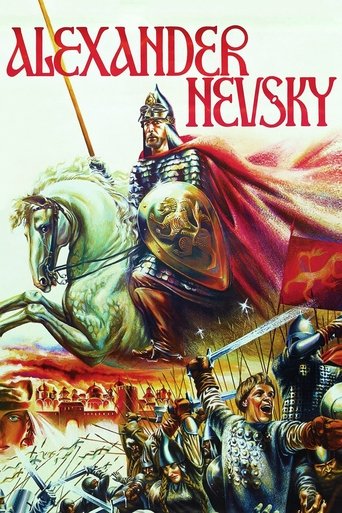
- Sergei Eisenstein's 'Alexander Nevsky' (1938) - for its historical epic structure and patriotic themes
- Soviet historical literature by Tolstoy and Pushkin depicting the 1812 war
- 19th-century Russian historical painting, particularly works by Vereshchagin
- Earlier Soviet historical films like 'Peter the Great' (1937-1939)
- Classical Russian opera and theater traditions of historical storytelling
This film influenced
- War and Peace (1956-1957) - Sergey Bondarchuk's epic adaptation
- The Battle of Borodino (1967) - Soviet television miniseries
- Waterloo (1970) - Rod Steiger's portrayal influenced by Dikiy's Kutuzov
- Later Soviet historical epics of the 1960s-1970s
- Modern Russian historical films about the Napoleonic era
Film restoration
The film is well-preserved in the Gosfilmofond archive in Russia, with both the original camera negative and multiple release prints maintained in climate-controlled conditions. The film has been digitally restored in high definition by Mosfilm as part of their classic film restoration project. Original elements including production stills, costume designs, and script materials are preserved in various Russian film archives. The film exists in both its original Russian version and an English-dubbed international version. Some deleted scenes and outtakes have been discovered and preserved, though they remain unreleased to the public.
Where to watch
- Available on Mosfilm's official YouTube channel with English subtitles
- Streaming on various Russian film platforms including KinoPoisk
- Available on DVD from Russian cinema distributors
- Occasionally broadcast on Russian television channels during historical commemorations
- Accessible through some international film streaming services specializing in classic cinema
- Available for viewing at film archives and cinematheques specializing in Soviet cinema