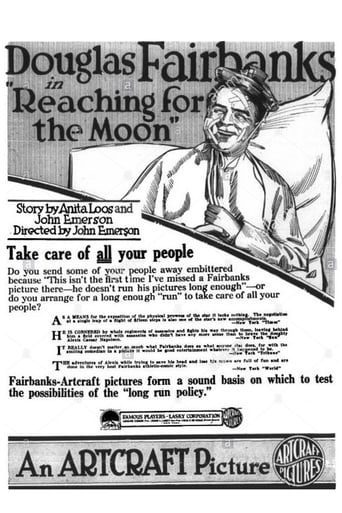
A Modern Musketeer
"A Kansas dreamer trades his Ford for adventure."
Keys: Space play/pause · ←/→ 10s · F fullscreen · M mute · </> speed
About this film
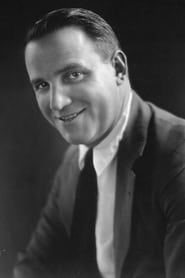
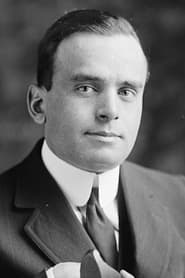
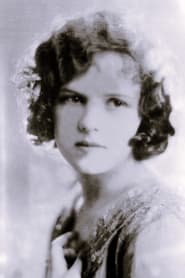
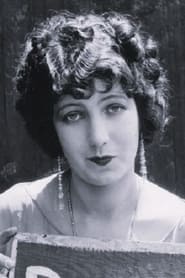
A young man grows restless living in a small Kansas town, dreaming of the adventures of the Three Musketeers. So in hopes of becoming a modern D'Artagnan, he mounts his steed (a Model T Ford) and sets out across the West in search of excitement and adventure.
Cast & crew
More films like this
More Adventure films
View all →

More from Allan Dwan
View all →
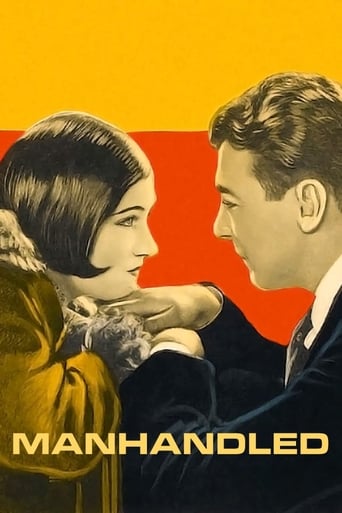
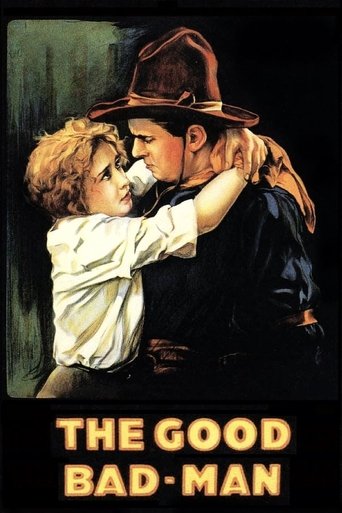
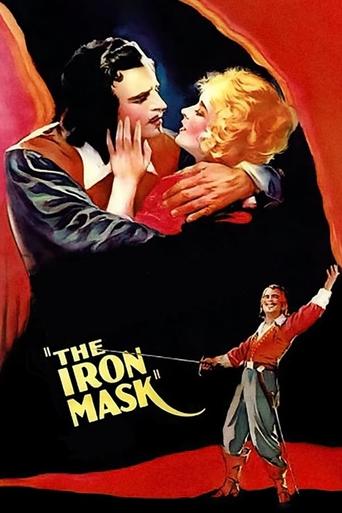


More about this film
About the production
Release dateNovember 11, 1917
Box officeVery successful - one of Fairbanks' biggest hits of 1917, grossing over $500,000
ProductionDouglas Fairbanks Pictures Corporation, Artcraft Pictures Corporation
Filmed inLos Angeles, California, San Fernando Valley, California, Santa Monica Mountains, California
This was one of the first films produced by Fairbanks' own company after leaving Triangle Film Corporation. The production utilized real locations rather than studio sets for many scenes, giving the film an authentic western feel. Fairbanks performed his own stunts, including several dangerous sequences with the Model T that required precise timing and athletic ability.
Themes
Modernization vs. TraditionThe Hero's JourneyAmerican IndividualismTechnology as EmpowermentThe Myth of the Frontier
Themes & topics
Historical background
By 1917, A Modern Musketeer was shaped by the silent era technology, distribution, and audience expectations.
Why this film matters
A Modern Musketeer (1917) helps trace genre evolution, performer careers, and exhibition practices of its period.
Making of
The production of 'A Modern Musketeer' marked a significant turning point in Douglas Fairbanks' career, representing his first foray into independent production after leaving Triangle Film Corporation. Fairbanks was deeply involved in every aspect of the film, from developing the story concept to overseeing the stunts. The Model T Ford featured in the film was reportedly a gift from Henry Ford himself, who was impressed with Fairbanks' work and wanted his automobile showcased in a major motion picture. Director Allan Dwan, who had worked with Fairbanks previously, encouraged the star to push the boundaries of what was considered possible in action sequences. The famous scene where Fairbanks leaps from the moving car onto a horse required multiple takes and nearly resulted in serious injury when the horse bolted unexpectedly. The film's success led to Fairbanks signing a lucrative distribution deal with Artcraft Pictures, giving him unprecedented control over his future projects and cementing his status as one of Hollywood's most powerful stars.
What critics said
Trade coverage around 1917 discussed A Modern Musketeer in terms of craft and audience appeal rather than blockbuster scale.
Did you know?
- This was the first film Douglas Fairbanks produced independently after forming his own production company.
- Fairbanks' character drives a Model T Ford, which was deliberately chosen as the modern equivalent of a noble steed.
- The film was one of the earliest to blend western, comedy, and swashbuckling elements in a single narrative.
- Fairbanks performed all his own stunts, including a sequence where he jumps from his moving car onto a runaway horse.
- The original story was written by Fairbanks himself, demonstrating his creative involvement beyond acting.
- The film's success helped establish Fairbanks as among the leading bankable stars in Hollywood.
- A Modern Musketeer was one of the first films to prominently feature an automobile as a central plot device.
- The film's title was a play on Fairbanks' earlier hit 'The Good Bad Man' and his growing reputation as an action star.
- The movie was shot in just three weeks, a remarkably fast schedule even for the era.
- Fairbanks' athletic performance in this film reportedly inspired the creation of the action-adventure genre.
Visual style
The cinematography by Victor Fleming and Harry Perry showcased innovative techniques that emphasized both the grandeur of the western landscapes and the dynamic action sequences. The filmmakers utilized location shooting in the California mountains and valleys to create sweeping vistas that contrasted sharply with the claustrophobic small-town opening scenes. The camera work during the action sequences was particularly notable for its mobility, with the cinematographers employing tracking shots to follow Fairbanks' athletic movements and the Model T's progress across rough terrain. The film made effective use of natural lighting, especially in the outdoor sequences, creating a sense of authenticity that distinguished it from many studio-bound productions of the era. The cinematographers also experimented with low angles during Fairbanks' stunts to emphasize his heroic stature and athletic prowess. The visual style successfully blended the epic scope of western landscapes with the intimate comedy moments, creating a varied visual palette that kept audiences engaged throughout the film's runtime.
Innovations
'A Modern Musketeer' featured several technical innovations that were ahead of their time. The film's most notable technical achievement was its pioneering use of the automobile as both a prop and a central storytelling device, requiring innovative camera techniques to capture dynamic moving shots. The production team developed specialized camera mounts for the Model T, allowing for tracking shots that followed the vehicle at high speeds across rough terrain. The stunt sequences involving the car and horse required precise timing and coordination, representing some of the most complex action choreography of the silent era. The film also employed early forms of what would become known as cross-cutting, intercutting between parallel action lines to build suspense during the climactic rescue sequence. The production utilized natural lighting techniques that were relatively advanced for 1917, particularly in the outdoor sequences where the cinematographers took advantage of the California sun to create dramatic shadow effects. The film's editing was notably brisk for the period, with action sequences cut to maintain momentum and excitement.
Music
As a silent film, 'A Modern Musketeer' was accompanied by live musical performances during its theatrical run. The original score was composed by Victor Schertzinger, who created a dynamic soundtrack that alternated between rousing adventure themes for the action sequences and lighter comedic motifs for the humorous moments. The music incorporated popular songs of the era alongside original compositions, including a recurring theme associated with Fairbanks' character that became instantly recognizable to audiences. The Model T sequences were accompanied by syncopated, modern-sounding rhythms that emphasized the technological novelty of the automobile, while the more traditional western scenes used melodies reminiscent of folk tunes. Large theaters typically employed full orchestras for the presentation, while smaller venues used piano or organ accompaniment. The score was published for home use, allowing amateur musicians to recreate the film's music for private screenings, which was common practice for popular silent films of the period.
Famous quotes
I'm a modern D'Artagnan, and this is my steed! [gesturing to his Model T]
In these modern times, a man needs more than a sword - he needs horsepower!
Adventure doesn't wait for you in Kansas; you have to go out and find it!
A true musketeer fights for what's right, whether he's in Paris or the American West!
They may call this the modern age, but honor and courage never go out of style!
Memorable scenes
- The opening sequence where Ned Thacker dramatically declares himself a modern musketeer and leaps onto his Model T Ford, transforming the ordinary automobile into his noble steed
- The thrilling chase scene where Fairbanks drives his Model T through rough terrain while being pursued by bandits on horseback, showcasing both automotive innovation and traditional western action
- The climactic rescue sequence where Fairbanks must simultaneously save the heroine from bandits and prevent his car from plunging off a cliff, requiring split-second timing and athletic prowess
- The comedic scene where Fairbanks attempts to apply 17th-century musketeer etiquette to a 20th-century Kansas diner, resulting in humorous culture clash
- The final showdown where Fairbanks uses both his athletic abilities and his car's mechanical features to outwit the villains, perfectly symbolizing the film's theme of modern heroism
What audiences thought
Audiences in 1917 embraced 'A Modern Musketeer' with tremendous enthusiasm, packing theaters across the country and generating significant word-of-mouth buzz. The film's combination of adventure, comedy, and Fairbanks' charismatic performance proved to be a winning formula that appealed to a wide demographic. Contemporary newspaper accounts reported standing ovations and multiple return viewings by patrons. The film's success was particularly notable given that it was released during wartime, when many films were struggling to maintain attendance. Audiences especially loved the sequences featuring the Model T, which were seen as both thrilling and humorous. The movie's popularity helped establish Fairbanks as among the leading reliable box office draws in Hollywood, with theater owners reportedly demanding more Fairbanks films to satisfy public demand. The film's strong performance also demonstrated that audiences were ready for longer, more elaborate feature films rather than the short programs that had dominated the early 1910s.
Film connections
Influenced by
- The Three Musketeers by Alexandre Dumas
- Western dime novels
- Commedia dell'arte traditions
- American frontier mythology
- Early automobile culture
This film influenced
- The Mark of Zorro (1920)
- Robin Hood (1922)
- The Thief of Bagdad (1924)
- Don Q, Son of Zorro (1925)
- The Black Pirate (1926)
- Modern action-adventure films
Film restoration
The film is preserved in its entirety at the Library of Congress and has been restored by several archives including the Museum of Modern Art and the UCLA Film & Television Archive. A 35mm nitrate copy was discovered in the 1970s and used for preservation. The film has been released on DVD by several distributors including Kino International and is available through various streaming services specializing in classic cinema. The restoration work has preserved the original tints used in the theatrical release, which included amber tones for day scenes and blue tints for night sequences.
Where to watch
- Available on DVD from Kino Lorber Classics
- Streaming on The Criterion Channel
- Available on Amazon Prime Video
- Can be viewed on YouTube through official archive channels
- Available for streaming on Kanopy (with library card)
- Included in the Douglas Fairbanks: The Great Swashbucklers collection on Blu-ray