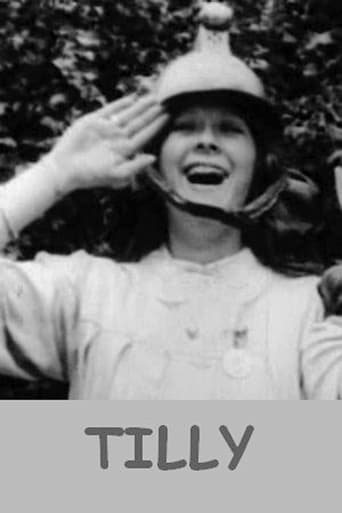
A Seaside Girl
Plot
A Seaside Girl is a brief comic chase film in which three young men each attempt to win the attention of a seaside girl by pursuing her in turn and trying to outdo one another with increasingly energetic displays of affection and agility. The film’s humor comes from the escalatory physical comedy of the pursuit: the suitors follow her through open-air coastal settings, colliding, competing, and repeatedly losing their composure in their efforts to impress her. Rather than choosing the most refined or persistent admirer, the girl ultimately asserts her own agency by deciding for herself which suitor she prefers. The story resolves quickly and lightly, in the manner of early British one-reel comedies, with the chase structure providing the entire dramatic arc. Its appeal lies less in narrative complexity than in timing, movement, and the playful social satire of courtship behavior.
Director
Lewin FitzhamonAbout the Production
This is an early silent comic short associated with Lewin Fitzhamon’s prolific output for the Hepworth Manufacturing Company. Like many British films of 1907, it was produced as a concise one-reeler or short subject designed for fast exhibition turnover rather than as a prestige feature. Surviving documentation for exact crew roles, budget, and release logistics is sparse, which is typical for films from this period, but the film fits the era’s emphasis on simple, visual, easily exportable comedy. Its seaside setting would have been especially attractive to contemporary audiences, combining the popularity of holiday imagery with broadly understandable slapstick and flirtation.
Historical Background
The film was made in 1907, during a formative period for British and international cinema when one-reel shorts dominated exhibition and filmmakers were still refining narrative grammar. Audiences of the Edwardian era were fascinated by moving images that could capture everyday leisure, seaside holidays, and light comic situations, all of which made a film like this immediately legible and entertaining. In the broader history of cinema, this was a time before the feature-length film had become standard, so concise visual storytelling and strong, readable action were essential. The film also reflects early twentieth-century social conventions around courtship, gender play, and public leisure, presenting romance as a playful competition staged in a public recreational space.
Why This Film Matters
Although not a landmark title in the way later celebrated silent comedies became, A Seaside Girl is culturally significant as a representative artifact of early British comic filmmaking. It preserves the style of physical, situation-based humor that helped establish screen comedy before the rise of more elaborate narrative features. The seaside setting also captures a recognizable element of Edwardian popular culture: the British holiday resort as a site of spectacle, flirtation, and social performance. For historians, films like this are important because they reveal how ordinary entertainment, gendered courtship rituals, and leisure culture were translated into the visual language of early cinema.
Making Of
A Seaside Girl belongs to the productive studio system of early British film-making, where directors like Lewin Fitzhamon were expected to deliver numerous short subjects quickly and efficiently. The cast listed in surviving records is small, which was typical for chase comedies that depended on clear physical action rather than ensemble storytelling. Production would almost certainly have emphasized outdoor shooting and natural light, both because studio lighting was limited and because seaside exteriors offered an appealing, readable setting. No detailed behind-the-scenes memoir or production report is commonly cited for the film, so the making of the picture is best understood in the broader context of Hepworth’s high-volume output and the practical, performance-driven methods of 1907 cinema.
Visual Style
The cinematography would have been typical of 1907 silent shorts, likely using a static or minimally moving camera positioned to frame the action clearly in full-body terms. Early comic films often relied on long, readable takes that allowed the audience to watch the pursuit unfold without cutting away from the physical gag. The seaside setting would have provided open compositions, bright natural light, and ample depth for movement, all ideal for chase-based humor. There is no evidence of unusual camera trickery or advanced editing; the visual style is best understood as functional, direct, and performance-centered.
Innovations
The film does not appear to be associated with major technical innovations, but it exemplifies the emerging competence of early British filmmaking in staging readable narrative action outdoors. Its achievement lies in economy: the entire story is conveyed through pure visual action, a hallmark of cinema still learning how to tell stories without spoken language. The likely use of location shooting, natural light, and straightforward blocking demonstrates the practical techniques that enabled early comedies to function clearly for mass audiences. In that sense, it is technically representative of the period’s craft rather than revolutionary.
Music
As a silent film, A Seaside Girl originally had no synchronized recorded soundtrack. In 1907, exhibition music would typically have been supplied live by a pianist, organist, or small ensemble, with improvisation or cue-based accompaniment varying from venue to venue. No original score is known to survive or to have been standardized for modern release. Any present-day screenings would generally use a restored or newly commissioned silent-film accompaniment if one is available.
Memorable Scenes
- The central chase in which the three suitors pursue the girl in succession, turning courtship into a physical competition.
- The ending, in which the girl makes her own choice after all the frantic chasing and posturing, providing the comic payoff.
Did You Know?
- A Seaside Girl is a very early example of British screen comedy centered on flirtation and physical chase rather than intertitles or dialogue.
- The film is associated with Lewin Fitzhamon, one of the busy directors working in the British silent era for Hepworth.
- May Clark appears in the cast, making the film notable to historians of early British screen acting because Clark became one of the recognizable faces of the period.
- The plot is built around a straightforward competition among three suitors, a structure common in early comic shorts because it could be understood instantly by audiences across language barriers.
- The seaside backdrop reflects a popular Edwardian leisure culture, when British coastal resorts were a familiar and appealing subject for cinema.
- As with many 1907 films, the original running time, exact release date, and exhibition history are not firmly documented in widely available sources.
- The film’s humor likely relied on pantomime-like performance, an important transitional style between stage comedy and later screen farce.
- Because it is a short silent film from the 1900s, no synchronized soundtrack or original score survives as a fixed canonical version; accompaniments would have varied by venue and accompanist.
- The title suggests a light romantic-comic scenario, but the surviving plot description indicates a chase gag format rather than a melodramatic love story.
- Its inclusion in modern databases reflects ongoing archival interest in cataloguing even the smallest surviving or documented works from the first decade of cinema.
What Critics Said
Contemporary review material specific to A Seaside Girl is scarce, and no widely cited critical notices have survived in standard reference sources. Like many shorts of the period, it was likely reviewed, if at all, as part of a broader program of miscellaneous films rather than as an individually scrutinized work. In modern scholarship, it is primarily valued as an archival and historical object rather than as a critically discussed masterpiece. Its significance today lies in what it reveals about early comic form, production practice, and British popular taste rather than in a documented critical canon.
What Audiences Thought
Direct audience-response records for this film are not readily available, which is common for very early shorts. However, the film’s structure suggests the sort of easy, immediate appeal that made chase comedies popular with turn-of-the-century audiences: a simple premise, energetic movement, and a clear romantic payoff. The seaside backdrop would likely have resonated with viewers familiar with British holiday culture, making the comic action feel both topical and familiar. Its survival in film databases indicates that it has retained enough historical interest to remain part of catalogued cinema history even without documented box-office reporting.
Film Connections
Influenced By
- Music-hall and pantomime comedy traditions
- Early chase comedies from the first decade of cinema
- Edwardian seaside holiday culture
- Stage farce and flirtation-based comic sketches
This Film Influenced
- Later British silent comedies built around chase structure and seaside settings
- Subsequent romantic slapstick shorts that use competitive suitors as a comic engine
You Might Also Like
More Comedy Films
View allMore from Lewin Fitzhamon
View allFilm Restoration
Survival status is not firmly established in widely available public sources; the film is documented in catalogs and databases, but a readily accessible restored print is not widely known.