
America
"Revolution splits a family and a nation"
Keys: Space play/pause · ←/→ 10s · F fullscreen · M mute · </> speed
About this film
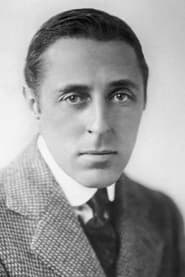
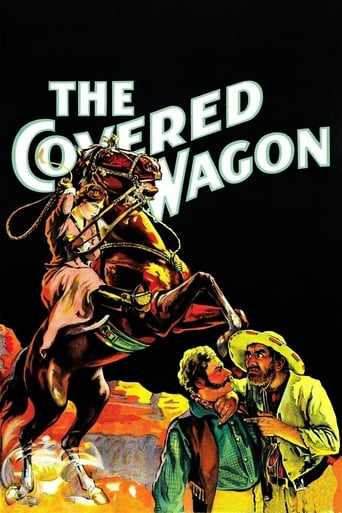
D. W. Griffith's colonial epic follows the North Carolina Bolling family as the American Revolution divides loyalties, homes, and marriages. Battles at Lexington, Bunker Hill, and Yorktown unfold around intimate scenes of courtship, betrayal, and reunion, with Griffith staging massed extras and historical tableaux on a scale that dwarfed most silent-era productions. Released as America and also known as Love and Sacrifice, the film was among Griffith's most ambitious attempts to fuse family melodrama with patriotic spectacle after the controversy of The Birth of a Nation.
Cast & crew
More films like this
More Drama films
View all →







More from D.W. Griffith
View all →
More about this film
About the production
Release dateFebruary 3, 1924
BudgetApproximately $500,000 (a substantial budget for the time)
Box officeThe film was not a commercial success, contributing to Griffith's financial difficulties
ProductionD.W. Griffith Productions, Paramount Pictures
Filmed inHollywood, California, New York locations for period settings
Griffith spared no expense in recreating Revolutionary War settings, building elaborate sets including full-scale replicas of colonial towns and battlefields. The film employed thousands of extras for the battle sequences and featured historically accurate costumes and props. Griffith's attention to detail extended to researching period architecture and customs, though some historical liberties were taken for dramatic effect.
Themes
Patriotism and national identityLove transcending political divisionsThe birth of American democracySacrifice for a greater causeThe conflict between loyalty to family and loyalty to country
Themes & topics
American Revolutionary WarHistorical epicRomanceBattle sequencesPatriotismColonial AmericaStar-crossed loversHistorical dramaWarFamily conflict
Historical background
Silent-era production in 1924 relied on intertitles, live accompaniment, and studio systems that were rapidly consolidating into national industries. Archival sources describe America as 1924 film by d. w. griffith. Contemporary context can be traced through sources such as the Wikipedia article on America (1924 film).
Why this film matters
America remains part of the screen heritage of its era, offering evidence of prevailing genres, production methods, and audience tastes. Later revivals, archive screenings, and digitization have kept such titles accessible to researchers and dedicated viewers long after their first commercial runs.
Making of
The production of 'America' was marked by Griffith's obsessive attention to historical detail and his determination to create an epic on par with his earlier successes like 'The Birth of a Nation' and 'Intolerance'. The filming of the battle sequences was particularly challenging, requiring the coordination of thousands of extras, horses, and military equipment. Griffith reportedly spent months researching the Revolutionary War period, consulting with historians to ensure accuracy in costumes, architecture, and military tactics. The relationship between Griffith and his star Carol Dempster created tension on set, as many cast and crew members felt she was miscast and only kept the role due to her personal relationship with the director. The film's elaborate sets were so impressive that they were preserved and used in subsequent historical films for years.
What critics said
Trade and newspaper reviews from the silent period for America survive only in fragments, making precise reception history difficult to reconstruct. Modern assessment tends to emphasize historical value, craft, and cultural context rather than box-office performance.
Did you know?
- This was D.W. Griffith's most expensive film to date, costing over $500,000 at a time when most films cost under $100,000
- The film featured over 5,000 extras in the battle sequences, making it one of the largest productions of the silent era
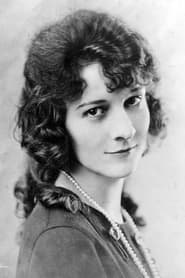
- Carol Dempster, who plays the female lead, was Griffith's protégé and romantic partner at the time
- The film's failure at the box office contributed significantly to Griffith's financial decline and loss of independence as a filmmaker
- Griffith originally planned to make this as his first sound film but abandoned the idea due to technical limitations
- The Boston Tea Party sequence required the construction of a full-scale replica of Boston Harbor
- Many of the battle scenes were filmed using real cannons and military equipment borrowed from historical societies
- The film was one of the first to use color tinting for dramatic effect, with blue tinting for night scenes and amber for daylight
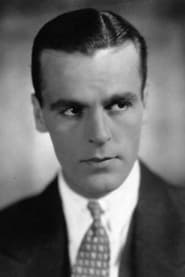
- Neil Hamilton, who played the male lead, would later become famous as Commissioner Gordon in the Batman TV series
- Griffith considered this film his patriotic masterpiece and was deeply disappointed by its poor reception
Visual style
The cinematography, overseen by Hendrik Sartov and G.W. Bitzer, represents some of the finest work of the silent era. The film employs innovative camera techniques including sweeping panoramic shots of battlefields and elaborate tracking shots that follow characters through colonial towns. The use of natural lighting in outdoor scenes creates a realistic atmosphere, while the controlled lighting of interior scenes demonstrates the sophistication of studio cinematography at the time. The film also makes effective use of color tinting, with different tints used to indicate time of day and emotional tone. The battle sequences feature some of the most complex camera movements of the era, with cameras placed on moving platforms to capture the scale of the action.
Innovations
The film featured several technical innovations for its time, including the use of multiple cameras to capture large-scale battle sequences from different angles simultaneously. The production employed what was then considered state-of-the-art special effects techniques to create realistic battle scenes, including the use of miniatures for certain wide shots and carefully orchestrated explosions. The film's editing was particularly advanced for the period, with Griffith using cross-cutting techniques to build tension during action sequences. The production also pioneered new methods for crowd control and coordination, developing systems for directing thousands of extras in complex battle formations. The elaborate set construction techniques developed for this film influenced subsequent historical productions.
Music
As a silent film, 'America' was accompanied by live musical performances during its theatrical run. The original score was composed by Louis F. Gottschalk and was designed to enhance the film's patriotic themes and dramatic moments. The score incorporated popular American folk songs of the Revolutionary period as well as original compositions that reflected the film's emotional arc. Different theaters often used their own musical arrangements, with larger venues employing full orchestras while smaller theaters used piano or organ accompaniment. The music was synchronized with the on-screen action using detailed cue sheets that specified which pieces should be played during particular scenes.
Famous quotes
'Our love is like this new nation - born in struggle, but destined for greatness'
'When liberty calls, even love must wait'
'I fight for a country where our children can love freely, without the shadow of tyranny'
Memorable scenes
- The Boston Tea Party sequence, featuring hundreds of extras in period costume throwing crates into a constructed harbor
- The Battle of Bunker Hill, with its sweeping panoramic shots of colonial forces facing British regulars
- Nancy's daring prison break to rescue Nathan, combining romance with Revolutionary action
- The final reconciliation scene with the American flag waving over the newly independent nation
What audiences thought
The film was a commercial disappointment, failing to attract the audiences that had made Griffith's earlier films so successful. Many viewers found the film too long and overly serious, particularly compared to the more entertaining comedies and dramas being produced by other studios. The romantic subplot failed to connect with audiences, partly due to the lack of chemistry between the leads. However, the battle sequences were widely praised by those who saw the film, and many contemporary viewers appreciated Griffith's attempt to create a serious historical epic. The poor reception contributed to Griffith's growing financial problems and his eventual loss of creative control over his productions.
Film connections
Influenced by
- The Birth of a Nation
- Griffith's own earlier historical epic
- Intolerance
- for its ambitious scale and multiple storylines
- European historical epics of the 1910s and early 1920s
This film influenced
- The Patriot
- for its portrayal of the Revolutionary War
- Revolution
- similar themes of family caught in revolutionary conflict
- The Last of the Mohicans
- for its historical romance set against colonial conflict
Film restoration
The film survives in its complete form and has been preserved by major film archives including the Library of Congress and the Museum of Modern Art. Several restored versions exist, with some including the original color tinting. The film has been released on DVD and Blu-ray by various distributors specializing in classic cinema.
Where to watch
- Available on DVD from Kino Lorber Classics
- Streaming on The Criterion Channel
- Available for digital purchase on Amazon Prime Video
- Can be found on some classic film streaming services
- Occasionally screened at film festivals and classic cinema venues