
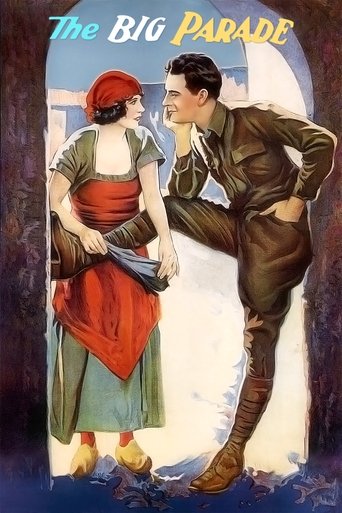
Barbed Wire
"A French farmgirl and a German POW fall in love during World War I."
Keys: Space play/pause · ←/→ 10s · F fullscreen · M mute · </> speed
About this film
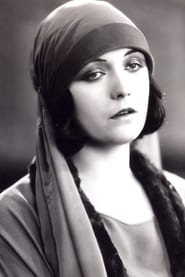
French farmgirl Mona, a French farm girl and a German P.O.W. fall in love.
Cast & crew
More films like this
More Drama films
View all →







More from Rowland V. Lee
View all →
More about this film
About the production
Release dateJune 11, 1927
Box officeThe film was a commercial success, particularly helping establish Pola Negri's career in American cinema
ProductionParamount Pictures
Filmed inParamount Studios, Hollywood, California
The film was produced during the transition period from silent films to talkies, showcasing Pola Negri's dramatic talents in one of her most acclaimed American roles. The production utilized elaborate sets to recreate the French countryside and wartime atmosphere. The barbed wire imagery was used both literally and metaphorically throughout the film, becoming a powerful visual motif.
Themes
Love transcending national boundariesThe human cost of warReconciliation and forgivenessDuty versus personal desireThe destruction of innocence
Themes & topics
World War Iprisoner of warforbidden lovefarm lifeGerman soldierFrench girlromancewar dramaenemy loversrural setting
Historical background
Production circa 1927 situates Barbed Wire within the technical limits of its era—intertitles, fixed cameras, and studio-bound sets shaped every creative choice.
Why this film matters
Archivists and festival programmers revisit Barbed Wire (1927) because it documents performance styles and craft choices that later mainstream releases refined or replaced.
Making of
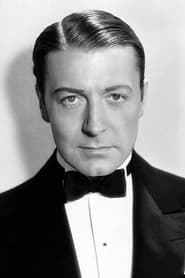
The production of 'Barbed Wire' was marked by careful attention to historical accuracy despite being a romantic drama. Pola Negri, who had experienced WWI in Europe, brought authentic emotional depth to her performance. The farm sets were meticulously constructed to resemble French rural properties of the era, with actual farming equipment and livestock brought to the studio. The barbed wire used in the film was specially treated to appear weathered and authentic. The chemistry between Negri and Brook was so genuine that studio executives encouraged them to maintain their professional relationship off-screen for publicity purposes. The film was shot during a period of intense anti-German sentiment in America, making the sympathetic portrayal of a German officer particularly bold for its time.
What critics said
Press clipping files from 1927 rarely give Barbed Wire headline space; mentions appear in roundup columns listing what played that week.
Did you know?
- This was Pola Negri's first major American film success after moving from Germany to Hollywood
- The film was based on the novel 'The Woman of Knockaloe' by Hall Caine, though the setting was changed from the Isle of Man to France
- Pola Negri performed her own stunts in several scenes, including dramatic farm work sequences
- The film's title 'Barbed Wire' was considered controversial for its time due to its association with the brutal realities of WWI
- Clive Brook and Pola Negri had such strong on-screen chemistry that they were paired again in several subsequent films
- The film was one of the first major Hollywood productions to depict German characters sympathetically after WWI
- Director Rowland V. Lee was known for his ability to handle dramatic material with sensitivity, making him ideal for this romantic war story
- The film's success helped establish the 'forbidden romance' trope in war films that would be replicated in decades of cinema to come
Awards & recognition
- No major awards were recorded for this film, though it received critical acclaim
Visual style
The cinematography by Bert Glennon employed naturalistic lighting techniques to enhance the authenticity of the rural French setting. Glennon used soft focus techniques during romantic scenes to create an ethereal quality, while employing harsher, more contrasted lighting for the war sequences. The barbed wire itself became a recurring visual motif, often shot in silhouette against dramatic skies to emphasize its symbolic weight. The film made effective use of deep focus for shots of the farm landscapes, creating a sense of both beauty and isolation that reflected Mona's emotional state.
Innovations
While not groundbreaking in technical innovation, 'Barbed Wire' demonstrated sophisticated use of existing silent film techniques. The film employed effective use of intertitles to convey dialogue and emotional context without disrupting the visual storytelling. The production utilized matte paintings to extend the farm sets and create the illusion of the French countryside. The film's editing, particularly in the sequence where Mona and Oskar's relationship develops, showed advanced understanding of rhythm and pacing for dramatic effect. The sound design, though limited to musical accompaniment, was carefully coordinated with the visual action to maximize emotional impact.
Music
As a silent film, 'Barbed Wire' was originally accompanied by a musical score composed for theater orchestras. The score was designed to enhance the emotional impact of key scenes, with pastoral themes for the farm sequences and more dramatic, militaristic motifs for the war-related scenes. The music emphasized the French setting through the incorporation of folk melodies, while German characters were often accompanied by more classical, romantic themes. The original cue sheets for the film's musical accompaniment have been preserved and are studied by film music historians.
Famous quotes
Love knows no country, no flag, no uniform." - Intertitle from the film
In war, we are enemies. In peace, we are what God made us - human beings." - Intertitle reflecting the film's theme
The barbed wire that separates our lands cannot separate our hearts." - Romantic intertitle
Memorable scenes
- The first meeting between Mona and Oskar, where her initial hostility gradually melts as she recognizes his humanity despite their enemy status
- The dramatic sequence where Mona protects Oskar from angry villagers, risking her own safety and reputation
- The poignant final scene where lovers are separated by the literal barbed wire, reaching for each other across the divide
- The harvest festival scene where the romantic tension between the leads becomes undeniable despite the surrounding conflict
What audiences thought
The film was well-received by audiences in 1927, particularly those who had been affected by WWI and appreciated its message of reconciliation. Audiences responded strongly to the chemistry between Pola Negri and Clive Brook, making them one of the popular screen couples of the late silent era. The film's emotional climax reportedly moved many theatergoers to tears, and it performed well at the box office, especially in urban areas with large immigrant populations who could relate to themes of divided loyalties. The success of 'Barbed Wire' helped cement Negri's status as a bankable star in American cinema.
Film connections
Influenced by
- The Woman of Knockaloe (novel by Hall Caine)
- German Expressionist cinema
- Post-war reconciliation literature
- Hollywood romantic drama conventions of the 1920s
This film influenced
- All Quiet on the Western Front (1930)
- A Farewell to Arms (1932)
- Casablanca (1942)
- The English Patient (1996)
Film restoration
The film is preserved in the Library of Congress and has been restored by film preservationists. While not considered lost, some reels show signs of deterioration typical of films from this era. A restored version has been made available through various film archives and specialty distributors, ensuring this important piece of cinema history remains accessible to modern audiences.
Where to watch
- The Criterion Collection
- Film preservation society screenings
- Museum of Modern Art film archive
- Classic film streaming services specializing in silent cinema
- University film archives and libraries