

Behind the Make-Up
"Gardoni, a down-on-his-luck vaudeville performer, is taken in by a"
Keys: Space play/pause · ←/→ 10s · F fullscreen · M mute · </> speed
About this film
Gardoni, a down-on-his-luck vaudeville performer, is taken in by a fellow performer, a clown who has a bicycle riding act. Gardoni shows his appreciation by stealing the clown's act and his girlfriend, whom he marries.
Cast & crew
More films like this
More Drama films
View all →







More from Robert Milton
View all →
More about this film
About the production
Release dateJanuary 18, 1930
Box officeConsidered a moderate success; popular enough to solidify the pairing of Powell and Francis.
ProductionParamount Pictures
Filmed inParamount Astoria Studios, Queens, New York City, New York, USA, Paramount Studios, Hollywood, Los Angeles, California, USA
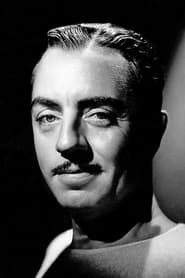
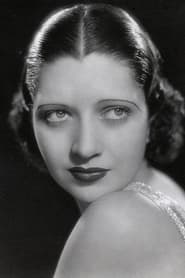
The film was produced during the chaotic transition from silent to sound cinema. It was based on the short story 'The Feeder' by Mildred Cram. While Robert Milton is the primary credited director, Dorothy Arzner—the only female director working in Hollywood at the time—directed several scenes uncredited to help complete the project. The film is notable for being the first of seven collaborations between William Powell and Kay Francis, a pairing that became defining of the early 1930s.
Themes
Themes & topics
Historical background
By 1930, sound cinema, wartime mobilization, and changing censorship norms were reshaping what audiences expected from narrative features.
Why this film matters
Behind the Make-Up remains part of the screen heritage of its era, offering evidence of prevailing genres, production methods, and audience tastes. Later revivals, archive screenings, and digitization have kept such titles accessible to researchers and dedicated viewers long after their first commercial runs.
Making of
The production of 'Behind the Make-Up' was a collaborative effort that saw significant input from Dorothy Arzner, who was frequently called upon by Paramount to 'fix' or finish films directed by others. Robert Milton, primarily a stage director, struggled with the technical requirements of the new 'talkie' format, leading the studio to rely on Arzner's editing and directing expertise. The film features authentic-looking vaudeville sets, reflecting the studio's desire to capitalize on the 'backstage' genre that was booming in 1929 and 1930. Casting Hal Skelly was a strategic move to bring Broadway prestige to the screen, though William Powell's charismatic performance as the antagonist ultimately stole much of the critical attention.
What critics said
Reception records for Behind the Make-Up are uneven; interest today is concentrated among archivists, historians, and viewers of older cinema. Modern assessment tends to emphasize historical value, craft, and cultural context rather than box-office performance.
Did you know?
- This film marks the first time William Powell and Kay Francis appeared together on screen; they would go on to make six more films as a popular romantic duo.
- Dorothy Arzner, a pioneer for female directors, worked on the film uncredited, reportedly handling retakes and helping with the dialogue sequences.
- The story is based on 'The Feeder' by Mildred Cram, who also wrote the source material for the 1939 classic 'Love Affair'.
- William Powell plays a villainous role here, which was common for him at Paramount before he transitioned to his famous 'debonair detective' persona at MGM.
- Hal Skelly, who plays the lead Hap Brown, was a major Broadway star of the era, best known for 'Burlesque'.
- In one sequence, William Powell briefly appears in drag, wearing a mask as part of a stage performance.
- The film was released just as the 'Pre-Code' era was beginning, allowing for more mature themes like adultery and suicide than would be permitted a few years later.
- Kay Francis was still being typed as a 'vamp' or 'seductress' in this film, a stark contrast to her later 'long-suffering' dramatic roles.
- The film's title refers to the literal and metaphorical masks worn by performers in the vaudeville circuit.
Visual style
The cinematography by Charles Lang is notable for its use of shadows and high-contrast lighting, which hints at the noir style that would emerge a decade later. Lang, who would become one of Hollywood's most celebrated cinematographers, used the camera to emphasize the duality of the performers' lives—bright and public on stage, dark and claustrophobic behind the scenes.
Innovations
The film is an early example of successful dialogue integration in a dramatic context, moving away from the 'static' camera work that plagued many 1929 talkies. The use of a 'film-within-a-film' structure to showcase vaudeville acts required complex sound mixing for the time, ensuring that the stage performances felt distinct from the private dialogue scenes.
Music
The film features a musical score by W. Franke Harling and John Leipold. It includes several songs typical of the era, such as 'The One Girl' and 'I'm Yours,' which were integrated into the vaudeville performances within the film. Unlike many early talkies that were 'all-talking, all-singing,' this film uses music more sparingly to underscore the dramatic tension.
Famous quotes
Gardoni (William Powell): 'They want hokum. I told you that highbrow stuff was over their heads.'
Hap Brown (Hal Skelly): 'I was happier when we had nothing. Then at least he needed me.'
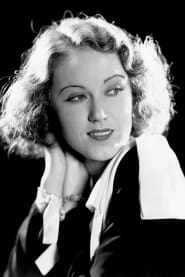
Marie (Fay Wray): 'I think I almost hate these pearls... they look real, but they feel like lead.'
Memorable scenes
- The opening scene where Hap Brown discovers a starving, desperate Gardoni and decides to share his meal and his life.
- The sequence where Gardoni performs the stolen bicycle act for the first time, revealing his complete lack of gratitude.
- The climactic confrontation where Gardoni's gambling debts are revealed, leading to his final, tragic decision.
- The final scene where Hap comforts Marie, showing a quiet dignity that contrasts with Gardoni's flamboyant ego.
What audiences thought
Audiences of 1930 were generally receptive to the film, as backstage dramas were highly popular. However, some found the pacing 'draggy' compared to the more energetic musicals of the same year. The film's popularity helped elevate William Powell and Kay Francis from supporting players to major stars, indicating that the public was more captivated by the actors than the specific plot.
Film connections
Influenced by
- The 'backstage' tradition of Broadway theater
- Mildred Cram's short story 'The Feeder'
- Early German Expressionism (in its visual treatment of the 'clown' figure)
This film influenced
- Street of Chance (1930)
- The Thin Man (1934) (in terms of Powell's star trajectory)
- Various 'backstage' melodramas of the 1930s
Film restoration
The film is preserved and is in the public domain. It was out of circulation for many years but was rediscovered and aired on Turner Classic Movies (TCM) in the 2000s.
Where to watch
- Turner Classic Movies (periodically)
- Internet Archive (Public Domain)
- YouTube (various classic film channels)