
Beyond the Rocks
"not the marrying kind"
Keys: Space play/pause · ←/→ 10s · F fullscreen · M mute · </> speed
About this film
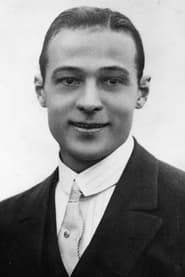
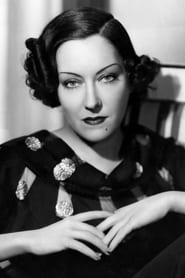
Theodora Fitzgerald (Swanson) looks into the eyes of Lord Hector Bracondale (Valentino) who returns her handkerchief in Beyond the Rocks Captain Fitzgerald, a retired guardsman on a modest pension, has to support three daughters: Theodora and her older half-sisters. Theodora's sisters pin their hopes on her marrying a wealthy man. One day, Theodora goes out on a rowboat off the coast of Dorset and falls into the water.
Cast & crew
More films like this

More Drama films
View all →







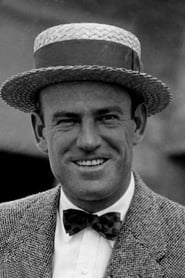
More from Sam Wood
View all →

More about this film
About the production
Release dateMay 6, 1922 (premiere), May 8, 1922 (general release)
Box officeThe film was commercially successful, though exact figures are not documented. It performed well domestically and internationally due to the star power of Valentino and Swanson.
ProductionFamous Players-Lasky Corporation, Paramount Pictures
Filmed inParamount Studios, Hollywood, California, Various locations in California including coastal areas for drowning scenes
The film was shot during the height of both stars' fame, with Valentino having just completed 'The Sheik' (1921) and Swanson being one of Paramount's biggest stars. Production was smooth despite the ego clashes that sometimes occurred between the two leads. The drowning sequence required elaborate underwater filming techniques for the era.
Themes
Themes & topics
honeymoonmarriage of conveniencelove trianglearistocracyrescueadulterymelodramaforbidden romancewealthsocial status
Historical background
Beyond the Rocks (1922) emerged during the silent-film era. Theodora Fitzgerald (Swanson) looks into the eyes of Lord Hector Bracondale (Valentino) who returns her handkerchief in Beyond the Rocks Captain Fitzgerald, a retired guardsman on a modest pension, has to support three daughters: Theodora and her older half-sisters. Archival records and catalog entries help place the work within film-history surveys of the period.
Why this film matters
Preserved under Wikidata ID Q1824941, Beyond the Rocks is valued as a screen drama within catalog and archive collections. Wikipedia's "Beyond the Rocks (film)" entry connect it to broader histories of cinema exhibition and restoration.
Making of
The production of 'Beyond the Rocks' was a major event in Hollywood, representing the first and only collaboration between two of cinema's biggest icons. Director Sam Wood, known for his work with major stars, had to navigate the delicate egos of both leads. Valentino was at the peak of his 'Latin Lover' fame following 'The Sheik,' while Swanson was Paramount's top female star. The studio invested heavily in the production, creating elaborate sets and costumes. The famous drowning scene was particularly challenging to film, requiring early underwater photography techniques and careful coordination to ensure safety. Both stars performed their own stunts in the sequence. The chemistry between Valentino and Swanson was carefully managed by the studio, which wanted to create believable on-screen romance while avoiding off-screen complications. The film's source material by Elinor Glyn was considered quite daring for its time, dealing with themes of adultery and passion, though the screenplay was toned down to satisfy censorship boards.
What critics said
Survival status shapes reception: Beyond the Rocks is discussed mainly in preservation and film-history literature rather than in wide contemporary review columns.
Did you know?
- This was the only film to feature both Rudolph Valentino and Gloria Swanson, the two biggest stars of the silent era, together on screen.
- The film was considered lost for over 80 years until a single nitrate print was discovered in 2003 in the private collection of a Dutch film enthusiast.
- The discovered print was in remarkably good condition, though it was missing approximately 2,000 feet of footage that had to be reconstructed using still photographs and title cards.
- The restoration process took over a year and was completed by the Nederlands Filmmuseum in collaboration with the Museum of Modern Art.
- Author Elinor Glyn, who wrote the source novel, was famous for coining the term 'It Girl' and was one of the highest-paid screenwriters of her time.
- Valentino and Swanson reportedly had a professional but cool relationship during filming, with both being accustomed to being the sole star of their productions.
- The film's rediscovery was called 'the most important film find of the decade' by film historians when announced in 2003.
- A scene featuring Valentino and Swanson in a passionate embrace caused controversy in some conservative areas, leading to censorship in certain markets.
- The original title cards were written by famed screenwriter Frances Marion, especially prolific and respected writers of the silent era.
- The film's success led to increased salaries for both stars, with Valentino earning $7,500 per week and Swanson $10,000 per week for subsequent films.
Visual style
The cinematography by Bert Glennon utilized the latest techniques of 1922, including elaborate lighting setups to create romantic atmospheres. The film employed extensive location photography along the California coast, unusual for the period when most films were shot entirely on studio sets. Glennon used soft focus techniques for close-ups of the stars, enhancing their romantic appeal. The underwater sequences in the drowning scene were particularly innovative for the time, requiring specialized equipment and careful planning. The film's visual style emphasized glamour and sophistication, with carefully composed shots that highlighted both the actors and the opulent settings. The cinematography helped establish the emotional tone through lighting choices, with warm tones for romantic scenes and cooler lighting for moments of conflict. The restored version reveals the sophisticated use of shadows and lighting that characterized the best of silent era cinematography.
Innovations
The film was notable for its advanced underwater photography techniques, which were quite sophisticated for 1922. The production used custom-built waterproof camera housings and specialized lighting to film the drowning sequence. The set design represented some of the most elaborate of the period, with full-scale recreations of European locations. The film employed innovative matte painting techniques to extend sets and create convincing outdoor environments. The makeup and costume design were particularly noteworthy, with Swanson's wardrobe featuring over 30 costume changes, each more elaborate than the last. The film's intertitles were artistically designed and integrated seamlessly into the visual narrative, representing some of the best title work of the silent era. The restoration process itself represents a technical achievement, using digital technology to repair damage and reconstruct missing footage while preserving the original nitrate look.
Music
As a silent film, 'Beyond the Rocks' would have been accompanied by live musical performances during its original theatrical run. Theaters typically used compiled scores combining popular songs of the era with classical pieces. For the 2003 restoration, a new score was composed by Gillian B. Anderson, based on authentic silent era music practices. The restored score uses period-appropriate instrumentation and follows the emotional arc of the film, with romantic themes for the love scenes and dramatic motifs for moments of conflict. The original cue sheets for the film have not survived, but contemporary accounts suggest that theaters used music by composers like Chopin and Tchaikovsky for the romantic sequences. The modern restoration's soundtrack has been praised for its authenticity and emotional resonance with the film's melodramatic tone.
Famous quotes
I would rather die with you than live without you." - Lord Hector Bracondale to Theodora
Duty is a heavier burden than any mountain." - Theodora Fitzgerald
Love knows no age, no station, no barriers but those we create ourselves." - Lord Hector Bracondale
In saving your life, I may have destroyed my own." - Lord Hector Bracondale
Some bonds are stronger than marriage vows." - Theodora Fitzgerald
Memorable scenes
- The dramatic opening sequence where Lord Hector saves Theodora from drowning, establishing their immediate connection and setting up the central conflict.
- The passionate embrace in the garden, where the two stars finally give in to their feelings, featuring some of the most romantic cinematography of the silent era.
- The climactic confrontation scene where Theodora must choose between her husband and her lover, showcasing Swanson's emotional range.
- The elaborate ballroom sequence featuring stunning costumes and set design, demonstrating the film's production values.
- The final farewell scene between the lovers, utilizing soft focus and dramatic lighting to enhance the emotional impact.
What audiences thought
The film was a box office success upon its 1922 release, capitalizing on the immense popularity of both leads. Audiences were particularly drawn to the novelty of seeing two of the biggest stars of the day together on screen. The film's romantic themes and exotic locations appealed to post-WWI audiences seeking escapist entertainment. Contemporary audience reactions were enthusiastic, with many theaters reporting sell-out crowds. The film's success was especially strong in urban areas where both stars had their largest followings. After its rediscovery and restoration in 2003, the film was screened at film festivals worldwide to enthusiastic audiences, many of whom had never seen a silent film in a theatrical setting. Modern audiences have responded positively to the film's visual beauty and the genuine chemistry between the leads, with many noting how the story transcends its era despite some dated elements.
Film connections
Influenced by
- The novel by Elinor Glyn
- Contemporary romantic literature of the 1920s
- Italian melodramatic traditions
- Victorian literature themes of duty and passion
This film influenced
- Later romantic melodramas of the silent era
- Films featuring similar love triangle plots
- Subsequent Valentino vehicles
- Swanson's later romantic dramas
Film restoration
The film was considered lost for over 80 years until its discovery in 2003. A single 35mm nitrate print was found in the private collection of a Dutch film enthusiast. The film has since been fully restored by the Nederlands Filmmuseum in collaboration with the Museum of Modern Art. The restoration process involved reconstructing approximately 2,000 feet of missing footage using production stills and continuity scripts. The restored version premiered at the Cannes Film Festival in 2005 and has since been preserved in multiple archives worldwide, including the Library of Congress and the British Film Institute. The film is now considered especially significant rediscoveries in cinema history.
Where to watch
- The Criterion Collection (Blu-ray/DVD)
- The Museum of Modern Art's film collection (occasional screenings)
- Film Forum in New York (periodic screenings)
- Turner Classic Movies (periodic television broadcasts)
- Various film festivals specializing in classic cinema
- The restored version is available through select streaming services specializing in classic films