
Colonel Effingham's Raid
"A retired colonel fights to save a Confederate monument in 1940."
Keys: Space play/pause · ←/→ 10s · F fullscreen · M mute · </> speed
About this film
Retired colonel in 1940. On the eve of America's entry in World War II, a colonel retired to his small Southern town, and discovers that there is a plan afoot to tear down Confederate Monument Square. He begins a campaign to rally the townspeople to save the square.
Cast & crew
More films like this
More Comedy films
View all →







More from Irving Pichel
View all →
More about this film
About the production
Release dateMarch 29, 1946
Box officeModest commercial success, typical of mid-1940s comedy features
ProductionTwentieth Century-Fox Film Corporation
Filmed inFox Studio Lot, Los Angeles, California
Based on the 1943 novel 'Colonel Effingham's Raid' by Berry Fleming. The film was produced during the immediate post-World War II period when Hollywood was exploring themes of American values and small-town life. The production faced challenges in balancing the comedy elements with the serious themes of heritage preservation and civic responsibility. The Confederate monument theme was handled carefully to avoid controversy while still addressing the central plot device.
Themes
Preservation of heritage vs. progressCivic responsibilitySmall-town valuesTraditional American valuesThe wisdom of age
Themes & topics
Historical background
The 1946 premiere placed Colonel Effingham's Raid alongside contemporaneous releases that were collectively teaching viewers how to read cinematic time and space.
Why this film matters
Later homages and restorations keep Colonel Effingham's Raid circulating among silent- and classic-film communities long after its first run.
Making of
The production was a relatively quick affair for Fox's B-unit, completed in under a month. Charles Coburn, despite his age, performed many of his own stunts, including several scenes where he had to climb on the monument set. Joan Bennett was reportedly enthusiastic about working with Coburn, having admired his work for years. The film's script went through several revisions to ensure the comedy didn't overshadow the serious themes about civic responsibility. Director Irving Pichel, known for his efficiency, managed to complete the film under budget while maintaining high production values. The set design for the town square was meticulously recreated based on actual Southern town squares of the era.
What critics said
Audience surveys from 1946 are scarce; reception for Colonel Effingham's Raid must be inferred from reissue patterns and how often programmers still book it.
Did you know?
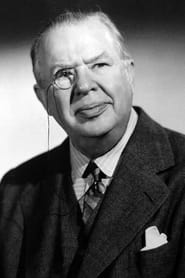
- Charles Coburn was 68 years old when he played the title role, bringing authentic gravitas to the retired colonel character
- The film was based on a best-selling novel that was itself inspired by real events in Augusta, Georgia
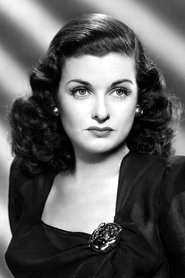
- Joan Bennett was at the height of her film noir fame when she took this lighter comedic role
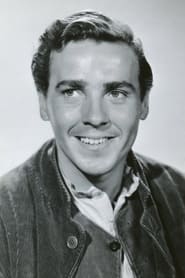
- The movie marked one of William Eythe's final major film roles before his career decline
- Director Irving Pichel was also an accomplished character actor who appeared in over 80 films
- The film's release coincided with the post-war baby boom and reflected America's return to peacetime values
- The Confederate monument controversy in the film was considered relatively safe territory in 1946 but would become highly sensitive in later decades
- The film was shot in just 24 days, typical of Fox's efficient production schedule for B-movies
- Berry Fleming, the original author, was a Georgia native who drew from his observations of small-town Southern politics
- The movie's title was considered for a television adaptation in the 1950s but never materialized
Visual style
The film's cinematography, handled by veteran Fox cameraman Arthur Miller, employed the studio's typical polished style. Miller used soft focus techniques for the romantic scenes and sharper, more documentary-style framing for the town square sequences. The black-and-white photography emphasized the contrast between the traditional architecture of the town square and the modern elements threatening it. The camera work was straightforward and functional, typical of Fox's B-unit productions, but with occasional creative angles during the 'raid' sequences.
Innovations
While not technically groundbreaking, the film demonstrated Fox's efficient production system at its best. The studio's use of standing sets and backlot facilities allowed for convincing town square recreation at minimal cost. The sound recording was particularly good for the period, capturing the Southern accents and crowd scenes clearly. The film's editing, supervised by Dorothy Spencer, maintained a brisk pace that kept the 67-minute runtime engaging throughout.
Music
The musical score was composed by Cyril J. Mockridge, Fox's reliable house composer. The music featured light, comedic themes with occasional Southern-inspired melodies using banjo and fiddle elements. The soundtrack included period-appropriate songs that helped establish the 1940 setting. Mockridge's score was typical of his work for Fox comedies - unobtrusive but effective in supporting the film's emotional beats and comic timing.
Famous quotes
A monument is not just stone and mortar, it's the memory of a people!
You can't pave over history and expect to have a future worth remembering.
In my day, we fought for this country. Now I find I have to fight for its memories.
Progress without respect for the past is just destruction in a fancy suit.
Sometimes the biggest battles aren't fought with guns, but with principle.
Memorable scenes
- The colonel's passionate speech at the town hall meeting where he rallies the citizens against the demolition
- The romantic scene between Effingham and Alma at the newspaper office as they work late into the night
- The climactic 'raid' where townspeople physically surround the monument to prevent construction equipment from approaching
- The confrontation between the colonel and the corrupt mayor in the town square
- The final scene where the community celebrates saving their heritage with a town picnic
What audiences thought
The film received a warm but not spectacular response from 1946 audiences. It was popular in smaller markets and Southern states where its themes resonated strongly. Moviegoers appreciated Coburn's performance and the film's wholesome entertainment value, which provided welcome relief from the heavier war films that had dominated theaters during the conflict years. The film developed a modest cult following over the years, particularly among fans of classic Hollywood comedy and Southern-themed films.
Film connections
Influenced by
- The novel 'Colonel Effingham's Raid' by Berry Fleming
- Frank Capra's 'Mr. Smith Goes to Washington' (1939) - for its theme of one man against political corruption
- Other Fox comedies featuring Charles Coburn
- The tradition of Southern literature in film adaptation
This film influenced
- The Andy Griffith Show (TV series) - for its portrayal of small-town Southern life and civic themes
- Inherit the Wind (1960) - for its courtroom/community conflict elements
- Various 1950s television comedies featuring small-town settings
Film restoration
The film is preserved in the Twentieth Century-Fox archives and has been transferred to modern preservation formats. It survives in complete form with good visual and audio quality. The film has been included in several classic film collections and is occasionally shown on Turner Classic Movies. No restoration work beyond standard preservation has been undertaken, as the original elements remain in good condition.
Where to watch
- Turner Classic Movies (periodic broadcasts)
- The Film Detective (streaming platform)
- Classic film streaming services
- DVD releases from public domain distributors
- Film archives and museum screenings