



Daddy-Long-Legs
"Jarvis Pendleton acts benefactor for"
Keys: Space play/pause · ←/→ 10s · F fullscreen · M mute · </> speed
About this film
Wealthy Jarvis Pendleton acts as benefactor for orphan Judy Abbott, anonymously sponsoring her in her boarding school. But as she grows up, he finds himself falling in love with her, and she with him, though she does not know that the man she has fallen for is her benefactor.
Cast & crew
More Drama films
View all →






More from Marshall Neilan
View all →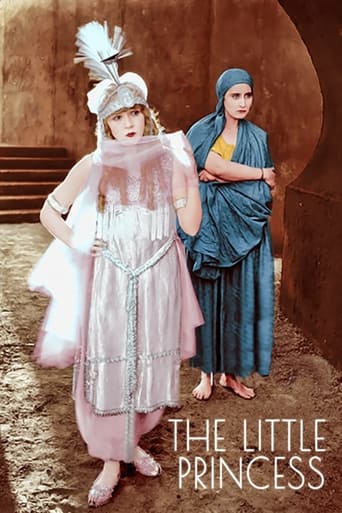

More about this film
About the production
Release dateMay 11, 1919
BudgetExact budget figures are not documented, but as a Mary Pickford production, it would have been substantial for 1919, likely in the range of $100,000-200,000
Box officeThe film was highly successful, grossing over $1 million at the box office, making it one of the biggest hits of 1919
ProductionMary Pickford Film Corporation
Filmed inCalifornia, Pickford-Fairbanks Studios, Hollywood
Mary Pickford exercised significant creative control over the production, as she did with most of her films from this period. The production used authentic college locations to add realism to Judy's educational journey. Pickford was heavily involved in costume design and worked closely with director Marshall Neilan to ensure the film captured both the charm and emotional depth of the source novel.
Themes
Female education and empowermentIdentity and self-discoveryClass mobility and social transformationThe power of anonymous kindnessComing of age and personal growth
Themes & topics
Historical background
Made in 1919, Daddy-Long-Legs reflects production norms of the silent era before feature-length dominance—shorter runtimes, regional audiences, and limited preservation infrastructure.
Why this film matters
Historians reference Daddy-Long-Legs (1919) when discussing 1919 film by Alfred Edward Green, Marshall Neilan.
Making of
The production of 'Daddy-Long-Legs' showcased Mary Pickford's exceptional business acumen and creative vision. As the head of her own production company, Pickford had final say on all creative decisions. She worked closely with director Marshall Neilan, with whom she had a successful professional relationship. Neilan was known for his ability to extract naturalistic performances from actors, which complemented Pickford's style. The filming process involved extensive location shooting to capture the authentic college atmosphere, which was unusual for the period. Pickford's attention to detail extended to every aspect of production, from costume selection to the careful pacing of emotional scenes. The film's success was partly attributed to Pickford's instinctive understanding of what audiences wanted and her ability to balance commercial appeal with artistic integrity.
What critics said
Trade and revival screenings have kept Daddy-Long-Legs (1919) on the map for collectors and scholars rather than mass first-run promotion.
Did you know?
- Mary Pickford was 27 years old when she played the teenage Judy Abbott, demonstrating her remarkable ability to portray younger characters convincingly
- The film was based on Jean Webster's 1912 novel of the same name, which was extremely popular at the time
- Pickford's character ages from 17 to 21 during the course of the film, requiring subtle makeup and costume changes
- This was one of the first films to deal seriously with women's education and independence as central themes
- The film's success helped cement Pickford's status as 'America's Sweetheart' and especially powerful women in Hollywood
- Director Marshall Neilan was one of Pickford's favorite collaborators, and they worked together on several successful films
- The film featured innovative use of intertitles to convey Judy's letters to her benefactor
- Pickford personally selected many of the film's locations to ensure authenticity
- The movie was re-released in 1924 with renewed success, demonstrating its enduring popularity
- This adaptation was so successful that it inspired later versions in 1931 and 1955
Awards & recognition
- Photoplay Magazine Medal of Honor (1919) - Mary Pickford for Best Performance
Visual style
The cinematography by Charles Rosher employed sophisticated techniques for its era, using soft focus and careful lighting to enhance the emotional impact of key scenes. Rosher utilized innovative camera movements and framing to convey Judy's emotional journey, particularly in scenes showing her transformation from orphan to college student. The film featured extensive use of natural lighting in outdoor sequences, creating a more realistic and intimate atmosphere than was typical of the period. The cinematography also employed subtle visual motifs, such as the recurring imagery of shadows and light to represent the mystery of Daddy-Long-Legs' identity. Rosher's work on this film demonstrated how visual storytelling could convey complex emotional states without dialogue, contributing significantly to the film's emotional power.
Innovations
While 'Daddy-Long-Legs' did not introduce revolutionary technical innovations, it demonstrated sophisticated application of existing film techniques. The film made excellent use of cross-cutting to build tension during emotional scenes and employed innovative intertitle design to convey Judy's letters effectively. The production utilized multiple camera setups for key scenes, allowing for more dynamic editing than was typical of the period. The makeup and aging effects used to show Judy's progression from teenager to young woman were considered particularly advanced for 1919. The film also featured impressive location shooting for college sequences, demonstrating the industry's growing technical capabilities for on-location filming.
Music
As a silent film, 'Daddy-Long-Legs' was accompanied by live musical performances in theaters during its original release. Theaters typically employed either full orchestras or solo pianists to provide musical accompaniment, with cue sheets distributed to guide musicians in matching the mood of each scene. The original musical score has not survived, but contemporary accounts suggest it featured popular classical pieces of the era along with specially composed themes for the main characters. The music was particularly important during Judy's letter-writing sequences, where it helped convey the emotional content of her correspondence. Modern screenings often feature newly composed scores that attempt to recreate the emotional impact of the original accompaniments.
Famous quotes
As a silent film, quotes were conveyed through intertitles. Key intertitles included: 'Dear Daddy-Long-Legs, I'm so grateful for this chance to learn', 'I wonder who you are, and why you're so kind', 'I'm falling in love with someone I've just met', 'The mystery of Daddy-Long-Legs haunts my dreams', 'Education has opened my eyes to a whole new world'
Memorable scenes
- The opening sequence showing Judy in the orphanage, establishing her difficult circumstances
- Judy's first day at college, capturing her wonder and excitement
- The letter-writing montages showing Judy's growth through her correspondence
- The first meeting between Judy and Jarvis, filled with dramatic irony
- The college graduation scene showing Judy's transformation
- The emotional revelation scene where Judy learns Jarvis's true identity
What audiences thought
Audiences in 1919 embraced 'Daddy-Long-Legs' with tremendous enthusiasm, making it one of the year's biggest box office successes. Moviegoers connected deeply with Judy Abbott's journey from orphan to educated young woman, seeing in her story both wish fulfillment and inspiration. The film's emotional resonance and Pickford's relatable performance created a powerful bond with viewers of all ages. The movie's popularity extended beyond its initial run, with successful re-releases in subsequent years. Letters from fans of the period reveal how many young women particularly identified with Judy's struggles and triumphs, viewing her as a role model for their own aspirations. The film's success helped solidify Pickford's status as 'America's Sweetheart' and demonstrated the commercial viability of stories centered on female experience.
Film connections
Influenced by
- Jean Webster's 1912 novel 'Daddy-Long-Legs'
- Contemporary women's suffrage movement
- Progressive Era educational reforms
- Silent era melodrama conventions
This film influenced
- 'Daddy-Long-Legs' (1931)
- 'Daddy Long Legs' (1955 musical)
- Later coming-of-age films featuring female protagonists
- Numerous orphan-to-success stories in cinema
Film restoration
The film has been preserved through the efforts of film archives and restoration projects. A complete 35mm copy exists in the collection of the Library of Congress, and the film has been restored by several archives including the Museum of Modern Art. The restoration work has addressed deterioration issues and has helped maintain the film's visual quality for modern audiences. The film is considered to be in good preservation condition, though some minor degradation is present in certain sequences.
Where to watch
- The film is available on DVD from several classic film distributors
- Streaming on The Criterion Channel
- Available on various classic film streaming platforms
- Can be viewed at film archives and museums specializing in silent cinema
- Occasionally screened at classic film festivals and revival houses