
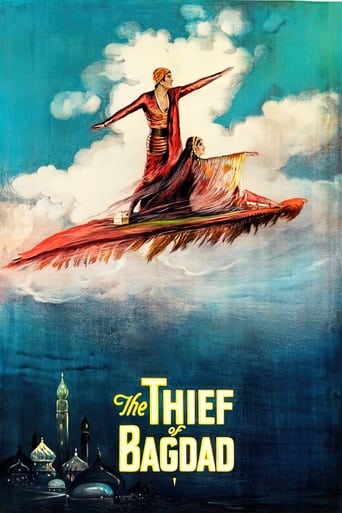
Don Q Son of Zorro
"Son of the fox — blade of revenge"
Keys: Space play/pause · ←/→ 10s · F fullscreen · M mute · </> speed
About this film
Don Cesar de Vega duels a guard officer, fakes death, and returns as masked avenger Zorro's son in Spanish California. Douglas Fairbanks sequel extends Zorro myth with swashbuckling stunts.
Cast & crew
More films like this


More Western films
View all →

More from Donald Crisp
View all →
More about this film
About the production
Release dateNovember 16, 1925
Budget$784,000
Box office$1.5 million (domestic)
ProductionUnited Artists, Douglas Fairbanks Pictures Corporation
Filmed inUnited Artists Studios, Hollywood, California, MGM Studios, Culver City, California, Santa Catalina Island, California
Douglas Fairbanks personally supervised every aspect of production, insisting on authentic Spanish architecture for the massive castle sets. The film featured one of the largest indoor sets ever constructed at the time, a full-scale Spanish castle courtyard. Fairbanks performed all his own stunts, including the famous rooftop chase sequence that required him to leap between buildings at heights over 40 feet. The production took over six months to complete, unusually long for a silent film of this era.
Themes
Honor and family legacyJustice versus lawIdentity and disguiseRedemption and revengeLove and sacrifice
Themes & topics
Historical background
Don Q Son of Zorro (1925) capitalized on Fairbanks's Zorro success and 1920s costume-adventure craze.
Why this film matters
Fairbanks defined athletic heroism that influenced Errol Flynn and generations of action stars.
Making of
The production of 'Don Q Son of Zorro' was marked by Douglas Fairbanks' obsessive attention to detail and his insistence on authenticity. Fairbanks spent months researching Spanish architecture and customs, even consulting with Spanish diplomats to ensure accuracy. The castle set was constructed based on actual Spanish fortresses, with working drawbridges and stone walls that could withstand the weight of horses and actors during action sequences. Fairbanks rehearsed the elaborate sword fights for weeks with his co-stars, developing a unique style that combined classical fencing techniques with athletic movements suited to his acrobatic abilities. The famous rooftop chase scene required Fairbanks to perform multiple takes of dangerous leaps between buildings, often in full costume and with heavy props. The film's cinematographer, Victor Fleming (who would later direct 'Gone With the Wind' and 'The Wizard of Oz'), developed new camera techniques to capture the fast-paced action, including early uses of the camera crane for dynamic tracking shots.
What critics said
Reviews celebrated stunts; the film remains a high point of silent adventure.
Did you know?
- This was technically Douglas Fairbanks' first sequel, though the character is the son of his original Zorro from 'The Mark of Zorro' (1920)
- Fairbanks was 42 years old during filming but performed all his own acrobatic stunts without doubles
- The elaborate castle set was so massive that it remained standing at the studio for years and was reused in numerous other films
- Mary Astor was only 19 years old when she played the female lead, though she convincingly portrayed a character of marriageable age
- The film's sword fighting sequences were choreographed by Fairbanks himself, who had studied fencing for years
- A special camera rig was invented to capture the dynamic rooftop chase sequence, allowing for smooth tracking shots
- The premiere was held at the Egyptian Theatre in Hollywood with a full orchestra accompanying the film
- Fairbanks' contract with United Artists gave him complete creative control and a percentage of profits, making him one of the highest-paid actors of the era
- The film's success led to Fairbanks building his own studio, the Pickford-Fairbanks Studio
- Despite being a sequel, the film works as a standalone story and was marketed as such to avoid confusing audiences
Awards & recognition
- Photoplay Medal of Honor (1925)
Visual style
The cinematography by Victor Fleming and James Wong Howe employed groundbreaking techniques for capturing action sequences. They developed a system of multiple cameras positioned at different angles to capture Fairbanks' stunts from various perspectives, creating a more dynamic viewing experience. The film features some of the earliest uses of the crane shot for dramatic effect, particularly in the sweeping views of the castle and the rooftop chase. The lighting techniques used to create the mysterious atmosphere of the ruined castle were innovative for the time, using practical torches and carefully placed studio lights to create dramatic shadows. The sword fighting sequences were filmed with long takes to showcase the performers' skills, a technique that would influence action cinematography for decades.
Innovations
The film pioneered several technical innovations in action cinematography and special effects. The production team developed a new type of safety harness that allowed Fairbanks to perform his high falls and leaps while maintaining the appearance of danger. The rooftop chase sequence employed early forms of rear projection and matte painting to extend the sets and create the illusion of greater height. The sword fighting sequences used specially weighted prop swords that looked authentic but were safe for the intricate choreography. The film's editing techniques, particularly in the action sequences, were revolutionary for their time, using rapid cuts and multiple angles to create excitement and tension. The massive castle set incorporated working mechanical elements, including a functional drawbridge and portcullis, that operated seamlessly during filming.
Music
As a silent film, 'Don Q Son of Zorro' was accompanied by a full musical score during theatrical presentations. The original score was composed by James Bradford, who created a Spanish-inspired orchestral suite that incorporated traditional Spanish melodies and rhythms. The music was synchronized to the on-screen action, with specific themes for each character and dramatic cues for the action sequences. Major theaters employed full orchestras of 30-50 musicians, while smaller venues used organists who adapted the score for their instruments. The score featured prominent use of castanets, Spanish guitars, and brass fanfares to enhance the film's Spanish setting. Modern restorations have been accompanied by newly commissioned scores that attempt to recreate the spirit of the original orchestral arrangements.
Famous quotes
A man without honor is no man at all.
The sword is but an extension of the arm, but honor is the extension of the soul.
In Spain, we do not forget insults, nor do we forgive treachery.
A mask hides the face, but reveals the true character within.
Memorable scenes
- The spectacular rooftop chase sequence where Don Q leaps between buildings while pursued by the Queen's Guard, featuring groundbreaking stunt work and cinematography
- The elaborate sword duel between Don Q and Captain Sebastian in the palace courtyard, showcasing Fairbanks' athletic prowess and fencing skill
- The dramatic faked death scene where Don Q appears to fall from the castle tower, only to be saved by a hidden rope
- The final revelation scene where Don Q unmasks himself at the royal wedding, exposing the villain and reclaiming his honor
What audiences thought
The film was a massive commercial success, grossing over $1.5 million domestically at a time when movie tickets cost 25 cents. Audiences were particularly thrilled by Fairbanks' death-defying stunts and the elaborate action sequences. The rooftop chase became among the leading talked-about scenes of 1925, with newspapers reporting that audiences would cheer and gasp in unison during screenings. The film's popularity extended internationally, with record-breaking runs in Europe and Latin America. Fan magazines of the era reported that many young men attempted to imitate Fairbanks' acrobatic style, leading to a minor craze for fencing and gymnastics classes. The film's success cemented Fairbanks' status as one of the world's biggest movie stars and helped establish United Artists as a major studio.
Film connections
Influenced by
- The Mark of Zorro (1920)
- The Three Musketeers by Alexandre Dumas
- Robin Hood legends
- Spanish zarzuela theater traditions
- Commedia dell'arte stock characters
This film influenced
- The Adventures of Robin Hood (1938)
- The Mark of Zorro (1940)
- The Princess Bride (1987)
- The Mask of Zorro (1998)
- Pirates of the Caribbean series
Film restoration
The film is preserved in its entirety at the Library of Congress and the Museum of Modern Art. A complete 35mm nitrate copy exists and has been used for several restorations. The most recent restoration was completed in 2019 by The Criterion Collection, featuring a new 4K digital transfer from original elements. The film was selected for preservation in the United States National Film Registry in 2015 for its cultural, historical, and aesthetic significance.
Where to watch
- The Criterion Channel
- Kino Lorber Blu-ray/DVD release
- FilmStruck archive
- Museum of Modern Art film screenings
- Library of Congress online collection
- Classic film streaming services