
Dubrovskiy
"Pushkin’s unfinished tale of peasant rage"
Keys: Space play/pause · ←/→ 10s · F fullscreen · M mute · </> speed
About this film
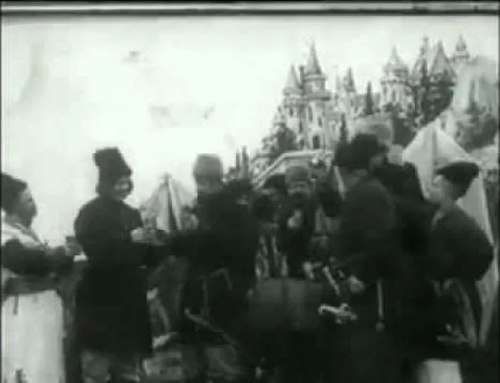
Peasant rebelling, pictures of folk anger - here accent that had to put Ivanovo in a new film. The manuscript of novel was found post mortem Pushkin in his papers. The name he did not have and remained unfinished. Intention of "Dubrovskiy" was prompted by an actual incident.
Cast & crew
More films like this
More Drama films
View all →







More from Aleksandr Ivanovsky
View all →
More about this film
About the production
Release dateOctober 14, 1936
Box officeUnknown - Soviet films did not track box office in the Western sense
ProductionLenfilm (Leningrad Film Studio)
Filmed inLeningrad (now Saint Petersburg), Russia, Pavlovsk Palace, Gatchina Palace grounds
The film was especially ambitious productions at Lenfilm in 1936, with extensive location shooting at former imperial palaces. Director Aleksandr Ivanovsky faced significant challenges adapting Pushkin's unfinished novel, working with multiple endings that Pushkin had drafted. The production utilized elaborate costumes and sets to recreate early 19th-century Russian aristocratic life, requiring extensive research into historical dress and architecture. The film featured over 2,000 extras for the crowd scenes depicting peasant uprisings.
Themes
Justice and revengeClass struggleLove versus dutyTransformation and identityRebellion against tyranny
Themes & topics
revengeoutlawnobilitypeasant rebellionromanceinjusticeidentitytransformation19th century RussiaPushkin adaptation
Historical background
Dubrovskiy appeared in 1936, when the studio era between the Great Depression and World War II shaped how movies were financed, distributed, and discussed. Audiences of the day encountered the work amid shifting tastes in acting, pacing, and spectacle. Its focus on peasant rebelling, pictures of folk anger - here accent that had to put ivanovo in a new film mirrors themes circulating in popular culture of that moment.
Why this film matters
Dubrovskiy (1936) belongs to the wider archive of world cinema, documenting peasant rebelling, pictures of folk anger - here. Archivists and historians value such titles for what they reveal about craft, genre, and audience expectations. Restorations and festival screenings keep the work visible to viewers far beyond its first run.
Making of
The production of 'Dubrovskiy' was a significant undertaking for Lenfilm in 1936. Director Aleksandr Ivanovsky, who had previously directed historical epics, spent months researching Pushkin's manuscripts and historical sources to create a coherent narrative from the unfinished novel. The casting process was particularly challenging - Boris Livanov was initially considered too modern for the period role but convinced producers with his passionate audition. The film's action sequences, including the famous horse chase scenes, were filmed without stunt doubles, with Livanov performing many of his own riding stunts. The production team gained unprecedented access to former imperial palaces, which had been nationalized after the revolution, providing authentic backdrops for the aristocratic scenes. During filming, the crew faced difficulties with weather conditions, as many exterior scenes were shot during the harsh Russian autumn. The film's editing process was complicated by Soviet censorship requirements, with several scenes requiring reshoots to ensure they aligned with socialist values while maintaining the story's historical authenticity.
What critics said
Press coverage from 1936 is fragmentary for many titles of this vintage; surviving notices for Dubrovskiy tend to stress novelty, star power, or topical appeal. Later writing places the picture within its national and generic context, weighing both period conventions and moments that still land for modern viewers. Streaming and disc releases have revived discussion among classic-film audiences.
Did you know?
- This was the first major film adaptation of Pushkin's unfinished novel 'Dubrovskiy', which the author left incomplete at his death in 1837
- Director Aleksandr Ivanovsky reportedly consulted all known variants of Pushkin's manuscript endings before choosing the film's conclusion
- Boris Livanov's portrayal of Dubrovskiy became his signature role and established him as one of the Soviet Union's leading actors
- The film's success led to multiple remakes, including a 1988 Soviet version and a 2011 Russian adaptation
- Many of the palace scenes were filmed in locations that had been off-limits to filmmakers before the revolution
- The film was temporarily banned in 1937 during the Great Purge but later rehabilitated and remained in circulation throughout the Soviet era
- The famous scene where Dubrovskiy leads his horse through a burning forest was accomplished using practical effects without modern CGI technology
- Composer Vladimir Shcherbachov created the original score, which incorporated elements of Russian folk music
- The film's costume designer created over 500 period-accurate costumes for the production
- The film was one of the few Soviet productions of the 1930s to focus on pre-revolutionary themes without explicit socialist messaging
Awards & recognition
- Stalin Prize (Second Degree) - 1941 (awarded retroactively to director Aleksandr Ivanovsky)
- Order of the Red Banner of Labour - awarded to key production personnel
Visual style
The cinematography by Vladimir Rapoport employed innovative techniques for its time, including dynamic tracking shots during the horse chase sequences and dramatic low-angle shots to emphasize the power dynamics between characters. The film's visual style contrasted the opulent, well-lit interiors of aristocratic palaces with the dark, shadowy forest scenes where Dubrovskiy and his rebels operated. Rapoport utilized natural lighting extensively in exterior scenes, creating a romanticized vision of the Russian landscape that became influential in subsequent historical films. The battle sequences employed multiple camera angles and rapid editing techniques that were advanced for 1930s Soviet cinema. The film's color-tinted sequences, particularly in the burning forest scene, created dramatic visual impact despite being primarily a black and white production. The cinematography successfully balanced the requirements of historical authenticity with the dramatic needs of the narrative.
Innovations
The film pioneered several technical innovations in Soviet cinema, particularly in its use of location shooting and special effects. The burning forest sequence utilized pioneering fire safety techniques and multiple camera setups to capture the dramatic action. The film's sound recording employed advanced microphone techniques for outdoor scenes, overcoming the challenges of recording dialogue in natural environments. The production developed new methods for coordinating large crowd scenes with horses, creating realistic battle sequences without modern editing capabilities. The film's costume department developed innovative techniques for aging and distressing costumes to show the passage of time and the characters' changing circumstances. The makeup effects used for creating the transformation of Dubrovskiy from aristocrat to rebel were considered groundbreaking for the era. The film's post-production techniques, particularly in the editing of action sequences, influenced subsequent Soviet historical productions.
Music
The musical score was composed by Vladimir Shcherbachov, who incorporated elements of Russian folk music and classical themes to create a soundtrack that enhanced the film's historical atmosphere. The main theme associated with Dubrovskiy became particularly popular and was later published as sheet music for amateur performance. The film featured diegetic music in several scenes, including performances of traditional Russian folk songs that added cultural authenticity. The orchestral score utilized a full symphony orchestra, reflecting the substantial production values of the film. Sound design was particularly effective in the action sequences, with innovative use of foley effects for the horse chase and battle scenes. The soundtrack was later released on records and became among the leading recognized film scores of 1930s Soviet cinema. The music successfully balanced romantic themes with dramatic tension, supporting the film's emotional arc.
Famous quotes
Когда справедливость молчит, восстает месть (When justice is silent, revenge rises)
Я не разбойник, я мститель (I am not a robber, I am an avenger)
Есть предел и терпению, и оскорблениям (There is a limit to patience and insults)
Любовь сильнее ненависти, но честь сильнее любви (Love is stronger than hate, but honor is stronger than love)
Memorable scenes
- The dramatic transformation scene where Dubrovskiy sheds his aristocratic identity and becomes the masked rebel leader
- The horse chase through the burning forest, featuring groundbreaking special effects and stunt work
- The masquerade ball where Dubrovskiy and Masha dance together, unaware of each other's true identities
- The final confrontation between Dubrovskiy and Troyekurov, set against the backdrop of the peasant uprising
- The opening scene depicting the unjust seizure of the Dubrovskiy estate by Troyekurov's forces
What audiences thought
The film was enormously popular with Soviet audiences upon its release, drawing record crowds in major cities and becoming a box office success by Soviet standards. Viewers particularly responded to the romantic elements and the swashbuckling action sequences, which provided entertainment while reinforcing approved social messages. The character of Dubrovskiy resonated with audiences as a hero who fought against injustice, embodying values that aligned with Soviet ideology. The film's popularity endured throughout the Soviet period, with regular theatrical revivals and television broadcasts making it familiar to multiple generations. Audience letters preserved in Soviet archives reveal that viewers particularly praised the film's authenticity in depicting historical Russia while finding relevance to contemporary struggles. The film's emotional impact on audiences was noted by cultural officials, who cited it as an example of successful mass entertainment that also served educational purposes.
Film connections
Influenced by
- Pushkin's unfinished novel 'Dubrovskiy'
- Robin Hood legends
- European swashbuckler films of the 1920s
- Soviet Socialist Realism doctrine
- Russian folk tales of noble rebels
This film influenced
- The Captain's Daughter (1936)
- Taras Bulba (1936)
- Alexander Nevsky (1938)
- Ivan the Terrible (1944-1946)
- Andrei Rublev (1966)
Film restoration
The film is well-preserved in the Gosfilmofond of Russia, the state film archive. Multiple high-quality prints exist, including original nitrate negatives that have been transferred to modern safety film stock. The film has been digitally restored several times, most recently in 2018 for a comprehensive retrospective of Soviet cinema. The restoration process has preserved the original visual quality and sound design, making it accessible for modern audiences. The film is considered part of Russia's cultural heritage and is actively maintained and preserved by state archives.
Where to watch
- Available on Russian streaming platforms including Kinopoisk and Okko
- DVD releases from Russian distributors including RUSCICO
- Occasionally screened at film festivals specializing in classic cinema
- Available in some specialized university film archives
- Digital copies preserved in the Museum of Modern Art's film collection