East Lynne
"Lady Isabel's long suffering"
Keys: Space play/pause · ←/→ 10s · F fullscreen · M mute · </> speed
About this film
Lady Isabel Carlisle suffers betrayal and exile in a modern-dress version of Ellen Wood's Victorian bestseller East Lynne. The 1916 Fox melodrama restages famous stage pathos for the screen.
Cast & crew
More films like this
More Drama films
View all →







More about this film
About the production
Release dateOctober 29, 1916
Box officeUnknown - but was reported as a commercial success for Fox Film Corporation
ProductionFox Film Corporation
Filmed inFox Studios, Fort Lee, New Jersey, New York City locations
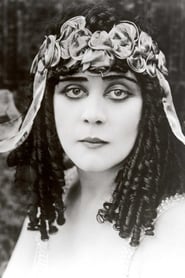
The film was one of Theda Bara's most prestigious productions, moving away from her typical 'vamp' roles to showcase her dramatic acting range. The production used elaborate sets and costumes to create the upper-class English setting, despite being filmed in New Jersey. The film featured advanced special effects for its time, including a dramatic train wreck sequence that was particularly noted by contemporary reviewers.
Themes
Wrongful accusation and redemptionMaternal love and sacrificeSocial class and reputationGender roles and double standardsThe consequences of jealousy
Themes & topics
melodramaadaptationfamily dramawrongful accusationidentityrevengetragedysocial classmaternal loveseparationredemptiondeception
Historical background
Released in 1916, East Lynne belongs to the silent feature period and reflects production norms of its release season.
Why this film matters
East Lynne contributes to understanding regional output and audience tastes around 1916.
Making of
The production of East Lynne represented a significant investment for Fox Film Corporation, with elaborate sets constructed to recreate English country houses and railway stations. Director Bertram Bracken worked closely with Theda Bara to develop a more restrained performance style than her typical vamp roles. The famous train wreck sequence required the construction of a miniature railway set and careful coordination with stunt performers. Contemporary reports indicate that Bara was deeply affected by the emotional material and often required time to compose herself between takes. The film's costume department created over 50 different outfits for Bara, reflecting her character's changing circumstances throughout the story. The production faced challenges in creating the English setting in New Jersey, with special attention paid to architectural details and period-appropriate props.
What critics said
Review records for East Lynne are typical of 1916: brief for shorts, more sustained for features.
Did you know?
- This was one of the few serious dramatic roles Theda Bara took during her peak 'vamp' years, helping to establish her as a versatile actress beyond typecasting
- The film was part of Fox Film Corporation's strategy to produce prestigious literary adaptations to compete with other major studios
- Ellen Wood's 1861 novel 'East Lynne' had been adapted for film multiple times before 1916, but this version was notable for updating the setting to contemporary times
- The train wreck sequence was considered among the leading elaborate and dangerous stunts of its time, requiring careful coordination and multiple takes
- Theda Bara personally requested this role as she wanted to prove her dramatic capabilities beyond her vamp persona
- The film's success led to increased demand for literary adaptations in Hollywood throughout the late 1910s
- Contemporary advertisements emphasized the film's emotional power, warning audiences to 'bring your handkerchiefs'
- The original novel was one of the best-selling books of the 19th century, making this adaptation highly anticipated
- Ben Deeley, who played Sir Archibald Carlyle, was a stage actor making one of his rare film appearances
- The film's intertitles were written by prominent screenwriter Bernard McConville, who specialized in literary adaptations
Visual style
The cinematography of East Lynne was handled by John W. Boyle, who employed sophisticated lighting techniques to create the film's dramatic atmosphere. The film made extensive use of backlighting to create silhouettes during emotional moments, particularly in scenes where Isabel's character is isolated from her family. The train wreck sequence utilized multiple camera angles and rapid editing to create a sense of chaos and danger, techniques that were innovative for 1916. Interior scenes featured careful use of natural light from windows to create realistic shadows and depth. The cinematography emphasized the contrast between the opulent Carlyle home and the more humble surroundings Isabel inhabits after her fall from grace. Close-ups were used sparingly but effectively, particularly during moments of emotional revelation.
Innovations
East Lynne featured several technical innovations for its time, particularly in its special effects sequences. The train wreck scene utilized miniature models combined with full-scale footage to create a convincing disaster sequence. The film employed sophisticated editing techniques, including cross-cutting between parallel actions to build tension. The makeup department developed new techniques for aging Theda Bara's character convincingly throughout the story. The production used innovative set designs that could be quickly reconfigured to show the passage of time. The film's intertitles were particularly well-designed, featuring artistic borders and careful typography that complemented the film's tone. The sound engineering team developed new methods for coordinating live musical accompaniment with the film's emotional beats.
Music
As a silent film, East Lynne would have been accompanied by live musical performances in theaters. Fox Film Corporation provided suggested musical cue sheets for theater orchestras, recommending classical pieces such as selections from Chopin, Beethoven's Moonlight Sonata, and original compositions by Fox's music department. The score was designed to enhance the film's emotional impact, with specific themes associated with Isabel's character and the Carlyle family. Major theaters featuring the film employed full orchestras, while smaller venues used piano accompaniment. The musical direction emphasized the contrast between the film's happy early scenes and the tragic later developments. Contemporary reviews noted that the musical accompaniment significantly enhanced the viewing experience, particularly during the film's climactic scenes.
Famous quotes
'Dead! Tell them I am dead!' - Isabel's instruction when she leaves her family
'A mother's love never dies' - Intertitle during Isabel's return
'Justice is blind, but sometimes it is also deaf' - Intertile reflecting on Isabel's situation
'In the eyes of the world, I am fallen, but in God's eyes, I am innocent' - Isabel's internal monologue
Memorable scenes
- The dramatic train wreck sequence where Isabel supposedly dies, utilizing innovative special effects and editing for 1916
- The emotional deathbed scene where Isabel reveals her true identity to her family, reportedly causing audiences to weep openly
- The moment when Isabel first sees her children as their governess, unable to reveal her true relationship
- The confrontation scene where Sir Archibald accuses Isabel of infidelity, setting the tragedy in motion
- The final scene where Sir Archibald discovers Isabel's diary and learns the truth about her innocence
What audiences thought
East Lynne was a significant box office success upon its release, with theaters reporting sell-out crowds and many requiring additional showings to meet demand. Contemporary audience accounts indicate that viewers were deeply moved by the story, with many reports of women weeping openly during the film's emotional climax. The film's success was particularly notable in urban areas where literary adaptations were becoming increasingly popular among middle-class audiences. Audience word-of-mouth was especially positive regarding Theda Bara's performance, with many viewers expressing surprise at her ability to portray a virtuous character convincingly. The film ran for extended engagements in major cities, a rarity for the time, and was frequently re-booked due to popular demand. Contemporary theater owners reported that the film attracted a more upscale audience than typical films, helping to establish cinema as respectable entertainment.
Film connections
Influenced by
- Ellen Wood's 1861 novel 'East Lynne'
- Victorian melodrama tradition
- Earlier stage adaptations of the novel
- Contemporary European film melodramas
- 19th century domestic fiction
This film influenced
- Later adaptations of East Lynne (1921, 1922, 1925)
- Fox Film Corporation's subsequent literary adaptations
- Theda Bara's later dramatic roles
- 1920s family melodramas
- Early Hollywood prestige pictures
Film restoration
East Lynne (1916) is considered a lost film. No complete copies are known to exist in any film archive or private collection. Only a few production stills and promotional materials survive. The film was one of many Fox productions from the 1910s that were lost in the 1937 Fox vault fire, which destroyed a significant portion of the studio's silent film output. The loss of the release is particularly regrettable as it represented one of Theda Bara's few serious dramatic roles from her peak period. Film historians continue to search for any surviving fragments or copies that might exist in private collections or overlooked archives.
Where to watch
- Unfortunately, East Lynne (1916) is not available for viewing as it is considered a lost film. No known copies exist in any archive or collection. Film enthusiasts can only experience the film through surviving production stills, promotional materials, and contemporary reviews that provide insight into this lost Theda Bara performance.