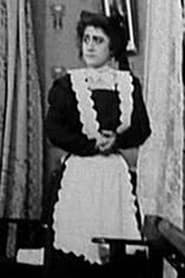
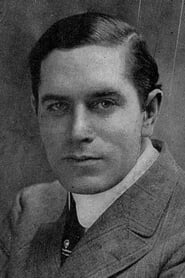
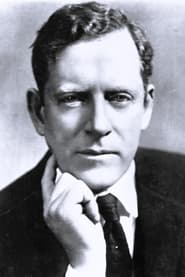
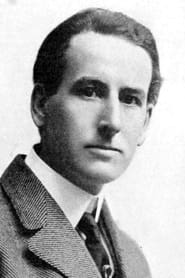
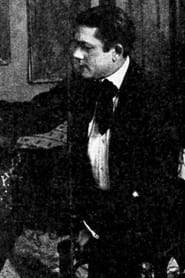

Edgar Allan Poe
"Genius against the clock"
Keys: Space play/pause · ←/→ 10s · F fullscreen · M mute · </> speed
About this film
As Poe's lover is slowly dying, he struggles to make money to care for her. Exhibitors circulated the 1909 print in short programs.
Cast & crew
More films like this

More Drama films
View all →







More from D.W. Griffith
View all →
More about this film
About the production
Release dateSeptember 13, 1909
Box officeNot documented (box office tracking was not standard practice in 1909)
ProductionAmerican Mutoscope and Biograph Company
Filmed inBiograph Studio, New York City, Fort Lee, New Jersey
This film was part of Griffith's remarkably prolific 1909 output, during which he directed over 60 short films for Biograph. The production was shot quickly, likely completed in one or two days, which was standard for Biograph productions of this period. Linda Arvidson, who plays Poe's lover, was Griffith's first wife at the time, and she appeared in numerous of his early films. The film represents Griffith's early experiments with psychological storytelling and character development, moving beyond the simple chase comedies that dominated early cinema.
Themes
Artistic struggle and povertyDeath and dyingRomantic tragedyCreative isolationThe suffering artist
Themes & topics
poetdying loverpovertymanuscript rejectionconsumptionromantic tragedyartistic sufferingdeathcaregivingdespair
Historical background
Edgar Allan Poe reached screens around 1909, produced in its country of origin. Programs then mixed actualities, dances, and staged scenes in single-reel slots.
Why this film matters
Researchers cite Edgar Allan Poe when tracing screen culture of its decade. Its brevity makes it useful for teaching how early narratives were staged.
Making of
The production of 'Edgar Allan Poe' took place during a pivotal moment in cinema history when D.W. Griffith was rapidly developing his directorial craft. Working at Biograph's Manhattan studio, Griffith was experimenting with more sophisticated narrative techniques, including cross-cutting and close-ups to convey emotional states. The casting of his wife Linda Arvidson as the dying lover was common practice for Griffith, who frequently used her in his early films. The film was shot quickly under the constraints of Biograph's factory-like production system, with Griffith expected to complete multiple films each week. Despite these limitations, Griffith managed to infuse the production with a level of psychological depth unusual for the period. The film's emphasis on Poe's internal struggle and emotional pain represented Griffith's growing interest in character-driven drama rather than mere spectacle or comedy.
What critics said
Reviewers in 1909 weighed Edgar Allan Poe on clarity, pacing, and audience response rather than prestige status. No single canonical review dominates later reference works for the title.
Did you know?
- This was one of the earliest films to depict a famous literary figure as its protagonist, helping establish the biographical genre in cinema.
- Barry O'Moore, who played Poe, later changed his screen name to Herbert Yost and became a prominent character actor in the 1920s and 1930s.
- The film's plot is entirely fictionalized; no historical evidence suggests Poe had a lover dying of consumption while he struggled to sell manuscripts.
- Linda Arvidson, who plays Poe's lover, was married to director D.W. Griffith at the time, though their marriage was already strained.
- The film was shot on 35mm film at Biograph's preferred frame rate of 16 frames per second.
- Like many Biograph films of this era, a paper print was made for copyright purposes and deposited with the Library of Congress.
- This film was released just months after Griffith's directorial debut, showing his rapid development as a filmmaker.
- The film's focus on psychological anguish and romantic tragedy was unusual for the period, when most films emphasized action and spectacle.
- Poe was a popular subject for early films due to his name recognition and association with Gothic horror and romance.
- The film was part of Biograph's strategy to appeal to middle-class audiences by adapting literary and historical subjects.
Visual style
The cinematography of 'Edgar Allan Poe' reflects the techniques and limitations of the Biograph Company in 1909. The film was shot by Biograph's regular cameraman G.W. Bitzer, who worked closely with Griffith throughout this period. The visual style uses static camera positions typical of the era, but Griffith was already beginning to vary shot distances to emphasize emotional moments. The lighting was natural and supplemented by arc lamps when filming indoors, creating dramatic contrasts that enhanced the Gothic atmosphere. The composition carefully frames actors to convey their emotional states, with Poe often shown in isolation to emphasize his alienation. The film uses the limited depth of field of the period to create visual focus on the main characters. The visual aesthetic incorporates elements of stage melodrama while beginning to explore cinematic techniques specific to the medium.
Innovations
While 'Edgar Allan Poe' does not feature groundbreaking technical innovations, it demonstrates several important developments in cinematic technique that were emerging in 1909. The film shows Griffith's early use of varying shot distances to emphasize emotional moments, moving away from the single wide shot that dominated early cinema. The editing creates a sense of narrative continuity and emotional progression that was more sophisticated than many contemporary films. The film's pacing and rhythm demonstrate Griffith's growing understanding of how to control audience attention through editing. The production also benefited from Biograph's relatively advanced film stock and processing techniques, which provided better image quality than many competitors. The film's survival through the Library of Congress paper print collection represents an important preservation achievement of the era.
Music
As a silent film, 'Edgar Allan Poe' would have been accompanied by live musical performance during its original exhibition. The typical Biograph theater presentation included a pianist or small ensemble providing musical accompaniment that matched the mood of each scene. For dramatic films like this, the music would have included romantic melodies for scenes with Poe and his lover, somber minor-key pieces for moments of despair, and more agitated music during Poe's struggles. The score likely drew from popular classical pieces and theater music of the period, with improvisation based on cue sheets provided by Biograph. No specific musical score was composed for the film, as was standard practice in 1909. The musical accompaniment played a crucial role in conveying the emotional tone of the story and helping audiences interpret the silent performances.
Famous quotes
No spoken dialogue - silent film with intertitles
Memorable scenes
- Poe desperately attempting to sell his manuscripts to indifferent publishers while his lover lies dying
- The tender bedside scenes where Poe cares for his suffering companion
- Poe's moments of anguished solitude as he confronts his poverty and helplessness
- The final deathbed scene emphasizing Poe's isolation and grief
What audiences thought
Audience reception in 1909 is difficult to document precisely, but films featuring literary figures like Poe were generally popular with nickelodeon audiences seeking more sophisticated fare than typical comedies and chase films. The tragic romance elements likely appealed to the predominantly female audience that frequented nickelodeons during this period. The film's emotional intensity and focus on romantic tragedy would have been relatively novel for audiences accustomed to more straightforward action and comedy. Contemporary accounts suggest that audiences responded positively to films that demonstrated emotional depth and character development, indicating that 'Edgar Allan Poe' was likely well-received. The film's subject matter also capitalized on the enduring public fascination with Poe's mysterious life and works, which had made him a cultural icon decades after his death.
Film connections
Influenced by
- Stage melodrama of the 19th century
- Literary biographies
- Gothic literature tradition
- Contemporary theatrical adaptations
- Earlier Biograph dramas
This film influenced
- Later Poe biographical films
- Griffith's own later biographical works
- Early Hollywood literary adaptations
- Romantic tragedy films of the 1910s
Film restoration
Preserved through Library of Congress paper print collection, has been restored and is available for viewing
Where to watch
- Library of Congress National Screening Room
- Museum of Modern Art film collection
- UCLA Film & Television Archive
- Various public domain film websites