
Estrellados
"Hollywood farce — Spanish cast"
Keys: Space play/pause · ←/→ 10s · F fullscreen · M mute · </> speed
About this film
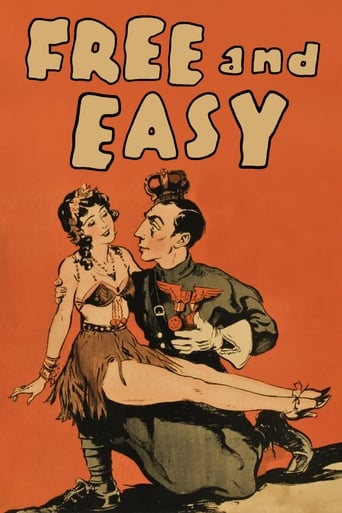
Spanish-language version of Free and Easy with Hispanic cast recreates Hollywood backstage farce. Estrellados (1930) belongs to MGM's foreign-language duplicate strategy in early talkie era.
Cast & crew
More films like this
More Comedy films
View all →







More about this film
About the production
Release dateJuly 7, 1930
BudgetApproximately $500,000 (combined with 'Free and Easy')
Box officeUnavailable (International market focused)
ProductionMetro-Goldwyn-Mayer (MGM)
Filmed inMGM Studios - 10202 W. Washington Blvd., Culver City, California, USA
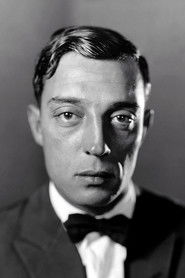
Estrellados was produced as a 'Multiple-Language Version' (MLV), a common practice in the early sound era before dubbing was perfected. While the English version 'Free and Easy' featured Anita Page and Robert Montgomery, MGM filmed 'Estrellados' simultaneously on the same sets at night with a Spanish-speaking cast. Buster Keaton, who did not speak Spanish, had to learn his lines phonetically, often reading from off-camera cue cards or having the lines whispered to him by a coach just before the cameras rolled. This process was grueling for Keaton, who preferred the spontaneity of silent physical comedy over the rigid requirements of early sound recording.
Themes
The 'American Dream' and the lure of HollywoodThe clash between small-town innocence and big-city artificeUnrequited love and self-sacrificeThe absurdity of the filmmaking processIdentity and language
Themes & topics
Hollywoodmovie studioSpanish languagegas station attendantmatinée idolstarletbumbling managerphonetic dialoguebehind the scenes
Historical background
Estrellados (1930) belongs to brief vogue for simultaneous foreign-language versions before dubbing dominated.
Why this film matters
Multiple-language production documents early sound globalization experiments at MGM.
Making of
The production of Estrellados was a logistical marathon. After the English-speaking crew finished their day shifts for 'Free and Easy', the Spanish-speaking cast and director Salvador de Alberich would take over the sets for the night. Buster Keaton was essentially working double shifts, often appearing exhausted on set. The technical constraints of early sound—bulky microphones hidden in props and the need for actors to stay near 'sweet spots'—severely limited Keaton's ability to perform the wide-ranging physical stunts that had made him a legend. He famously clashed with the studio over the script, which he found wordy and lacking the visual logic of his silent masterpieces.
What critics said
Spanish markets welcomed star access; scholars study it in polyglot Hollywood history.
Did you know?
- This was Buster Keaton's first sound film, and remarkably, he made his 'talkie' debut in two languages (English and Spanish) almost simultaneously.
- Keaton's character name was changed from Elmer Butts in the English version to Canuto Cuadratín in the Spanish version.
- The film features numerous cameos from MGM stars of the era, including Cecil B. DeMille, Lionel Barrymore, and William Haines, who appeared in both the English and Spanish versions.
- Because Keaton had to memorize Spanish lines phonetically, his delivery has a distinct, slow, and rhythmic quality that some critics felt added to his 'Great Stone Face' persona.
- The title 'Estrellados' is a clever Spanish pun; it can mean 'star-studded' (referring to the movie stars) or 'smashed/crashed' (referring to the characters' failures).
- Raquel Torres, the female lead, was one of the few Mexican-American actresses to successfully transition from silent films to early sound 'Hispanic Hollywood' productions.
- The film includes a sequence where Keaton performs a parody of a traditional Spanish dance, which was specifically tailored for the Spanish-speaking audience.
- Director Salvador de Alberich was a Spanish journalist and writer hired by MGM specifically to oversee their Spanish-language productions and ensure linguistic accuracy.
Visual style
The cinematography by Leonard Smith is typical of early sound films, characterized by a more static camera compared to the fluid movements of the late silent era. Because the microphones were stationary and hidden in flower vases or furniture, the actors—and consequently the camera—had to remain relatively still. However, the film successfully captures the 'behind-the-scenes' glamour of the MGM lot, using wide shots of actual soundstages and backlots to give the film an authentic Hollywood feel.
Innovations
The primary technical achievement was the seamless coordination of a dual-language production. The crew had to maintain identical blocking and lighting for two different sets of actors across different shifts. It also demonstrated the early use of 'phonetic coaching' for lead actors, a technique that would be used for other stars like Laurel and Hardy in their own foreign-language shorts.
Music
The soundtrack features early synchronized sound recorded via the Western Electric sound-on-film system. It includes several musical numbers, most notably 'Free and Easy' (translated or adapted for the Spanish version) and traditional Spanish-flavored melodies. The sound design is notable for its use of 'diegetic' sound, where the noises of the movie studio (clapper boards, shouting directors) are integrated into the plot's comedy.
Famous quotes
Canuto: 'Yo no sirvo para el cine... para ser artista hay que nacer.' (I'm no good for the movies... to be an artist, one must be born that way.)
Director: '¡Silencio! ¡Cámara! ¡Acción!' (The recurring motif of the chaotic movie set.)
Memorable scenes
- The 'Sultan's Bedroom' Scene: Canuto accidentally wanders onto a serious dramatic set dressed as a harem girl, leading to a disastrous and hilarious sequence of physical blunders that ruin the take.
- The Phonetic Serenade: Canuto attempts to woo Elvira using grandiloquent Spanish phrases he clearly doesn't understand, resulting in perfect deadpan comedic timing.
- The Finale: A bittersweet moment where Canuto performs a comedy routine on stage, making the audience roar with laughter while his heart breaks as he watches Elvira leave with Larry.
What audiences thought
The film was a significant hit in Latin America and Spain, where audiences flocked to see 'El Rey de la Risa' (The King of Laughter) in a talking picture. In the United States, it played primarily in specialized theaters in cities with large Spanish-speaking populations like Los Angeles, San Antonio, and New York. Audiences generally found Keaton's deadpan delivery in Spanish to be charmingly absurd, which fit his established screen character perfectly.
Film connections
Influenced by
- The real-life experiences of vaudevillians moving to Hollywood
- The 'Show People' (1928) tradition of Hollywood-on-Hollywood satire
This film influenced
- Singin' in the Rain (1952) - which parodies the exact era of difficult transitions to sound
- The Artist (2011)
Film restoration
Preserved. The film was long considered difficult to find but has been restored and made available through the Warner Archive Collection, often paired as a bonus feature with the English version 'Free and Easy'.
Where to watch
- Warner Archive Collection (DVD/Blu-ray)
- Turner Classic Movies (TCM) occasional broadcasts
- Available for digital rental/purchase on platforms like Amazon Video and Apple TV in certain regions