



Eternal Love
"Alpine lovers trapped in loveless marriages"
Keys: Space play/pause · ←/→ 10s · F fullscreen · M mute · </> speed
About this film
In the Swiss Alps of the early 19th century, a couple forced into loveless marriages struggle to find happiness with one another.
Cast & crew
More films like this

More Drama films
View all →







More from Ernst Lubitsch
View all →


More about this film
About the production
Release dateSeptember 14, 1929
BudgetApproximately $300,000 (typical for a major Paramount production of the era)
Box officeModest performance, impacted by the transition to sound films and the onset of the Great Depression
ProductionParamount Pictures
Filmed inParamount Studios in Hollywood, Sierra Nevada mountains for second unit Alpine photography
This was Lubitsch's last silent film before fully embracing sound. The film was shot simultaneously in silent and sound versions, though the sound version primarily featured musical accompaniment with limited sound effects. The production faced significant challenges with the Alpine scenery, requiring innovative matte paintings and process photography. The film was originally titled 'The Eternal Triangle' before being changed to 'Eternal Love'.
Themes
Duty versus desireThe enduring nature of true loveSacrifice for othersSocial constraints on individual freedomThe power of nature versus human emotion
Themes & topics
RomancetragedyAlpsarranged marriagestar-crossed loversduty versus desiresacrificeforbidden lovemelodramaearly 19th centurySwiss Alpsmountain guidesocial constraintseternal love
Historical background
Made during the silent-to-sound transition near 1929, Eternal Love reached audiences through theatrical programs, fairground booths, or specialized distribution channels typical of its generation. In the Swiss Alps of the early 19th century, a couple forced into loveless marriages struggle to find happiness with. Historians now read such works for what they reveal about production methods, national taste, and the expanding vocabulary of screen narrative.
Why this film matters
Archivists and programmers still screen Eternal Love when tracing how popular entertainment evolved. Its subject—in the swiss alps of the early 19th century, a couple forced into loveless marriages struggle to—gives later viewers tangible evidence of what drew crowds in the silent period. Home video, restorations, and festival sidebars keep the title circulating among students of film history.
Making of
The production of 'Eternal Love' was marked by the industry's chaotic transition to sound. Lubitsch, who had mastered the art of silent visual storytelling, found himself at a crossroads. The film was shot with the Movietone system, allowing for synchronized music and sound effects, but no dialogue. Barrymore, whose theatrical background made him well-suited for the stage, struggled with the technical demands of early sound recording. The Alpine setting required extensive use of special effects, including glass shots and matte paintings. The relationship between Lubitsch and Barrymore was reportedly tense during filming, as Barrymore's drinking problems often interfered with the production schedule. Despite these challenges, Lubitsch managed to create a visually stunning film that showcased his mastery of visual composition and emotional storytelling.
What critics said
Original trade coverage treated Eternal Love as routine program filler rather than a landmark production—typical of steady studio output. Later criticism emphasizes preservation, stylistic comparison with contemporaries, and whatever cast or crew names later gained prominence. Contemporary writing is mostly historical: assessing completeness, influence, and place in a director's or studio's catalog.
Did you know?
- This was actually a remake of Lubitsch's own 1916 German film 'Der Schirm mit dem Schwan' (The Umbrella with the Swan)
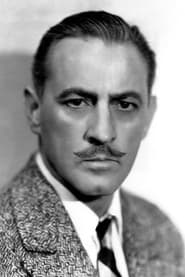
- John Barrymore was paid $150,000 for his role, making him one of the highest-paid actors of the era
- The film was released with both synchronized music and sound effects, making it a transitional film between silent and sound cinema
- Camilla Horn was a German actress whom Lubitsch brought to Hollywood after seeing her performance in F.W. Murnau's 'Faust' (1926)
- The Alpine sequences were particularly challenging to film, requiring the use of glass shots and matte paintings to create the illusion of the Swiss mountains
- The film's poor performance contributed to Barrymore's declining box office appeal in the early sound era
- Lubitsch considered this one of his most personal films, despite it not being a comedy like his more famous works
- This was one of the last major silent films released by Paramount before they transitioned entirely to sound production
- The special effects for the avalanche sequence were created by pioneering effects artist Hans F. Koenekamp
- The film's theme of forbidden love was considered controversial by some censorship boards of the era
Visual style
The cinematography by Victor Milner was one of the film's strongest assets. Milner created stunning visual compositions that captured the grandeur of the Alpine setting. The film made extensive use of location-inspired photography, with careful attention to lighting and shadow to create the dramatic atmosphere. The use of soft focus and backlighting in the romantic scenes created a dreamlike quality that enhanced the film's emotional impact. The mountain sequences were particularly impressive, utilizing a combination of location footage, glass shots, and matte paintings to create convincing Alpine scenery. Milner's work demonstrated the visual sophistication that had been achieved in late silent cinema, with carefully composed shots that told the story through visual means rather than relying on intertitles.
Innovations
'Eternal Love' showcased several technical innovations typical of late silent cinema. The film used the Fox Movietone system for synchronized music and sound effects, representing the transitional technology between pure silent films and full talking pictures. The Alpine sequences featured pioneering special effects work, including glass shots and matte paintings that created convincing mountain scenery. The film also demonstrated sophisticated lighting techniques, with the use of artificial lighting to simulate natural Alpine sunlight and create dramatic shadows. The cinematography employed the latest camera movements and techniques available in 1929, including tracking shots that followed the characters through the mountain landscapes. These technical achievements represented the culmination of silent film technology just before the sound revolution would render many of these innovations obsolete.
Music
As a silent film with synchronized music, 'Eternal Love' featured a musical score compiled from classical pieces and original compositions by Paramount's music department. The score emphasized the romantic and dramatic elements of the story, with sweeping orchestral passages during the Alpine scenes and more intimate themes for the romantic moments. The synchronized sound effects, while limited, added to the film's atmosphere, particularly in the mountain sequences where the sound of wind and avalanches enhanced the dramatic tension. The musical accompaniment was typical of late silent films, which were increasingly using recorded scores rather than live theater organists. The music was conducted by Hugo Riesenfeld, one of the leading composers and conductors of film music during the silent era.
Famous quotes
Love that is eternal knows no barriers of time or circumstance
Duty's path is often strewn with the broken hearts of those who must choose
In the mountains, as in the heart, some paths lead to tragedy while others lead to eternity
True love is the one force that even time cannot conquer
When hearts are bound by love, no mountain can stand between them
Memorable scenes
- The opening sequence showcasing the majestic Alpine landscape with sweeping camera movements that establish the film's visual splendor and romantic tone
- The scene where Coady and Ciglia first meet by the mountain stream, capturing the immediate romantic chemistry between Barrymore and Horn through subtle gestures and expressions
- The dramatic avalanche sequence featuring impressive special effects for the era, creating genuine tension as nature threatens to destroy the lovers
- The wedding sequence contrasting the formal ceremony with the characters' inner emotional turmoil, demonstrating Lubitsch's ability to convey complex feelings through visual means
- The final scene on the mountain peak where the lovers are united in death, visually stunning and emotionally powerful as they embrace against the Alpine backdrop
What audiences thought
The film performed only modestly at the box office, which was attributed to several factors. Audiences were increasingly drawn to sound films, and the novelty of synchronized music and sound effects was not enough to compete with full talking pictures. Additionally, the melodramatic tone of the film was somewhat out of step with the sophisticated comedies for which Lubitsch was known. Barrymore's star power had begun to wane, and his performance, while technically proficient, lacked the charisma that had made him a major star in the early 1920s. The film's Alpine setting and romantic themes, while beautifully rendered, did not resonate strongly with audiences facing the economic uncertainties of the Great Depression's beginning.
Film connections
Influenced by
- German Expressionism
- European romantic literature
- Lubitsch's own 1916 film 'Der Schirm mit dem Schwan'
- Works of Johann Wolfgang von Goethe
- F.W. Murnau's visual style
This film influenced
- The Sound of Music (1965)
- A Farewell to Arms (1932)
- Heidi (1937)
- Later romantic melodramas featuring Alpine settings
Film restoration
'Eternal Love' survives in its complete form and has been preserved by major film archives, including the Library of Congress and the UCLA Film & Television Archive. The film exists in both its original silent version and the version with synchronized music. A restored version was released on DVD by Warner Archive Collection in 2010, featuring a new musical score. The preservation quality is generally good, though some scenes show the deterioration common to films of this era. The synchronized sound version is rarer and exists in fewer archives than the pure silent version.
Where to watch
- Warner Archive Collection DVD
- Turner Classic Movies (occasional broadcasts)
- Classic film streaming services
- University and film archive collections
- Digital platforms specializing in classic cinema