
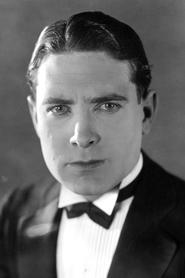
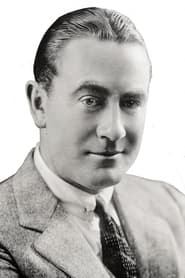
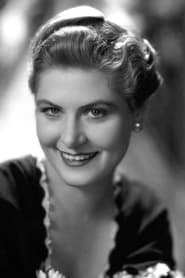
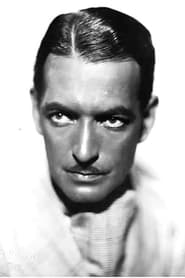

Extravagance
"Alice Kendall's costly trousseau"
Keys: Space play/pause · ←/→ 10s · F fullscreen · M mute · </> speed
About this film
Socialite Alice Kendall spends her mother's last funds on a trousseau for a marriage that unravels. A 1930 pre-Code cautionary drama.
Cast & crew
More films like this
More Drama films
View all →







More from Phil Rosen
View all →
More about this film
About the production
Release dateOctober 10, 1930
BudgetEstimated at $150,000 (standard for Tiffany Pictures 'prestige' productions)
ProductionTiffany Pictures, Tiffany Productions
Filmed inTiffany Studios, Hollywood, Los Angeles, California, USA
Produced by Tiffany Pictures, one of the leading 'Poverty Row' studios that attempted to compete with the majors by producing 'prestige' independent films. The film was directed by Phil Rosen, a former cinematographer and founding member of the ASC, who brought a more visual sensibility to the early sound era. The production utilized the RCA Photophone System for its sound recording, which was a common alternative to Western Electric at the time.
Themes
MaterialismMarital DiscordSocial ClassSacrificeConsequences of Greed
Themes & topics
sable coatsocialitebankruptcyadulterysuicidemarriage troublespre-codestock deal
Historical background
Released in 1930, Extravagance belongs to the early sound era and reflects production norms of its release season.
Why this film matters
Extravagance contributes to understanding regional output and audience tastes around 1930.
Making of
The production of 'Extravagance' faced the typical challenges of early sound films, including the 'stiffness' of actors who had to remain near hidden microphones. Director Phil Rosen, having started as a cameraman, attempted to keep the camera moving more than many of his contemporaries, though the limitations of early sound booths are still evident in certain scenes. Casting Owen Moore was seen as a way to bring silent-era star power to the independent production. The film was marketed as a 'fashion show' of sorts, specifically targeting female audiences with its display of high-end costumes and sets, despite the moralistic ending that condemned such luxury.
What critics said
Review records for Extravagance are typical of 1930: brief for shorts, more sustained for features.
Did you know?
- The film is a notable example of 'Pre-Code' cinema, featuring themes of adultery and financial deception that would be strictly censored a few years later.
- Director Phil Rosen was one of the founders of the American Society of Cinematographers (ASC).
- Jameson Thomas, who plays the playboy Morrell, was a British actor making his American film debut in this production.
- Owen Moore, who plays Jim Hamilton, was famously the first husband of 'America's Sweetheart' Mary Pickford.
- The film's plot acts as a cautionary tale released just as the Great Depression was beginning to take a severe toll on American households.
- June Collyer was known for her striking beauty and was often cast in roles requiring a 'million-dollar' look.
- The film was released by Tiffany Pictures, a studio that went bankrupt only two years later in 1932.
- The 'sable coat' plot point was a common trope in 1930s melodramas to symbolize the corrupting influence of material wealth.
Visual style
Shot by Max Dupont, the film features the high-contrast lighting typical of early 1930s dramas. Because director Phil Rosen was a former cinematographer, the film contains several sophisticated visual compositions and 'deep focus' attempts that were advanced for a low-budget production of 1930.
Innovations
The film is noted for its early use of the RCA Photophone sound-on-film process. It also utilized sophisticated set designs by Ralph M. DeLacy to make a modest budget look like a major studio production.
Music
The film features a standard early sound score with minimal incidental music, relying heavily on diegetic sound and dialogue. The RCA Photophone system used for the film provided a relatively clear audio track for the era, though it lacks the complexity of later 1930s scores.
Famous quotes
Alice: 'A woman is only as old as her clothes, Fred, and I'm feeling positively ancient in this rag!'
Fred: 'I'm not asking you to starve, Alice. I'm just asking you to wait.'
Morrell: 'In this world, Mrs. Garlan, you don't get something for nothing. But sometimes, the price is just a little... discretion.'
Memorable scenes
- The opening sequence showing Alice's mother secretly selling her jewelry to pay for Alice's wedding finery.
- The tense dinner scene where Fred discovers the sable coat and realizes Alice has lied about its origin.
- The tragic climax involving Esther's suicide, which serves as the ultimate wake-up call for Alice's character.
What audiences thought
Audiences of the time were drawn to the film's depiction of high society and glamorous fashion, which provided a form of escapism even as the plot warned against such lifestyles. The film performed reasonably well in independent circuits and was popular among female viewers who enjoyed the 'society drama' genre.
Film connections
Influenced by
- The social melodramas of the late silent era
- The works of Cecil B. DeMille
- Real-life social scandals of the 1920s
This film influenced
- The Women (1939)
- Various 1930s 'fallen woman' films
- Imitation of Life (1934)
Film restoration
The film is preserved and is available in various archival collections. It has been released on home video (DVD) by Alpha Video.
Where to watch
- Alpha Video (DVD)
- Public Domain archives
- Rare film streaming platforms like Rumble or YouTube