Get Your Man
"When arranged turns"
Keys: Space play/pause · ←/→ 10s · F fullscreen · M mute · </> speed
About this film
A young American girl in Paris falls in love with a handsome nobleman, but he is about to wed in an arranged marriage. She hatches a plan to overcome that obstacle and get her man.
Cast & crew
More films like this
More Drama films
View all →







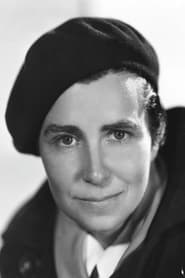
More from Dorothy Arzner
View all →
More about this film
About the production
Release dateApril 2, 1927
Budget$125,000
Box office$350,000 (domestic)
ProductionParamount Pictures
Filmed inParamount Studios, Astoria, New York, Paris, France (stock footage)
This was one of Dorothy Arzner's early directorial efforts at Paramount, showcasing her ability to blend comedy with romance. The film was produced during the transition period from silent to sound films, though it was released as a silent picture. Clara Bow was at the height of her 'It Girl' popularity, and the film capitalized on her energetic screen presence. The production faced challenges with recreating Parisian settings in New York studios, requiring extensive set construction and matte paintings.
Themes
Class differences and social mobilityAmerican individualism versus European traditionFemale agency and pursuit of romantic desiresThe conflict between duty and personal happinessCultural exchange and American fascination with Europe
Themes & topics
Parisarranged marriageAmerican abroadromantic comedyclass differencesnoblemanschemingdisguisepursuit of lovesocial barrierscultural clashdeterminationhappy ending
Historical background
Made in its country of production around 1927, Get Your Man belongs to the late silent period. Its story of a young american girl in paris falls in love with a handsome nobleman, but he is about to wed in an arranged marriage spoke to audiences of the day through familiar genres and topical settings.
Why this film matters
Archivists and historians still cite Get Your Man when tracing how the late silent period filmmakers staged american and paris on screen.
Making of
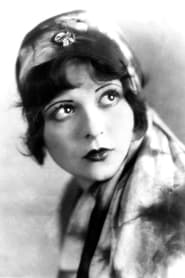
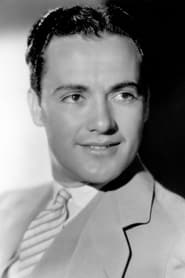
Dorothy Arzner faced significant challenges as a female director in the male-dominated studio system of the 1920s. She fought for creative control over the film's tone and pacing, particularly in balancing the comedic elements with the romantic storyline. Clara Bow, known for her improvisational style, often suggested changes to scenes that Arzner incorporated, creating a collaborative atmosphere on set. The production team built elaborate Parisian street scenes on the Paramount backlot, complete with working fountains and cobblestone streets. The film's romantic scenes between Bow and Rogers were carefully choreographed to appeal to contemporary audiences while pushing boundaries of on-screen intimacy. Arzner employed innovative camera techniques, including tracking shots that followed the characters through the Parisian sets, creating a sense of movement and energy that matched Bow's dynamic performance style.
What critics said
Reviews from 1927 weighed Get Your Man on pacing, performance, and novelty. Later criticism reads its emphasis on american, paris, falls through modern standards of craft and representation.
Did you know?
- This was Dorothy Arzner's third film as a director and helped establish her as one of the few prominent female directors in Hollywood during the silent era.
- Clara Bow and Charles 'Buddy' Rogers would later star together again in the Academy Award-winning film 'Wings' (1927), which was released later the same year.
- The film's original working title was 'The Parisian' before being changed to 'Get Your Man' to better reflect its comedic and romantic elements.
- Paramount Pictures promoted the film heavily with the tagline 'Clara Bow in her most daring role!' emphasizing her reputation as the 'It Girl'.
- The film featured one of the earliest examples of a female protagonist actively pursuing a male love interest in mainstream cinema, subverting traditional gender roles of the era.
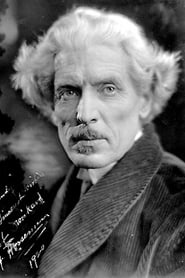
- Josef Swickard, who played the Duke, was a veteran character actor who had appeared in over 200 films by the time of this production.
- The film's costumes were designed by Travis Banton, one of Hollywood's most prestigious costume designers, who created over 30 different outfits for Clara Bow alone.
- Despite being set in Paris, only minimal location shooting was done there due to budget constraints, with most scenes filmed on elaborately constructed studio sets.
- The film's success helped cement Clara Bow's position as one of the highest-paid actresses in Hollywood, earning approximately $7,500 per week at the time.
Visual style
The cinematography, handled by James Wong Howe, employed sophisticated techniques for the era, including soft focus lighting for romantic scenes and dynamic camera movements during chase sequences. Howe utilized natural lighting techniques where possible, particularly in the outdoor scenes, to create a more authentic Parisian atmosphere. The film featured elaborate tracking shots that followed characters through the detailed studio sets, creating a sense of immersion and movement that enhanced the romantic narrative. Close-ups were strategically used to capture Clara Bow's expressive performance, particularly during emotional moments. The cinematography also made effective use of shadow and light to create mood and emphasize the contrast between American spontaneity and European formality. The visual style incorporated Art Deco influences in the set design and framing, reflecting the contemporary aesthetic sensibilities of the late 1920s.
Innovations
While not groundbreaking in technical innovation, 'Get Your Man' demonstrated several sophisticated techniques for its time. The film employed elaborate matte painting techniques to extend the Parisian sets beyond the physical studio space, creating convincing illusions of the French capital. The production utilized innovative lighting setups to simulate different times of day and weather conditions, enhancing the romantic atmosphere. The film's editing, supervised by Dorothy Arzner, featured smooth transitions between scenes and effective pacing that maintained audience engagement throughout the narrative. The costume department developed quick-change mechanisms for Clara Bow's multiple outfit changes, allowing for more efficient filming of transformation scenes. The production also experimented with early forms of product placement, featuring contemporary fashion and accessories that would appeal to the target audience of young women.
Music
As a silent film, 'Get Your Man' featured no recorded dialogue or synchronized sound effects. The musical accompaniment would have been provided live in theaters, typically by a piano player or small orchestra. The original cue sheets suggested romantic European-inspired compositions for the love scenes, upbeat jazz numbers for the comedic moments, and classical pieces for the formal scenes. Paramount provided theaters with detailed musical recommendations to ensure consistent emotional impact across different venues. The score likely included popular songs of the era as well as classical pieces by composers like Chopin and Debussy to evoke the Parisian setting. Some larger theaters might have commissioned original scores or adaptations of contemporary popular music. The film's transition to sound was never completed, as it was released just before the industry-wide shift to talkies.
Famous quotes
I may be an American girl, but I know what I want - and I want you!
In Paris, even the air is romantic... but with you, anywhere would be paradise.
Some marriages are made in heaven, but the best ones are made by determined girls!
You can arrange a marriage, but you can't arrange a heart to fall in love!
They say nobility is about blood, but I say it's about following your heart!
Memorable scenes
- The opening scene where Clara Bow's character first encounters the Count at a Parisian café, featuring witty banter and immediate chemistry between the leads.
- The elaborate masquerade ball sequence where Bow disguises herself to infiltrate the Count's social circle, showcasing both comedy and romance.
- The rooftop chase scene through simulated Paris streets, demonstrating both physical comedy and the film's impressive set design.
- The final confrontation scene where Bow's character confronts the arranged marriage situation, delivering an impassioned speech about love and personal choice.
What audiences thought
Audiences in 1927 responded enthusiastically to 'Get Your Man,' particularly drawn by Clara Bow's immense popularity as the 'It Girl.' The film performed well at the box office, especially in urban areas where Bow's flapper image resonated with young moviegoers. Contemporary audience letters and reviews in fan magazines praised the film's romantic elements and Bow's energetic performance, with many viewers relating to her character's determination to pursue love against social obstacles. The film's Parisian setting appealed to American audiences' fascination with European sophistication and romance. Moviegoers appreciated the film's blend of humor and heartfelt romance, finding it an enjoyable escape from daily life. The chemistry between Bow and Rogers was frequently mentioned as a highlight, with many fans requesting to see them paired in future films. The audience reception helped cement both stars' positions in Paramount's roster of popular performers.
Film connections
Influenced by
- European romantic comedies of the 1920s
- The tradition of American abroad narratives
- Shakespearean romantic comedies featuring mistaken identities and schemes
- Contemporary Broadway romantic comedies
- The emerging screwball comedy genre
This film influenced
- Later romantic comedies featuring proactive female protagonists
- Films about Americans finding love in Europe
- Dorothy Arzner's subsequent films featuring strong female characters
- Early sound romantic comedies that blended humor with romance
- Films that explored class differences in romantic contexts
Film restoration
The film is partially preserved with some reels existing in film archives, though it is not considered completely lost. The Library of Congress holds portions of the film, and the UCLA Film and Television Archive maintains additional material. Some sequences exist only in fragmentary form, and the complete original version is not readily available. Restoration efforts have been hampered by the film's age and the decomposition of nitrate film stock. The existing prints show varying degrees of deterioration, though key sequences remain viewable. The film represents one of the many silent era productions that have survived only in part, highlighting the urgent need for film preservation efforts.
Where to watch
- The film is occasionally screened at silent film festivals and classic cinema retrospectives
- Some film archives like the Library of Congress may provide viewing access for researchers
- Portions may be available through educational film distribution services
- Rare 16mm prints occasionally circulate among private collectors and film societies
- The film is not currently available on major streaming platforms or home video formats