Going to the Fire
Plot
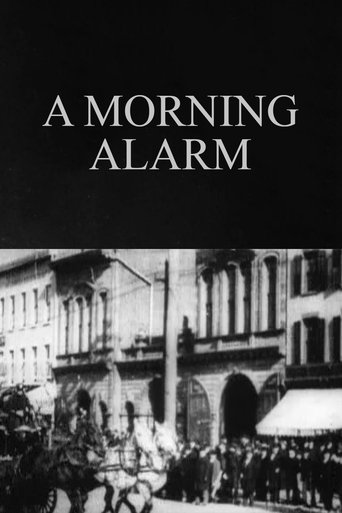
A crowd of onlookers gathers in the street as the Newark Fire Department rushes to answer an alarm. The film records the movement and urgency of the apparatus as it passes through the urban setting, emphasizing the speed, activity, and public spectacle of an early fire response. Rather than following a fictional narrative, the short presents a real-world civic event in a documentary, actuality style typical of the 1890s. Its interest lies in the collective reaction of the crowd and the motion of the emergency crew, offering a brief glimpse of daily life and public services in the late nineteenth century.
Director
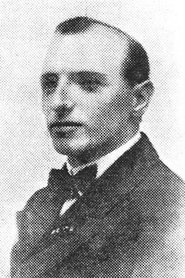
James H. WhiteAbout the Production
This is an early actuality film made for Edison, designed to capture a real event rather than stage a fictional story. It was filmed outdoors on location in Newark and reflects the Edison studio's interest in documenting modern urban life, public spectacle, and movement. Like many films of the period, it was extremely short and likely shot with a fixed camera position, with the drama created by the passing action and the reactions of the crowd. Because it is an 1896 film, detailed production records such as costs, crew breakdowns, or precise shooting dates are limited or unavailable.
Historical Background
The film was made in 1896, a pivotal year in the history of cinema when motion pictures were transitioning from technological novelty to public entertainment. In the United States, Edison’s productions were part of a broader race to commercialize filmed actuality, urban scenes, and short-lived attractions that audiences found exciting because they showed familiar modern life in motion. This was also a period of rapid urbanization, when cities like Newark were expanding and municipal services such as organized fire departments had become symbols of modern civic infrastructure. The film matters historically because it preserves an everyday public event from the late nineteenth century and demonstrates how early cinema served as both entertainment and documentary record.
Why This Film Matters
Going to the Fire is culturally significant as an example of the earliest nonfiction cinema, before narrative feature filmmaking became dominant. It reflects a foundational function of motion pictures: the recording of real people, real streets, and real institutions in a way that contemporary audiences found thrilling and immediate. For historians, it offers a tiny but meaningful snapshot of urban American life, including public crowd behavior and the visibility of emergency response in the late Victorian period. More broadly, it belongs to the body of Edison actualities that helped establish cinema as a medium for observing the everyday world, not just staging invented stories.
Making Of
Going to the Fire was produced in the tradition of Edison actuality films, which sent cameramen into real-world locations to photograph topical, recognizable events. James H. White, one of Edison’s most active early filmmakers, specialized in capturing scenes of modern life, transport, labor, and public spectacle, and this film fits that pattern closely. The shoot would have required positioning a camera where the responding fire crew and crowd could pass clearly in front of the lens, with the main creative challenge being to capture motion cleanly on the primitive equipment of the era. No elaborate set construction or staged performance is associated with the film; its significance comes from the act of observation itself and the novelty of seeing a public emergency on screen.
Visual Style
The cinematography is characteristic of 1890s actuality filming: a largely fixed camera, little or no camera movement, and a composition designed to keep the main action within a shallow, frontal viewing space. The emphasis is on clarity and legibility rather than artistic framing in the later cinematic sense. Motion across the frame is the primary visual attraction, especially the fire department apparatus and the surrounding crowd. The image would have been in black and white and silent, with visual information carried by gesture, movement, and street activity.
Innovations
The film is not known for a specific technical innovation in the sense of special effects or editing breakthroughs, but it is technically important as an early outdoor actuality captured on location. It demonstrates the use of the motion-picture camera as a documentary tool to record a public event in real time. The ability to photograph moving vehicles, a crowd, and an urban emergency in 1896 was itself noteworthy to early audiences. Its technical value lies in its contribution to the vocabulary of filmed observation that would become a core function of cinema.
Music
No original soundtrack survives or is known for this silent film. In its original exhibition, it would typically have been accompanied live, if at all, by a pianist, organist, lecturer, or other local musical accompaniment depending on the venue. Any music today would be a later archival or distribution addition rather than something originally fixed to the film. Because it is a very short actuality, the sound accompaniment would have functioned primarily as atmospheric support for the exhibition experience.
Memorable Scenes
- The fire department response as it moves into action, the central spectacle of the film.
- The gathered crowd observing the emergency, which gives the short its sense of public immediacy.
- The passing street activity that situates the fire response within everyday urban life.
Did You Know?
- The film is an early nonfiction actuality, meaning it records a real event rather than staging a dramatic narrative.
- It was made in 1896, during the earliest period of American motion-picture production.
- James H. White was a key Edison cameraman and filmmaker associated with many early actualities and travel views.
- The film documents the Newark Fire Department, making it of interest to historians of urban services and municipal life.
- Its title is sometimes encountered in collections of Edison early films and can be easily confused with other fire-related short films from the silent era, but this specific title refers to the 1896 Newark subject.
- As with many films of the 1890s, it likely existed as a short strip intended for exhibition in nickelodeons, vaudeville programs, or other early exhibition settings.
- The film is valuable as a visual record of clothing, street conditions, crowd behavior, and firefighting equipment of the era.
- Because it is so brief, it relies entirely on the viewer's recognition of the event and the excitement of movement rather than editing or intertitles.
What Critics Said
Contemporary critical reception for this specific short is not well documented, which is typical for very early films that were often discussed only in trade notices or exhibition catalogs, if at all. At the time, such actuality subjects were generally appreciated for their novelty, realism, and ability to show current events or recognizable scenes of city life. Modern critics and film historians tend to value the film less as a dramatic work than as a historical artifact and a representative example of Edison documentary filmmaking. Its present-day reputation rests on archival and scholarly interest in the origins of nonfiction cinema rather than on individual critical acclaim.
What Audiences Thought
Audiences in the 1890s were drawn to actuality films because they offered a startling sense of immediacy and motion, and a scene involving a fire department would likely have been especially compelling. Viewers could recognize the urgency of the situation and the local or civic relevance of firefighters responding to duty. The film's appeal would have been enhanced by the excitement of watching a real event unfold with no staging, dialogue, or narrative mediation. Today, audience interest is mostly specialized, coming from viewers of silent cinema, early film history, or local-history archives.
Film Connections
Influenced By
- Edison studio actuality films
- late nineteenth-century lantern-slide and news illustration traditions
- vaudeville and exhibition culture favoring topical novelty
This Film Influenced
- Early actuality and newsreel-style street films
- city-life documentaries
- firefighting actuality shorts from the silent era
You Might Also Like
More Documentary Films
View allMore from James H. White
View allFilm Restoration
The film is extant in archival or cataloged form and is not generally considered lost, though surviving materials may be limited and derive from preservation holdings or later transfers from early prints.