

Greed
"Five thousand dollars poisons a marriage"
Keys: Space play/pause · ←/→ 10s · F fullscreen · M mute · </> speed
About this film
A five-thousand-dollar lottery win transforms a miner turned dentist and his wife, unleashing greed that corrodes their marriage. Erich von Stroheim's adaptation of Frank Norris's McTeague follows McTeague, Trina, and Marcus toward jealousy, violence, and ruin.
Cast & crew
More Drama films
View all →






More from Erich von Stroheim
View all →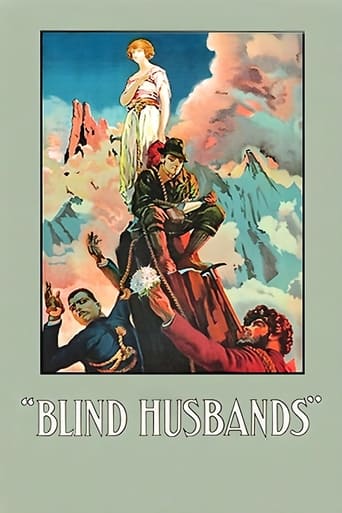
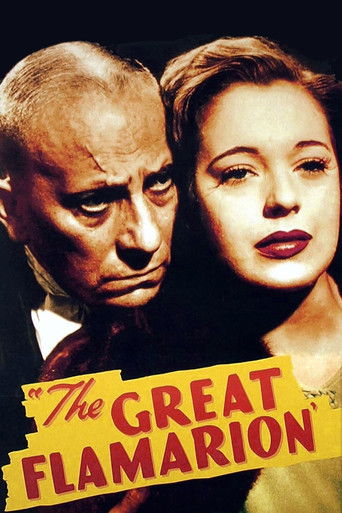
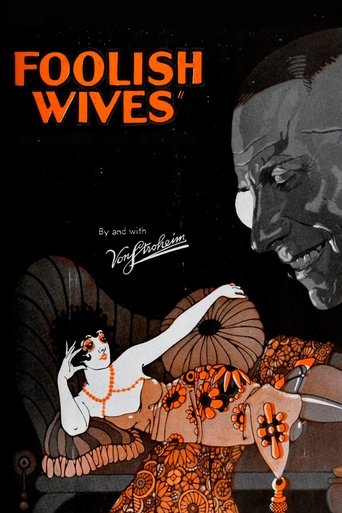

More about this film
About the production
Release dateDecember 4, 1924 (premiere), January 1925 (general release)
Budget$500,000-$700,000 (an enormous sum for 1924, nearly bankrupting the studio)
Box officeCommercial failure, significant financial loss for Goldwyn Pictures
ProductionGoldwyn Pictures Corporation
Filmed inSan Francisco, California, Death Valley, California, MGM Studios, Culver City, California
Erich von Stroheim shot over 42 hours of footage for his original 9-hour version, using real gold coins for the lottery money and insisting on absolute period authenticity. The Death Valley sequences were filmed in 120°F heat, causing crew members to collapse and film emulsion to melt. Von Stroheim was fired during editing after refusing to make cuts demanded by the studio, who then brought in other editors to reduce the film to 140 minutes. The production became in Hollywood as 'von Stroheim's Folly' due to its extravagance and the director's uncompromising vision.
Themes
The corrupting influence of wealthThe destructive nature of greedThe breakdown of human relationshipsThe conflict between civilization and primal instinctsThe inevitability of fate and destiny
Themes & topics
Historical background
Greed appeared in 1924, when the late silent period and the transition to sound shaped how movies were financed, distributed, and discussed. Audiences of the day encountered the work amid shifting tastes in acting, pacing, and spectacle. Its focus on a lottery win of $5,000 forever changes the lives of a miner turned dentist and his wife mirrors themes circulating in popular culture of that moment.
Why this film matters
Greed (1924) belongs to the wider archive of world cinema, documenting a lottery win of $5,000 forever changes the. Archivists and historians value such titles for what they reveal about craft, genre, and audience expectations. Restorations and festival screenings keep the work visible to viewers far beyond its first run.
Making of
The production of 'Greed' became in Hollywood as an example of artistic excess and directorial obsession. Von Stroheim, known as 'The Man You Love to Hate,' was given unprecedented freedom by Goldwyn Pictures, which he exploited to create his magnum opus. He insisted on absolute realism, from authentic 19th-century dental instruments to real gold coins that had to be guarded constantly. The Death Valley sequences proved particularly grueling, with the crew filming in extreme heat that caused equipment to malfunction and personnel to collapse. Von Stroheim's perfectionism extended to demanding that Zasu Pitts actually learn dental procedures and that Gibson Gowland grow an authentic beard. The director's refusal to compromise led to his dismissal during editing, with the studio taking control and cutting the film down to a fraction of its original length. This battle between artistic vision and commercial constraints became a defining moment in Hollywood history, symbolizing the tension between creative freedom and studio control.
What critics said
Press coverage from 1924 is fragmentary for many titles of this vintage; surviving notices for Greed tend to stress novelty, star power, or topical appeal. Later writing places the picture within its national and generic context, weighing both period conventions and moments that still land for modern viewers. Streaming and disc releases have revived discussion among classic-film audiences.
Did you know?
- The original 42-reel version would have been one of the longest films ever made, requiring multiple screenings over several days.
- Von Stroheim insisted on building full-scale reproductions of San Francisco streets rather than using studio backdrops.
- The production used 20,000 real gold coins for the lottery money, which required constant security guards.
- During the Death Valley shoot, temperatures reached 120°F, causing the cinematographer's camera to literally melt.
- Many cast and crew members suffered heat stroke and dehydration during the desert sequences.
- Von Stroheim demanded that actors wear period-appropriate underwear that would never be seen on camera.
- The famous final scene was shot in reverse order, starting with McTeague's collapse and working backward.
- Approximately 8 hours of footage was destroyed, though some was salvaged for von Stroheim's later films.
- The film's failure contributed to the merger that created Metro-Goldwyn-Mayer (MGM).
- Frank Norris's novel 'McTeague' was considered unfilmable due to its dark themes and complex characters.
Awards & recognition
- 1991: Selected for preservation in the National Film Registry by the Library of Congress
- 1998: Ranked #7 on AFI's 100 Greatest American Movies
- 2007: Ranked #9 on AFI's 10th Anniversary 100 Greatest American Movies
- 2012: Ranked #4 in Sight & Sound's critics' poll of greatest films
- 1958: Named one of the 12 greatest films ever made at the Brussels World's Fair
Visual style
The cinematography by Ben Reynolds and William H. Daniels was revolutionary for its time, featuring extensive location shooting and natural lighting techniques that were unprecedented for a major studio production. Von Stroheim demanded absolute realism, leading to the use of actual San Francisco locations and the harsh, unforgiving landscapes of Death Valley. The film employed sophisticated deep focus photography and complex tracking shots that pushed the boundaries of what was technically possible in 1924. The visual style emphasized gritty realism over the glamorous artifice typical of Hollywood productions, with careful attention to period detail in every frame. The Death Valley sequences, shot in extreme heat, created a stark, desolate visual landscape that perfectly mirrored the characters' emotional and moral desolation. The use of shadows and contrast in interior scenes created a psychological depth that would later influence film noir aesthetics. The camera work often maintained a detached, observational quality that reinforced the film's naturalistic approach.
Innovations
Greed pioneered numerous technical innovations that would become standard in filmmaking. The production's extensive location shooting was unprecedented for a major studio film of its era, establishing the practice of on-location filming for authenticity. Von Stroheim's use of deep focus photography and complex camera movements pushed the boundaries of what was technically possible in 1924. The film's editing techniques, particularly in the truncated version, demonstrated sophisticated narrative compression and visual storytelling. The production design achieved remarkable period authenticity through meticulous research and attention to detail, from authentic dental instruments to historically accurate costumes. The Death Valley sequences required developing new techniques for filming in extreme conditions, including special camera housings and film stock modifications to withstand the intense heat. The film also pioneered the use of psychological realism in performance, with von Stroheim demanding naturalistic acting styles that contrasted with the exaggerated performances common in silent cinema.
Music
As a silent film, 'Greed' was originally accompanied by live musical performances that varied by theater and region. The typical score consisted of classical pieces, popular songs of the era, and specially composed cues selected by theater musicians to match the film's dramatic moments. Von Stroheim reportedly provided detailed musical suggestions for the original screenings, though these were not always followed. Modern restorations have featured newly composed scores by artists such as Carl Davis, Robert Israel, and the Alloy Orchestra. These contemporary scores attempt to capture the film's psychological complexity while respecting its silent era origins, often using leitmotifs for different characters and themes. The music emphasizes the tragic elements of the story while avoiding melodrama, reflecting von Stroheim's naturalistic approach to the material. Some modern screenings have experimented with alternative musical approaches, including jazz and experimental compositions.
Famous quotes
I'll kill you, McTeague! I'll kill you! - Marcus Schouler
The money is mine! I won it! It's mine! - Trina Sieppe
You're a dentist, McTeague. You should know better than to drink. - Marcus Schouler
I'm not afraid of you. I'm not afraid of anything. - McTeague
The desert doesn't care about money. It only cares about survival. - Implied theme
You can't have my money! It's all I have! - Trina Sieppe
I trusted you, Marcus. I trusted you. - McTeague
Memorable scenes
- The lottery ticket discovery scene where Trina's life changes forever with the announcement of her $5,000 win
- The wedding scene showing the beginning of McTeague and Trina's doomed marriage, filled with hope and innocence
- The dental surgery sequence demonstrating McTeague's professional skill and underlying brutality
- The money-hoarding scene where Trina obsessively counts and polishes her gold coins in secret
- The brutal fight between McTeague and Trina over the hidden money, leading to her murder
- The Death Valley pursuit sequence with McTeague dragging the dying Marcus across the desert
- The final haunting image of McTeague, handcuffed to a corpse, facing death alone in the scorching desert
What audiences thought
Contemporary audiences largely rejected 'Greed' due to its length, dark themes, and lack of conventional entertainment value. Many viewers found the film's pessimistic worldview and unrelenting grimness difficult to stomach, particularly during the prosperous Roaring Twenties. The film was a commercial disaster, playing to half-empty theaters and contributing to Goldwyn Pictures' financial troubles. Audience members reportedly walked out during screenings, unable to endure the film's bleakness and slow pacing. However, as the film's reputation grew over the decades, it developed a cult following among film enthusiasts and students of cinema. Modern audiences, particularly those interested in film history and artistic cinema, have come to appreciate its groundbreaking techniques and powerful themes. The reconstructed 4-hour version has found appreciation at film festivals and special screenings, though its unrelenting darkness can still be challenging for viewers accustomed to more conventional narratives.
Film connections
Influenced by
- Frank Norris's novel 'McTeague: A Story of San Francisco' (1899)
- Naturalist literature of the late 19th century
- German Expressionist cinema
- The works of Émile Zola
- Victorian morality tales
- Social Darwinism
- Freudian psychology
- The literary movement of Naturalism
This film influenced
- The Treasure of the Sierra Madre (1948)
- Ace in the Hole (1951)
- Shane (1953)
- The Killing (1956)
- Psycho (1960)
- The Graduate (1967)
- Chinatown (1974)
- Raging Bull (1980)
- There Will Be Blood (2007)
- The Master (2012)
- The Revenant (2015)
- The Irishman (2019)
Film restoration
The original 9-hour version of 'Greed' is considered lost, though approximately 8 hours of footage was destroyed by the studio. In 1999, Turner Classic Movies produced a four-hour reconstructed version using over 650 production still photographs and the original continuity script. This version, titled 'Greed: The Lost Version,' provides the most complete representation of von Stroheim's vision possible. The surviving 140-minute theatrical version has been preserved by the Museum of Modern Art and designated for preservation by the Library of Congress in the National Film Registry. Various restoration efforts have improved the film's visual quality over the years, including a 4K restoration by the Criterion Collection. Despite the tragic loss of the original cut, enough material survives to understand the film's original scope and artistic intentions, making it one of cinema's most famous 'lost' masterpieces.
Where to watch
- The Criterion Collection (Blu-ray/DVD with extensive special features and the 4-hour reconstructed version)
- Turner Classic Movies (occasionally broadcasts with special programming and introductions)
- The Criterion Channel (streaming service with restored versions and supplemental materials)
- Kanopy (streaming service available through many libraries and universities)
- Film archives and museum screenings (Museum of Modern Art, UCLA Film & Television Archive)
- Some versions available on YouTube and other free streaming platforms (quality varies significantly)