
Guilty Without Guilt
"Touring actress discovers the son she abandoned"
Keys: Space play/pause · ←/→ 10s · F fullscreen · M mute · </> speed
About this film
A story based on a classic play by Alexander Ostrovsky. The famous actress Kruchinina graciously agrees to tour in a town with which she has heavy memories, and finds there a son, left by her due to circumstances many years ago. He has become embittered from his hard childhood, youth and young adulthood an insignificant and drinking like everyone else, an actor in the local provincial theater.
Cast & crew
More films like this
More Drama films
View all →







More from Vladimir Petrov
View all →

More about this film
About the production
Release dateOctober 22, 1945
BudgetNot publicly disclosed in Soviet-era records
Box officeNot publicly tracked in Soviet cinema system
ProductionMosfilm Studio
Filmed inMoscow, Soviet Union
The film was one of the first major Soviet productions completed after World War II, representing a return to classical literary adaptations. Director Vladimir Petrov was particularly careful to maintain the theatrical essence of Ostrovsky's original play while adapting it for the cinema medium. The production faced challenges with post-war resource shortages but received priority status due to its cultural significance. The theater scenes were meticulously staged to reflect authentic 19th-century Russian provincial theater aesthetics.
Themes
Maternal love and sacrificeRedemption through forgivenessThe conflict between art and lifeSocial criticism of provincial Russian societyThe destructive nature of bitterness and resentment
Themes & topics
theatermother-son relationshipreconciliationprovincial lifealcoholismfamily separationforgiveness19th century Russiaactressemotional reunion
Historical background
Made during the studio era of 1945, Guilty Without Guilt reached audiences through theatrical programs, fairground booths, or specialized distribution channels typical of its generation. A story based on a classic play by Alexander Ostrovsky. The famous actress Kruchinina graciously agrees to tour in a. Historians now read such works for what they reveal about production methods, national taste, and the expanding vocabulary of screen narrative.
Why this film matters
Archivists and programmers still screen Guilty Without Guilt when tracing how popular entertainment evolved. Its subject—a story based on a classic play by alexander ostrovsky. the famous actress kruchinina graciously—gives later viewers tangible evidence of what drew crowds in its day. Home video, restorations, and festival sidebars keep the title circulating among students of film history.
Making of
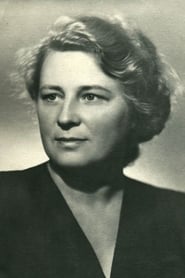
The filming took place during a challenging period in Soviet history, immediately following the devastation of World War II. The Moscow Film Studios (Mosfilm) had suffered damage during the war, and resources were severely limited. Despite these hardships, the production was given priority status due to its cultural importance. Alla Tarasova, already in her 50s during filming, brought decades of theatrical experience to her role, having first performed as Kruchinina on stage in the 1930s. The director worked closely with the actors to maintain the theatrical intensity of Ostrovsky's original text while making it visually cinematic. The theater sequences were particularly challenging to film, requiring the recreation of authentic 19th-century stage conditions and lighting techniques. The emotional scenes between mother and son were reportedly filmed in long takes to preserve the actors' emotional continuity, with Tarasova and Stanitsyn rehearsing extensively off-camera to build their chemistry.
What critics said
Original trade coverage treated Guilty Without Guilt as routine program filler rather than a landmark production—typical of steady studio output. Later criticism emphasizes preservation, stylistic comparison with contemporaries, and whatever cast or crew names later gained prominence. Contemporary writing is mostly historical: assessing completeness, influence, and place in a director's or studio's catalog.
Did you know?
- Alla Tarasova, who played Kruchinina, was widely praised actresses of the Soviet stage and had previously performed this role numerous times in theater productions.
- The film was based on Alexander Ostrovsky's 1884 play 'Без вины виноватые' (Without Guilt, Though Guilty), which was one of the playwright's final works before his death.
- Director Vladimir Petrov was known for his adaptations of Russian literary classics, having previously directed 'Peter the Great' (1937) and 'Suvorov' (1940).
- The film was released shortly after the end of World War II and was seen as part of the Soviet cultural recovery effort.
- Viktor Stanitsyn, who played the role of the son, was a prominent actor at the Moscow Art Theatre and brought significant theatrical gravitas to his film performance.
- The film's themes of maternal sacrifice and redemption resonated deeply with post-war Soviet audiences, many of whom had experienced family separations during the war.
- The production team consulted with theater historians to ensure authentic representation of 19th-century Russian provincial theater life.
- The film was selected for preservation in the State Film Archive of the Russian Federation due to its cultural significance.
- The original play had been banned for several years after its initial publication due to its critical portrayal of provincial society.
- The film's release coincided with the 100th anniversary of Ostrovsky's birth, making it part of a broader celebration of the playwright's legacy.
Awards & recognition
- Stalin Prize, First Class (1946) - awarded to director Vladimir Petrov and lead actress Alla Tarasova
- State Prize of the RSFSR (1946) - for outstanding contribution to Soviet cinema
Visual style
The cinematography, handled by Yuri Raizman, employed a visual style that balanced theatrical composition with cinematic movement. The camera work in the theater scenes used deep focus to capture both the stage action and the audience reactions, creating a meta-theatrical effect. The lighting design was particularly noteworthy, using chiaroscuro techniques to emphasize the emotional states of the characters, especially in the intimate scenes between mother and son. The film's visual palette was dominated by warm, amber tones that evoked the atmosphere of 19th-century Russian provincial life. The camera movements were deliberately restrained during dialogue scenes to maintain the theatrical rhythm, but became more dynamic during emotional climaxes. The cinematography successfully created a sense of theatrical space while exploiting the possibilities of cinematic framing and close-ups.
Innovations
While not groundbreaking in technical innovation, the film was notable for its successful synthesis of theatrical and cinematic techniques. The production team developed innovative methods for filming theater scenes that captured both the stage performance and the audience's perspective simultaneously. The film's sound recording was particularly advanced for its time, using new microphone techniques to capture dialogue with clarity while maintaining the acoustic properties of theatrical spaces. The makeup and costume departments achieved remarkable authenticity in recreating 19th-century Russian provincial theater aesthetics, with particular attention to the transformation of actors' appearances between their stage and real-life personas. The film's editing rhythm was carefully calibrated to maintain the dramatic tension of the original play while taking advantage of cinematic pacing possibilities.
Music
The musical score was composed by Vano Muradeli, one of the prominent Soviet composers of the period. The soundtrack incorporated elements of 19th-century Russian musical theater, with themes that echoed the emotional content of Ostrovsky's original play. The music was particularly effective in underscoring the emotional reunion scenes, where Muradeli used leitmotifs to represent the mother-child bond. The score also included period-appropriate theater music for the provincial theater scenes, adding authenticity to the historical setting. The sound design was notable for its clarity in capturing dialogue, which was crucial given the theatrical nature of the source material. The film's theme music became recognizable to Soviet audiences and was later used in radio programs about classic Russian literature.
Famous quotes
A mother's heart is like the sun - it shines on all her children, no matter how far they have strayed.
In the theater of life, we all play many roles, but the role of mother is the one that never ends.
Forgiveness is not weakness, but the greatest strength of the human heart.
Time cannot erase the bond between mother and child, even when years of bitterness have tried to drown it.
Memorable scenes
- The emotional climax where Kruchinina finally reveals her identity to her son in the theater wings, leading to his breakdown and eventual acceptance of her love
- The opening scene where Kruchinina arrives in the provincial town, her face showing the weight of memories as she recognizes familiar streets
- The theater performance scene where Kruchinina plays a role that mirrors her own life situation, creating a powerful meta-theatrical moment
- The final reconciliation scene where mother and son embrace, symbolizing the healing of old wounds and the triumph of love over bitterness
What audiences thought
The film was enormously popular with Soviet audiences upon its release, with theaters reporting full houses for weeks. Many viewers were moved to tears by the emotional reunion scenes, which resonated with their own wartime experiences of family separation. The film became particularly beloved by women, who identified with Kruchinina's strength and maternal devotion. In provincial towns, where the film was especially popular, audiences appreciated its authentic portrayal of theater life outside the major cultural centers. The film's success led to increased demand for literary adaptations and helped establish Alla Tarasova as one of Soviet cinema's most beloved actresses. Even decades after its release, the film remained a staple of Soviet television programming and was regularly shown in retrospectives of classic Russian cinema.
Film connections
Influenced by
- The theatrical tradition of the Moscow Art Theatre
- Stanislavski's system of acting
- 19th-century Russian realist literature
- Classical Russian melodrama
- Soviet socialist realist aesthetic
This film influenced
- The Cranes Are Flying (1957) - in its emotional intensity
- Moscow Does Not Believe in Tears (1979) - in its portrayal of motherhood
- Oblomov (1979) - in its literary adaptation approach
Film restoration
The film has been preserved in the State Film Archive of the Russian Federation and has undergone digital restoration. A restored version was released on DVD as part of the Russian Cinema Classics collection. The original negative remains in good condition, and the film is regularly screened in retrospectives of classic Soviet cinema. The restoration work was completed in 2008 as part of a broader effort to preserve important works of Soviet film heritage.
Where to watch
- Available on Russian streaming platforms such as Kinopoisk and Okko
- DVD releases from Russian cinema distributors
- Occasionally screened in film festivals and cinema retrospectives
- Available in some specialized film archive collections and university libraries
- Selected streaming services specializing in classic international cinema