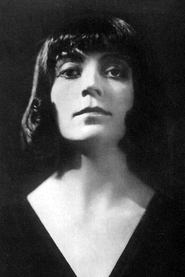

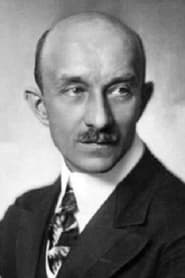

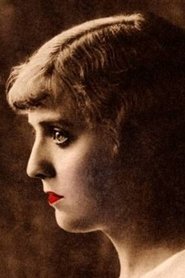
Hamlet
"The court's prince is the queen's daughter in disguise."
Keys: Space play/pause · ←/→ 10s · F fullscreen · M mute · </> speed
About this film
A Danish queen disguises her daughter as a boy, and the girl grows up living as 'Prince' Hamlet. When her father is poisoned by the treacherous Claudius, Hamlet feigns madness to investigate without revealing her identity in this free adaptation of Shakespeare's tragedy.
Cast & crew
More films like this


More Drama films
View all →







More about this film
About the production
Release dateOctober 27, 1921
ProductionAsta Nielsen Film, Decla-Bioscop AG
Filmed inBerlin, Germany, Copenhagen, Denmark
This was one of Asta Nielsen's most personal projects, as she had significant creative control and was instrumental in developing the gender-bending interpretation. The film was based on Edward P. Vining's 1881 theory that Hamlet was actually a woman disguised as a man. The production faced initial resistance from traditionalists but proceeded due to Nielsen's immense star power and artistic reputation. The elaborate costumes were designed to suggest masculinity while subtly hinting at Hamlet's true nature, with Nielsen often wearing slightly androgynous outfits that maintained ambiguity.
Themes
Gender identity and performanceTruth and deceptionFamilial duty versus personal desirePower dynamics and political manipulationPsychological complexity and mental health
Themes & topics
Shakespeare adaptationgender-bendingrevenge tragedyDanish courtroyal successionpolitical intriguefeigned madnessghostpoisonplay-within-a-playforbidden lovefamily secretsidentity crisispsychological dramasilent cinemafeminist reinterpretationliterary adaptationtragedydeceptiongender performanceroyal family
Historical background
Made in 1921, in Germany, under Svend Gade, Hamlet belongs to silent filmmaking amid the silent era's rapid stylistic experiments. Hamlet, or Hamlet: The Drama of Vengeance, is a 1921 German film adaptation of the William Shakespeare play Hamlet starring and produced by Danish silent film actress Asta Nielsen.
Why this film matters
Within silent history, Svend Gade's name attaches to the work; surviving prints help researchers study silent-era craft; 1921 film directed by Svend Gade and Heinz Schall.
Making of
The production of this unique Hamlet was driven largely by Asta Nielsen's artistic vision and her unprecedented control over her projects. As one of Europe's biggest film stars, Nielsen had formed her own production company and could choose projects that interested her artistically. She worked closely with Danish director Svend Gade to develop this radical interpretation, which was based on both scholarly theory and Nielsen's desire to explore complex psychological roles. The filming took place during the height of German Expressionism, though the film opted for more realistic visual style to better serve the character study. The casting created interesting dynamics - Heinz Stieda as Horatio had to portray a relationship that takes on different dimensions with the gender reveal. The production team faced challenges in creating costumes that would read as masculine on screen while allowing Nielsen to express the character's feminine nature. The film's elaborate palace sets were constructed at Berlin's Decla studios, requiring significant resources and attention to historical detail. Nielsen was deeply involved in every aspect of production, from script development to costume design, making this truly her artistic statement.
What critics said
Contemporary reviews of Hamlet are sparse in open sources; later catalog entries chiefly summarize plot and credits.
Did you know?
- Asta Nielsen was one of the first international movie stars and the highest-paid actress of her era, earning approximately $125,000 per film in the 1920s
- The film's gender-bending premise was based on Edward P. Vining's 1881 book 'The Mystery of Hamlet,' which presented scholarly evidence that the character was actually a woman
- This was one of cinema's earliest major feminist reinterpretations of classic literature, predating later feminist film theory by decades
- The film was a major international success, screening across Europe and in the United States, helping establish Nielsen as a global star
- Director Svend Gade was Danish, making this a true German-Danish collaboration that reflected Nielsen's own international background
- The film's intertitles were written by noted author Theodor Fontane's son, adding literary credibility to the adaptation
- Despite being a silent film, the production used elaborate sets costing over 200,000 marks to create authentic Danish court atmosphere
- Nielsen's performance was praised for its psychological depth, particularly in scenes showing Hamlet's internal conflict about her dual identity
- The film was considered quite controversial for its time due to its gender themes, with some critics calling it 'scandalous' while others praised its artistic courage
- The film's success proved that audiences would accept experimental reinterpretations of classic literature, encouraging further artistic innovation in cinema
- Modern film historians consider this an important early example of queer cinema, though that terminology didn't exist in 1921
Visual style
The cinematography by Ragnar Ring and Karl Freund demonstrates the growing sophistication of visual storytelling in silent cinema. While not as avant-garde as contemporary Expressionist works, the film employs dramatic lighting techniques to emphasize psychological states, particularly in Hamlet's soliloquies. The camera work includes innovative angles and movements for the period, using deep focus to create depth in palace interiors. The cinematography effectively uses shadow and light to reinforce themes of deception and hidden truths. Close-ups are used strategically, particularly on Nielsen's face, to convey the complex emotions of a character living with a secret identity. The visual style balances realism with theatricality, appropriate for literary adaptation while embracing cinematic possibilities. The Danish court settings are rendered with visual richness, using architectural elements to create a sense of both grandeur and confinement that mirrors Hamlet's psychological state.
Innovations
While not as technically innovative as some contemporary German films, Hamlet demonstrated several notable achievements for 1921. The production design created convincing 16th-century Danish court settings requiring substantial resources and historical accuracy. Costume design was significant, needing to suggest masculinity while accommodating the gender reveal. Makeup techniques were advanced for the period, effectively creating Nielsen's transformation without appearing artificial. The intertitles were thoughtfully crafted to convey Shakespearean dialogue and additional exposition for the gender-bending premise. Editing techniques effectively paced the complex narrative and maintained dramatic tension throughout the substantial runtime. The film's survival in multiple reels demonstrates relatively advanced film stock and processing techniques available in Germany. The production also achieved technical sophistication in its lighting design, using chiaroscuro effects to enhance psychological drama without fully adopting Expressionist style.
Music
As a silent film, Hamlet would have been accompanied by live musical performance during theatrical runs. The specific scores used are not well documented, but theaters likely used classical pieces or specially composed music reflecting the dramatic tone. German theaters probably featured composers like Wagner or other romantic composers. Some cinemas used existing classical pieces matching different scenes' moods, while larger venues had original scores composed specifically for the film. The music was crucial in conveying emotional content and dramatic tension, particularly in scenes showing Hamlet's internal conflict. Modern screenings typically feature newly composed scores attempting to capture the spirit of the era while enhancing contemporary viewing experience. The musical accompaniment would have been particularly important in scenes where Hamlet's gender identity creates psychological tension beneath the surface of the action.
Famous quotes
'To be, or not to be, that is the question' (adapted for intertitles with added gender context)
'The play's the thing wherein I'll catch the conscience of the king' (modified for the gender-bending premise)
'Something is rotten in the state of Denmark' (maintained from original but with added layers of meaning)
'Frailty, thy name is woman' (takes on ironic significance in this adaptation)
'I am but mad north-north-west: when the wind is southerly I know a hawk from a handsaw' (adapted for the psychological complexity of the gender performance)
Memorable scenes
- The opening sequence establishing Hamlet's upbringing as a boy, setting up the film's unique premise
- The ghost scene where Hamlet learns of her father's murder, taking on added weight with the gender reveal
- The play-within-a-play scene where Hamlet uses theatrical performance to expose truth while living a performance herself
- The confrontation between Hamlet and Gertrude where the mother-daughter relationship is hidden beneath their public roles
- The scene where Hamlet's interactions with Horatio reveal romantic tension complicated by the gender secret
- The final tragic scenes where the various characters meet their demise, particularly poignant with Hamlet's hidden identity revealed
- The 'To be or not to be' soliloquy, rendered through intertitles and Nielsen's expressive performance with added existential dimension from the gender conflict
What audiences thought
Audience reception was generally enthusiastic, particularly among Asta Nielsen's substantial international fan base. The film performed well in major European markets, with extended runs in Berlin and Copenhagen. Contemporary viewers were intrigued by the gender-bending premise, which added mystery and psychological complexity to the familiar story. Some audience members were initially confused by the gender element, but most found it enhanced the character study. The film's success helped cement Nielsen's status as one of Europe's biggest stars and demonstrated that sophisticated audiences would support ambitious artistic projects. American audiences, when the film was imported in 1922, were particularly fascinated by the European approach to literary adaptation. Modern audiences who have seen restored versions often express admiration for how the film handles complex themes with subtlety and psychological depth. The film has developed a cult following among silent film enthusiasts and those interested in early examples of gender-bending cinema.
Film connections
Influenced by
- Shakespeare's original Hamlet
- Edward P. Vining's 'The Mystery of Hamlet' (1881)
- German Expressionist cinema
- Early feminist movement
- Weimar Republic cultural experimentation
- Theatrical adaptation traditions
- European star system
- Post-war psychological theories
This film influenced
- Victor/Victoria (1982)
- The Crying Game (1992)
- Orlando (1992)
- Yentl (1983)
- Shakespeare in Love (1998)
- Boys Don't Cry (1999)
- Later experimental Shakespeare adaptations
- Gender-bending films of the 1980s-90s
- Feminist film theory developments
Film restoration
The film exists in incomplete form with some reels missing or damaged. Surviving elements are held in archives including the Bundesarchiv-Filmarchiv in Berlin and the Danish Film Institute. Some restoration work has been completed on available elements, but the film does not exist in its original complete version. The survival of multiple reels is due in part to Nielsen's star status and the film's international distribution. Modern viewers typically see reconstructed versions using existing footage, still photographs, and intertitle cards. The film's cultural significance has contributed to preservation efforts, but like many films from this era, it remains incomplete.
Where to watch
- Available through specialized film archives and cinematheques
- Screened occasionally at silent film festivals and retrospectives
- Some versions available through educational film distribution services
- May be found on specialized streaming platforms focusing on classic cinema
- Film museums with silent film collections occasionally organize screenings
- Available through some European film archive streaming services
- Silent film enthusiast societies sometimes organize screenings of restored versions