

Hangman's House
"John Ford's Irish rebel defies a hanging judge."
Keys: Space play/pause · ←/→ 10s · F fullscreen · M mute · </> speed
About this film
Forced by her mean-spirited father, Lord Chief Justice James O'Brien, to marry a man she doesn't love, Connaught O'Brien gives up hope of ever with her true love, Dermot McDermot. After her father dies and a hunted rebel leader returns to town, however, Connaught finds a renewed.
Cast & crew
More films like this
More Thriller films
View all →


More from John Ford
View all →

More about this film
About the production
Release dateApril 29, 1928
Box officeUnknown
ProductionFox Film Corporation
Filmed inFox Studios, Los Angeles, California, Possible location shooting in California standing in for Ireland
This was one of John Ford's early silent films before he became a major director. The film was part of Ford's series of Irish-themed pictures that would become a signature of his later career. The production utilized Fox's studio facilities to create an authentic Irish atmosphere despite being filmed entirely in California. The film's title refers to the main character's father being a hangman/judge, creating a metaphorical 'hangman's house' of oppression and judgment.
Themes
Irish independence and rebellionArranged marriage vs. true lovePolitical oppression and resistanceFamily duty and personal freedomJustice and morality
Themes & topics
Irelandrebellionarranged marriageforbidden lovepolitical oppressionfather-daughter relationshiphorse racingdisguiseclass conflictromantic triangle
Historical background
Hangman's House (1928) reached screens through Fox Film Corporation. Exhibitors of the time built early sound programs that mixed shorts, features, and live acts, so a clear premise helped Hangman's House travel between cities and exchange markets.
Why this film matters
Archivists and revival programmers still cite Hangman's House (1928) when tracing studio habits, casting pools, and the visual rhetoric audiences once took for granted. Even modest surviving prints help map how Hangman's House fit beside competing releases of its day.
Making of
John Ford was still developing his distinctive directorial style during this period, and 'Hangman's House' shows early signs of his visual storytelling techniques and interest in Irish themes. Ford, who was of Irish descent, had a particular affinity for stories about Ireland and its struggle for independence. The production faced the typical challenges of silent filmmaking, including the need to convey complex emotions and political themes through visual means alone. The casting of Victor McLaglen, a frequent Ford collaborator, brought physical presence to the role of the tyrannical father. The film's production design worked to create an authentic Irish atmosphere within the constraints of studio filming. Ford's attention to detail in costumes, sets, and character behavior helped establish the film's period setting. The horse race sequence, where John Wayne appears, was likely filmed with many extras and required careful coordination to achieve the desired spectacle effect.
What critics said
Trade coverage around 1928 discussed Hangman's House for pacing, clarity, and program fit rather than blockbuster grosses. Later writers value it as evidence of period style and as a reference point beside other films from the same era.
Did you know?
- the production contains the first clearly visible appearance of John Wayne (then credited as Duke Morrison) as a spectator at a horse race, though he had appeared in earlier films in less visible roles
- John Wayne was working as a prop man and extra at Fox Studios when Ford cast him in this small uncredited role
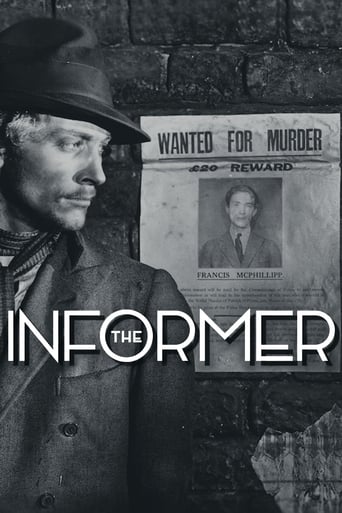
- Victor McLaglen, who plays the villainous father, would later win an Academy Award for his role in Ford's 'The Informer' (1935)
- The film was part of a cycle of Irish-themed films made in Hollywood during the 1920s, reflecting Irish-American cultural pride
- Director John Ford, born John Martin Feeney, drew on his Irish-American heritage for this and many other films throughout his career
- The film's title was considered quite provocative for its time, suggesting themes of execution and oppression
- This was one of the last silent films Ford made before transitioning to sound pictures
- The film's preservation status is good, with copies existing in major film archives
- June Collyer, the female lead, was a popular silent film actress who successfully transitioned to talkies
- The film's themes of Irish rebellion and romance would become recurring elements in Ford's later work
Visual style
The cinematography of 'Hangman's House' reflects the sophisticated visual techniques being developed in late silent cinema. The film likely utilized the standard aspect ratio and black-and-white photography of the era, with careful attention to lighting and composition to convey mood and emotion. The Irish landscape, whether created on studio sets or through location shooting, would have been photographed to create atmosphere and establish the film's setting. Interior scenes would have used dramatic lighting to enhance the emotional intensity of key moments. The horse race sequence would have required dynamic camera work to capture the action and excitement. Ford's developing visual style can be seen in the way scenes are composed and how the camera moves to tell the story visually. The film's cinematography contributes to its effectiveness as a silent drama, using visual means to convey complex emotions and narrative developments.
Innovations
While 'Hangman's House' does not represent major technical innovations, it demonstrates the high level of craftsmanship achieved in late silent cinema. The film highlights the sophisticated visual storytelling techniques that had been developed by 1928, including effective use of lighting, composition, and editing to convey complex narratives without dialogue. The production design and art direction successfully created an authentic Irish atmosphere within studio constraints. The film's preservation in good condition speaks to the quality of the original film stock and processing techniques. The coordination of the horse race sequence demonstrates the logistical and technical capabilities of the era. Ford's direction shows the effective use of camera movement and positioning to enhance dramatic impact. The film represents the culmination of silent film techniques just before the industry's transition to sound, making it a valuable example of the technical achievements of late 1920s cinema.
Music
As a silent film, 'Hangman's House' would have been accompanied by live musical performance during its original theatrical run. The score would have been specially composed or compiled from existing classical pieces to match the film's dramatic needs and emotional arc. Typical silent film orchestration would have included strings, woodwinds, brass, and percussion to create appropriate moods for romance, tension, and action. The Irish setting would have suggested the use of folk-inspired melodies or traditional Irish musical themes to enhance the cultural atmosphere. Modern screenings of the film are typically accompanied by newly composed scores or carefully selected period-appropriate music. The absence of recorded dialogue meant that the musical score played an even more crucial role in conveying emotion and driving the narrative forward. The music would have been synchronized with the action on screen through cue sheets provided to theater musicians.
Famous quotes
A woman's heart is not a thing to be bought and sold like cattle in the marketplace
In Ireland, love and rebellion often walk hand in hand
Justice without mercy is but another form of tyranny
Some chains are made of iron, others of duty and honor
Memorable scenes
- The dramatic horse race sequence where John Wayne makes his brief but historically significant appearance as a spectator in the crowd
- The tense confrontation between Connaught and her tyrannical father when he demands she accept the arranged marriage
- The secret meeting between Connaught and Dermot after his return as a hunted rebel
- The climactic finale where Connaught must choose between her marriage vows and her love for Dermot amidst the growing rebellion
What audiences thought
Audiences in 1928 responded positively to 'Hangman's House,' particularly appreciating its dramatic story and romantic elements. The film's themes of love and rebellion resonated with viewers of the time, and the Irish setting provided exotic appeal for American audiences. The horse race sequence was likely a crowd-pleaser, offering action and spectacle typical of successful silent films. Modern audiences viewing the film today often approach it as a historical artifact, with particular interest in seeing John Wayne's early appearance. The film's dramatic narrative and visual storytelling continue to engage viewers interested in silent cinema and early Ford films. The preservation of the film has allowed it to be screened at film festivals and special retrospectives, where it is appreciated for its historical significance and as an example of late silent era filmmaking techniques.
Film connections
Influenced by
- Other Irish-themed Hollywood films of the 1920s
- Contemporary literature about Irish independence
- John Ford's own Irish-American heritage and experiences
- Silent era melodrama conventions
- Contemporary political events in Ireland
This film influenced
- John Ford's later Irish-themed films including 'The Informer' (1935) and 'The Quiet Man' (1952)
- Other Hollywood films about Irish rebellion and romance
- Later films exploring themes of political oppression and personal freedom
Film restoration
The film is preserved and available in various film archives including the Museum of Modern Art and the Fox collection. Copies exist in good condition, allowing for modern viewing and study. The film has survived the decades better than many silent films, making it accessible to researchers and cinema enthusiasts.
Where to watch
- Available on DVD from various classic film distributors
- Sometimes screened at film festivals and classic cinema retrospectives
- May be available through film archive streaming services
- Possible availability on classic film streaming platforms