Janice Meredith
“The Spectacular Romance of the American Revolution!”
About Janice Meredith
Set in 1774 on the eve of the American Revolution, Janice Meredith is the beautiful daughter of a staunch Tory landowner in New Jersey who finds her heart divided by the political turmoil of the colonies. Though her father intends for her to marry a wealthy loyalist, Janice becomes enamored with Charles Fownes, an indentured servant who is actually a disguised British aristocrat and patriot sympathizer. As the war erupts, Janice's adventures take her across the front lines, where she encounters historical figures like George Washington and Patrick Henry while being pursued by both British and American suitors. The narrative culminates in the high-stakes Siege of Yorktown, where Janice must navigate personal betrayals and the chaos of battle to secure her freedom and reunite with her true love. Ultimately, the film serves as a sweeping romantic epic that intertwines the birth of a nation with the personal growth of a headstrong young woman.
Cast & crew


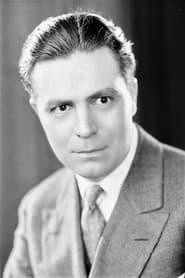
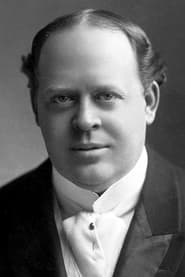

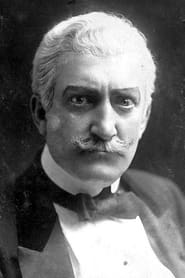
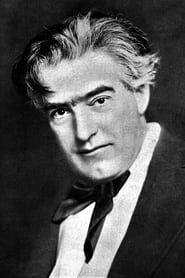
More films like this

More from E. Mason Hopper
View all →
More about Janice Meredith
Production
- Release date
- August 5, 1924
- Country
- United States
- Budget
- $1,500,000
- Box office
- Approximately $1,000,000 (Domestic)
- Production
- Cosmopolitan Productions, Metro-Goldwyn-Mayer (MGM)
- Filmed in
- Plattsburgh, New York, Lake Champlain, New York, Cosmopolitan Studios, New York City, New York
The film was one of the most expensive productions of the silent era, funded largely by William Randolph Hearst to showcase the talents of Marion Davies. Hearst spared no expense, ordering the construction of massive colonial-era sets and hiring thousands of extras for the battle sequences. The production utilized the 26th Infantry of the U.S. Army for the large-scale military maneuvers filmed at Plattsburgh. Despite the massive investment, the film struggled to recoup its costs during its initial run due to the sheer scale of the overhead and the high percentage of the gate taken by theaters.
Themes & topics
Historical background
Released during the mid-1920s, Janice Meredith arrived at a time when Hollywood was obsessed with 'prestige' historical epics following the success of films like 'The Birth of a Nation' and 'The Covered Wagon.' The 1920s saw a surge in American patriotism and an interest in the founding myths of the country, partly as a reaction to the social changes of the Jazz Age. The film also represents the peak of the 'Hearst-Davies' era, where the power of the press was used to manufacture movie stardom. It was a period where silent film technology had reached its zenith, allowing for sophisticated cinematography and massive scale before the transition to sound.
Why this film matters
Janice Meredith is significant as a prime example of the 'super-feature' of the 1920s, demonstrating the immense financial risks studios were willing to take on historical dramas. It helped solidify Marion Davies' reputation as a capable dramatic and comedic actress, moving her away from the 'chorus girl' image Hearst's critics often used against her. The film's depiction of the American Revolution influenced how the war was visualized in American cinema for decades, emphasizing the romantic and heroic aspects of the conflict. It also stands as a monument to the influence of William Randolph Hearst on the early film industry.
Making of
The production was a massive undertaking overseen by E. Mason Hopper, but Hearst's influence was felt in every department. Hearst insisted on the highest production values, which led to the hiring of renowned illustrator Edward Percy Moran to consult on the visual historical accuracy of the scenes. The filming of the 'Crossing of the Delaware' was particularly treacherous, as it was shot on location in freezing conditions to capture a sense of realism. Tensions occasionally rose on set due to the presence of Hearst's personal representatives, who monitored Davies' performance and the film's progress daily. Despite the pressure, the cast formed a tight bond, with Harrison Ford (the silent era star) and Davies developing a strong professional rapport.
What critics said
At the time of its release, critics praised the film for its spectacular scale and Davies' charming performance, though some found the length to be excessive. The New York Times called it 'a magnificent spectacle' and noted the impressive attention to detail in the battle scenes. Modern critics view it as an important historical artifact that showcases the technical proficiency of late silent cinema, though some find the plot melodramatic by contemporary standards. It is often cited as one of Davies' best roles, proving her screen presence was more than just a byproduct of Hearst's promotion.
What audiences thought
Audiences were generally enthralled by the film's grandiosity and the celebrity of Marion Davies. It was a major 'event' film, drawing large crowds in urban centers where Hearst's promotion was most intense. However, its massive length and the somewhat traditional plot meant it didn't achieve the same 'evergreen' status as some of its contemporaries. In rural areas, the film performed well but the high rental costs for theaters limited its overall profitability.
Visual style
The film features stunning deep-focus photography for its time, particularly in the outdoor battle sequences. Cinematographers Robert Kurrle and Ira H. Morgan used multiple camera setups to capture the scale of the 26th Infantry's maneuvers. The lighting in the interior scenes was designed to mimic the soft glow of candlelight, adding to the 18th-century atmosphere. The 'Crossing of the Delaware' sequence is noted for its dramatic use of silhouettes and natural elements, creating a painterly aesthetic reminiscent of famous historical canvases.
Innovations
The film was lauded for its seamless integration of thousands of extras and its complex pyrotechnics during the Yorktown sequence. The production design was a major achievement, involving the reconstruction of entire colonial streets and the interior of Mount Vernon. The use of authentic-looking costumes and weaponry set a new standard for historical accuracy in Hollywood 'costume dramas.'
Music
As a silent film, it was originally accompanied by a live orchestral score composed by Deems Taylor. The score was highly praised for its use of period-appropriate motifs and its ability to heighten the tension during the war sequences. Modern restorations have featured new scores that attempt to replicate the grand, patriotic feel of Taylor's original arrangements.
Film restoration
The film is preserved and exists in several archives, including the Library of Congress and the UCLA Film & Television Archive. A restored version was released on DVD by Milestone Film & Video, which helped bring the film back to public attention.
Did you know?
- The film was based on the 1899 novel 'Janice Meredith' by Paul Leicester Ford and the subsequent stage play.
- William Randolph Hearst was so obsessed with the film's success that he used his vast newspaper empire to provide constant, glowing coverage during production.
- The 26th Infantry of the U.S. Army was used to portray both the British and American armies in the battle scenes.
- Marion Davies reportedly found the heavy period costumes and wigs physically exhausting during the long summer shoots.
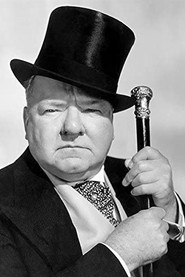
- The film features a young W.C. Fields in a rare silent character role as a British sergeant.
- The production required over 3,000 costumes and hundreds of period-accurate props, including functional cannons.
- It was one of the last major films released under the Cosmopolitan Productions banner before Hearst moved his operations to Warner Bros.
- The film's premiere at the Cosmopolitan Theatre in New York featured a full orchestral score and elaborate live prologues.
- Historical accuracy was a major marketing point, though the film takes significant liberties with the timeline of Janice's romantic life.
- The film was edited down significantly for various re-releases, with some versions running nearly an hour shorter than the premiere cut.
Awards & recognition
- Photoplay Magazine Medal of Honor (Nominee/Finalist, 1924)
- The New York Times 'Ten Best Films of the Year' (1924)
Memorable scenes
- The Crossing of the Delaware: A visually stunning recreation of the famous historical event, filmed with real ice and hundreds of extras.
- The Siege of Yorktown: A massive scale battle sequence featuring thousands of soldiers and practical explosions.
- The encounter with George Washington: A quiet, reverent moment where Janice meets the future president, highlighting the film's hagiographic approach to the Founding Fathers.
Influenced by
- The Birth of a Nation (1915)
- Orphans of the Storm (1921)
- The works of historical painter Emanuel Leutze
This film influenced
- 1776 (1972)
- The Patriot (2000)
- Marie Antoinette (1938)
Where else to watch
- Available on DVD via Milestone Film & Video
- Streaming on Kanopy (in certain regions)
- Occasional airings on Turner Classic Movies (TCM)
Famous quotes
General Washington: 'The fate of unborn millions will now depend, under God, on the courage and conduct of this army.'
Janice Meredith: 'I care not for Whig or Tory, I care only for the man I love!'