

Jubilee
"A bank jubilee upended by chaos"
Keys: Space play/pause · ←/→ 10s · F fullscreen · M mute · </> speed
About this film
The bank is preparing to solemnly celebrate the 15th anniversary of the institution. And at that moment, two events took place that turned everything upside down.
Cast & crew
More Comedy films
View all →






More from Vladimir Petrov
View all →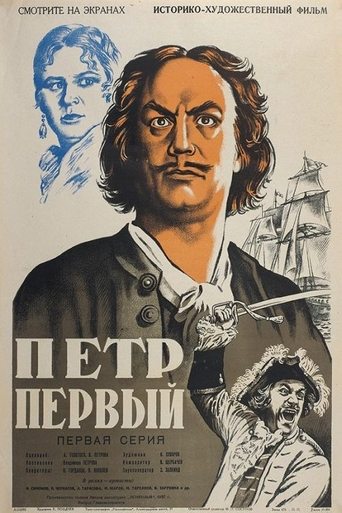

More about this film
About the production
Release dateOctober 23, 1944
ProductionMosfilm Studio
Filmed inMoscow, Soviet Union
The film was adapted from Anton Chekhov's one-act play 'Jubilee' (1891), transposing the setting from Tsarist Russia to contemporary Soviet times. Production took place during the height of World War II, making filming particularly challenging due to resource constraints and air raid warnings. The cast and crew often worked in difficult conditions at the Mosfilm studios, which had been partially evacuated but continued production. Director Vladimir Petrov, known for his adaptations of Russian literary classics, brought his characteristic attention to period detail while updating the social commentary for Soviet audiences.
Themes
Bureaucratic absurdityHypocrisy in official institutionsThe gap between appearance and realityCorruption in administrative systemsIndividual dignity versus institutional power
Themes & topics
bankanniversarycorruptionbureaucracycomedy of errorsinspectionembezzlementfarcesocial satireworkplace comedy
Historical background
Jubilee reached theaters around 1944, balancing wartime logistics with demand for escapist programming.
Why this film matters
Jubilee reflects the range of mid-century production beyond a single national mainstream.
Making of
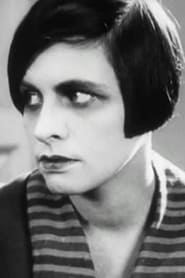
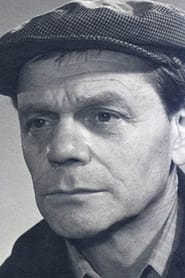
The production of 'Jubilee' faced numerous challenges typical of Soviet wartime cinema. Filming took place at Mosfilm Studio during the German bombing campaign on Moscow, with cast and crew often having to interrupt shooting to take shelter in air raid bunkers. Director Vladimir Petrov insisted on maintaining Chekhov's satirical edge while adapting the story for contemporary Soviet audiences, a delicate balance that required careful negotiation with state censors. The casting was particularly significant - Viktor Stanitsyn brought his Moscow Art Theatre prestige to the role of Khirin, while Olga Androvskaya, primarily a stage actress, made one of her rare film appearances. The production design team worked with limited resources but managed to create convincing bank interiors and period-appropriate costumes. Screenwriter Nikolai Erdman, who had previously faced political persecution for his satirical works, had to carefully navigate the line between comedy and acceptable social commentary. The film's editing process was extensive, with multiple versions submitted to state film authorities before final approval was granted.
What critics said
Press notices for Jubilee (1944) are sparse in digitized sources; interest today rests on preserved prints and comparison with related titles.
Did you know?
- The film is one of the few Soviet comedies produced during World War II, as most cinema of the period focused on war themes and patriotic propaganda.
- Anton Chekhov's original play was written in 1891 but was not performed during his lifetime due to censorship concerns about its critique of bureaucracy.
- Director Vladimir Petrov was a specialist in literary adaptations, having previously directed versions of 'Anna Karenina' and 'Peter the First'.
- The film's production coincided with the 15th anniversary of Mosfilm Studio itself, adding a meta-layer to the jubilee theme.
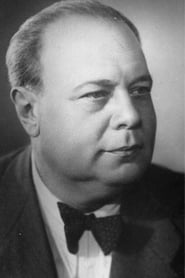
- Viktor Stanitsyn, who played the bank director Khirin, was especially noted actors of the Soviet stage and screen, known for his work at the Moscow Art Theatre.
- The film was shot in black and white despite the Soviet Union having developed color technology, as color film was reserved for more ideologically significant productions during wartime.
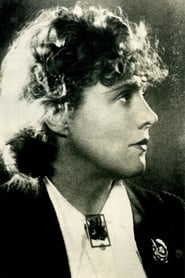
- Olga Androvskaya, who played the bank employee's wife, was a renowned Moscow Art Theatre actress making relatively few film appearances.
- The screenplay adaptation was written by playwright and screenwriter Nikolai Erdman, who had previously been arrested and exiled for his satirical works.
- The film's release was delayed several months due to wartime distribution priorities and the need for ideological approval.
- Despite its comedic nature, the film includes subtle social commentary about Soviet bureaucracy that managed to pass censors due to its classic literary source.
Awards & recognition
- Stalin Prize, Second Class (1946)
Visual style
The cinematography by Boris Volchek employed classic Soviet realist techniques with careful attention to composition and lighting appropriate for a comedy. The camera work emphasized the claustrophobic atmosphere of the bank office, using medium shots and two-shots to capture the characters' reactions and the escalating chaos. The lighting design created a bright, almost theatrical quality that enhanced the film's comedic tone while maintaining the visual standards of Soviet cinema. The camera movement was relatively static compared to pre-war Soviet films, reflecting both resource constraints and the theatrical origins of the source material. The visual style successfully balanced the need for realistic Soviet settings with the exaggerated reality required for comedy. The bank's interior was designed to look both authentic and slightly absurd, with oversized furniture and props that emphasized the characters' petty concerns. The black and white photography used contrast effectively to highlight facial expressions and comic timing, particularly in close-up shots of the actors' reactions.
Innovations
While not technically innovative, 'Jubilee' demonstrated significant technical proficiency given the wartime production constraints. The film's sound recording was particularly notable for maintaining clarity despite the challenging acoustic conditions of the Mosfilm studios during wartime. The production team successfully created convincing bank interiors using limited resources, employing creative set design techniques to suggest a larger space than actually existed. The film's editing by Tatyana Likhacheva maintained tight comedic timing throughout, ensuring that the farcical elements landed effectively. The makeup and costume departments achieved period-appropriate looks that suggested both the original Chekhov setting and contemporary Soviet life. The film's technical crew managed to maintain professional standards despite material shortages and the constant threat of air raids. The successful synchronization of sound and picture in the film's many rapid dialogue exchanges represented a technical achievement for Soviet cinema of the period. The preservation of the film's visual quality through multiple copies for distribution across the Soviet Union demonstrated effective quality control under difficult circumstances.
Music
The musical score was composed by Vano Muradeli, who created light, comedic arrangements that supported the film's farcical elements while maintaining appropriate Soviet musical sensibilities. The music used traditional Russian folk motifs adapted for orchestral performance, creating a sound that was both familiar and contemporary. The soundtrack included several musical interludes that punctuated key comedic moments, using leitmotifs for different characters. The sound design emphasized the chaotic atmosphere of the bank office, with overlapping dialogue and background noise that contributed to the sense of mounting confusion. The film's audio quality reflected the technical limitations of wartime Soviet recording but maintained clarity for the important comedic dialogue exchanges. Musical cues were carefully timed to enhance physical comedy and reaction shots, following the traditions of both Russian theatrical comedy and Soviet film comedy. The score avoided overtly modern or Western influences, staying within the bounds of acceptable Soviet musical style while still providing effective comic support.
Famous quotes
Fifteen years of honest service - and now this! A jubilee to remember us by our shame!
In our bank, we don't just count money - we count on our reputation!
An inspector during a jubilee? It's like having a fire drill during a fireworks display!
The higher the position, the harder the fall - and the louder the laughter of those below.
We celebrate fifteen years of progress, while our books show fifteen years of the same old mistakes.
Memorable scenes
- The opening sequence showing the bank staff frantically decorating the office while simultaneously trying to cover up accounting irregularities, establishing the film's comic tone and central conflict.
- The climactic scene where the government inspector arrives just as the embezzlement is discovered, forcing the bank director to give his jubilee speech while trying to prevent a complete collapse of the institution.
- The moment when Khirin tries to simultaneously welcome important guests, deal with the inspector, and hide the accountant's confession, resulting in a masterclass in comedic timing and physical comedy.
What audiences thought
The film was well-received by Soviet audiences during its initial release, who welcomed the opportunity to laugh during the difficult war years. Movie theaters in Moscow and other major cities reported good attendance, particularly among educated audiences familiar with Chekhov's work. The film's humor resonated with viewers who could recognize parallels between the bureaucratic absurdities depicted and their own experiences with Soviet administration. Letters to film magazines and newspapers from viewers praised the film's entertainment value and its faithfulness to Chekhov's comic spirit. The film became particularly popular among intelligentsia and theater-goers who appreciated the literary connection. In the decades following its release, 'Jubilee' maintained a reputation as one of the better Soviet comedies of the 1940s, though it was less widely seen than some other films of the era due to limited distribution and the passage of time. The film continues to be screened in retrospectives of Soviet cinema and Chekhov adaptations.
Film connections
Influenced by
- Anton Chekhov's play 'Jubilee' (1891)
- Soviet realist comedy tradition
- Moscow Art Theatre acting style
- Russian satirical literature tradition
This film influenced
- Later Soviet workplace comedies
- Post-war Soviet satirical films
- Adaptations of Chekhov in Soviet cinema
Film restoration
The film has been preserved in the Gosfilmofond of Russia (State Film Archive) and is considered to be in good condition for its age. A restored version was created in the 1970s as part of a Soviet classic film restoration project. The original negative survived the war years and subsequent storage challenges. Digital preservation efforts have been undertaken in the 21st century, though the film is not widely available in high-definition formats. The film remains accessible through Russian film archives and occasional special screenings.
Where to watch
- Available in Russian film archives and special collections
- Occasionally screened at Soviet cinema retrospectives and film festivals
- May be available through specialized Russian cinema streaming services
- Accessible through some university film studies programs
- Possible to view at the Gosfilmofond archive in Moscow by appointment