



Kept Husbands
"Joel McCrea's steelworker courts the boss's daughter."
Keys: Space play/pause · ←/→ 10s · F fullscreen · M mute · </> speed
About this film
A former All-American football star, now working as a steel mill supervisor in New Jersey, falls in love with the mill owner's wealthy, very spoiled daughter.
Cast & crew
More films like this
More Drama films
View all →







More from Lloyd Bacon
View all →


More about this film
About the production
Release dateJanuary 24, 1931
ProductionFirst National Pictures
Filmed inWarner Brothers Burbank Studios, Burbank, California
the production was produced during the transition period from silent films to talkies, and represents one of the early sound dramas exploring social class themes. The production utilized the newly developed sound stages at Warner Brothers facilities, allowing for more intimate dialogue scenes. The steel mill sequences were created using elaborate sets and matte paintings to simulate the industrial environment of New Jersey mills.
Themes
Class conflictLove across social boundariesDignity of laborWealth vs. worthParental opposition to romance
Themes & topics
steel millfootball starrich girlworking classromancesocial classNew Jerseyfamily oppositionindustrial accidentclass differences
Historical background
Kept Husbands (1931) reached screens through First National Pictures. Exhibitors of the time built early sound programs that mixed shorts, features, and live acts, so a clear premise helped Kept Husbands travel between cities and exchange markets.
Why this film matters
Archivists and revival programmers still cite Kept Husbands (1931) when tracing studio habits, casting pools, and the visual rhetoric audiences once took for granted. Even modest surviving prints help map how Kept Husbands fit beside competing releases of its day.
Making of
The production faced several challenges during filming, particularly with the sound recording equipment which was still relatively new in 1931. The steel mill sequences required special sound design to create authentic industrial noises while still allowing dialogue to be heard clearly. Dorothy Mackaill and Joel McCrea reportedly had excellent chemistry on set, which translated well to their on-screen romance. Director Lloyd Bacon, known for his efficiency, completed filming ahead of schedule despite the technical complexities of the sound recording. The film's script underwent several revisions to satisfy both the studio's commercial concerns and the emerging censorship standards that would soon be enforced by the Hays Code.
What critics said
Trade coverage around 1931 discussed Kept Husbands for pacing, clarity, and program fit rather than blockbuster grosses. Later writers value it as evidence of period style and as a reference point beside other films from the same era.
Did you know?
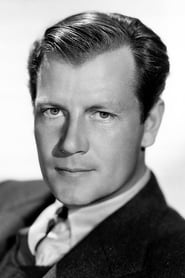
- Joel McCrea, who played the football star turned steel worker, had been a real football player at Pomona College before becoming an actor, bringing authentic athletic presence to his role.
- Dorothy Mackaill was one of the few silent film stars who successfully transitioned to talkies, though her career would decline within a few years of the production.
- Clara Kimball Young, who played the mother, was a major silent film star from the 1910s who had been largely forgotten by the time the production was made.
- The film was released just months before the enforcement of the Hays Production Code, allowing it to explore more mature themes of class conflict and romance.
- Director Lloyd Bacon would go on to direct some of Warner Brothers' biggest hits of the 1930s, including '42nd Street' and 'The Public Enemy'.
- The steel mill sets were so realistic that some contemporary reviewers mistakenly believed the film had been shot on location at an actual mill.
- This was one of the earliest films to feature the 'rich girl falls for working class hero' trope that would become popular in 1930s cinema.
- The film's title 'Kept Husbands' was considered somewhat scandalous for 1931, suggesting male prostitution or relationships based on financial dependency.
Visual style
The cinematography by Sol Polito utilized the new possibilities of sound filming, creating more intimate close-ups and dialogue scenes than were common in silent films. The steel mill sequences employed dramatic lighting and camera angles to emphasize the dangerous and industrial nature of the work environment. Polito's work effectively contrasted the gritty, masculine world of the mill with the opulent, feminine spaces of the Van Dyke mansion, visually reinforcing the film's class themes.
Innovations
As an early sound film, 'Kept Husbands' demonstrated the improving quality of sound recording technology, particularly in balancing dialogue with ambient noise in the mill sequences. The film also utilized early microphone techniques that allowed for more naturalistic acting performances. The production design for the steel mill sets represented an achievement in creating realistic industrial environments on studio soundstages.
Music
The film featured a musical score by Leo F. Forbstein, Warner Brothers' music director, who was pioneering the use of synchronized music in talkies. The soundtrack included popular songs of the era that would have been familiar to contemporary audiences. The sound design for the mill sequences was particularly noteworthy, using industrial sounds to create atmosphere while maintaining dialogue clarity - a technical challenge for early sound films.
Famous quotes
A man's worth isn't measured by the size of his paycheck, but by the size of his heart.
In my father's world, love is something you can buy and sell. In my world, it's all I have to give.
You can take the boy out of the steel mill, but you can't take the steel mill out of the boy.
Memorable scenes
- The dramatic mill crisis sequence where Hughie takes charge to save the workers, demonstrating his leadership and earning the respect of Dorothy's father.
- The initial meeting between Hughie and Dorothy at the mill, where their different worlds collide and sparks of romance begin to fly.
- The confrontation scene where Hughie stands up to Dorothy's father, declaring his love and worth despite their class differences.
What audiences thought
The film performed moderately well at the box office, appealing to audiences who could relate to its themes of economic struggle and romance across class lines. Viewers responded positively to Joel McCrea's portrayal of the dignified working-class hero, which aligned with the growing admiration for ordinary Americans during the Depression. The film's straightforward approach to romance and social issues made it popular with mainstream audiences, though it didn't achieve the blockbuster status of some other Warner Brothers releases of the period.
Film connections
Influenced by
- The tradition of silent film romances
- Contemporary stage plays about class issues
- The growing genre of social problem films of the early 1930s
This film influenced
- Later Warner Brothers social dramas
- The 'rich girl/poor boy' romance formula films of the 1930s
- Industrial-themed films of the Depression era
Film restoration
The film survives in complete form and has been preserved by the Library of Congress. A 16mm copy exists in various film archives, and it has occasionally been shown at classic film festivals and on specialty cable channels. The film is not currently available on DVD or Blu-ray through major distributors, though it exists in some public domain collections.
Where to watch
- The film occasionally appears on Turner Classic Movies
- Available through some classic film streaming services
- Can be found in various public domain archives online
- Screenings at film festivals specializing in pre-Code cinema
- Available through the Library of Congress for research purposes