


Love
"In Imperial Russia."
Keys: Space play/pause · ←/→ 10s · F fullscreen · M mute · </> speed
About this film
In Imperial Russia, Anna Karenina falls in love with the dashing military officer Count Vronsky and abandons her husband and child to become his mistress.
Cast & crew
More films like this

More Drama films
View all →







More from Edmund Goulding
View all →
More about this film
About the production
Release dateNovember 29, 1927
Budget$379,000
Box office$1,050,000 (domestic)
ProductionMetro-Goldwyn-Mayer (MGM)
Filmed inMGM Studios, Culver City, California
The film was shot simultaneously in both silent and sound versions, with the sound version featuring a synchronized musical score and sound effects. MGM invested heavily in production design, recreating elaborate Russian ballrooms and train stations. The famous train sequence required complex camera work and safety precautions for Garbo. The production faced challenges with the strict censorship boards of the era, requiring careful handling of the adulterous themes. The costume budget alone exceeded $50,000, with Garbo's wardrobe featuring over 30 elaborate gowns designed by Adrian.
Themes
Forbidden loveSocial hypocrisyFemale desire and autonomyThe price of passionClass and social conventions
Themes & topics
Historical background
Production circa 1927 meant fixed cameras, intertitles or early sound rigs, and studio economies that shaped every scene in Love.
Why this film matters
Historians treat Love as evidence of what typical 1927 audiences could see in a program slot.
Making of
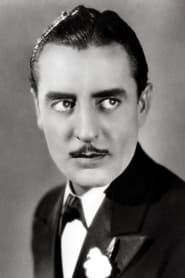
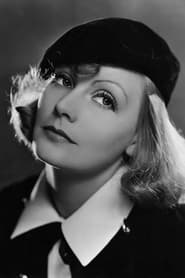
The production of 'Love' was marked by the tense professional relationship between its stars, John Gilbert and Greta Garbo. Their real-life romance had famously ended when Garbo left Gilbert at the altar in 1926, yet MGM continued to pair them as a screen couple. On set, the two maintained a cold professionalism, communicating only through intermediaries when necessary. Director Edmund Goulding had to navigate this difficult dynamic while coaxing passionate performances from both actors. The famous train sequence required extensive preparation, with the studio building a special track on their backlot and implementing safety measures for Garbo's stunt work. The film's elaborate costumes were designed by Adrian, who would become Garbo's favorite designer and create her signature look throughout her career. The synchronized sound version was created simultaneously, with composer William Axt conducting the orchestra during filming to ensure the music matched the actors' movements and emotional beats.
What critics said
Trade papers near 1927 listed Love as program material rather than headline art cinema.
Did you know?
- This was the first of four films John Gilbert and Greta Garbo made together, though their real-life romance had already ended by the time of production
- The film was originally titled 'Anna Karenina' but MGM changed it to 'Love' to avoid confusion with other adaptations and to emphasize the romantic elements
- Greta Garbo was paid $2,500 per week for this film, making her one of the highest-paid actresses in Hollywood
- The famous train scene was filmed using a special camera rig that could move alongside the tracks, a technical innovation for the time
- Despite being a silent film, a sound version was released with a synchronized musical score by William Axt
- The film's success led MGM to immediately plan another Garbo-Gilbert collaboration, 'A Woman of Affairs' (1928)
- George Fawcett, who played Karenin, was 63 years old during filming, while Garbo was only 22
- The film's ballroom sequence featured over 300 extras in authentic Russian-style costumes
- MGM conducted extensive market research before release, testing multiple endings with preview audiences
- The film was banned in several countries for its depiction of adultery, including Ireland and parts of the American South
Awards & recognition
- Photoplay Magazine Medal of Honor - 1927
Visual style
The cinematography by William H. Daniels employed innovative techniques to convey the emotional landscape of the story. Daniels used soft focus lighting for Garbo's close-ups, creating the luminous, ethereal quality that became her trademark. The famous train sequence utilized tracking shots and multiple camera angles to build tension and create a sense of movement and danger. The ballroom scenes featured elaborate lighting setups with hundreds of practical lights to recreate the opulence of Russian aristocracy. Daniels employed chiaroscuro techniques throughout the film to contrast the brightness of Anna's passion with the darkness of her despair. The cinematography also made effective use of shadows and reflections to suggest the psychological states of the characters.
Innovations
The film pioneered several technical innovations that influenced future cinema. The synchronized sound version represented one of the earliest successful attempts at combining music and effects with a dramatic feature. The train sequence employed a specially designed camera crane that could move alongside the tracks, creating dynamic movement previously unseen in cinema. The film's lighting techniques, particularly Daniels' use of diffusion and backlighting for Garbo, set new standards for glamour photography in Hollywood. The production also utilized early matte painting techniques for establishing shots of Russian cities and landscapes. The film's preservation of both silent and sound versions provided valuable documentation of cinema's transition between formats.
Music
The musical score was composed by William Axt, one of MGM's staff composers during the silent era. For the sound version released in 1928, Axt conducted a full orchestra that was synchronized to the film's action using the Vitaphone system. The score featured adaptations of Russian classical music, including works by Tchaikovsky and Rachmaninoff, to establish the film's setting. Axt created distinct leitmotifs for each main character, with Anna's theme being particularly memorable and emotionally resonant. The soundtrack also included synchronized sound effects for the train sequences and ballroom scenes, adding to the film's immersive quality. The music was considered groundbreaking for its seamless integration with the visual narrative.
Famous quotes
I cannot live without love. It is the breath of life to me.
When love is once dead, it can never be brought back to life.
You are afraid of life, but you are more afraid of death.
I think of you and I feel as though I were dying.
In this world, one must pay for everything.
Memorable scenes
- The opening train station sequence where Anna first meets Vronsky, with the dramatic imagery of a worker being crushed by a train foreshadowing Anna's fate
- The grand ballroom scene where Anna and Vronsky dance together, causing scandal among the Russian aristocracy
- The passionate embrace in the garden where Anna and Vronsky consummate their affair
- Anna's mental breakdown scene where she hallucinates and sees visions of her abandoned son
- The final tragic sequence where Anna throws herself under the train, returning to the film's opening imagery
What audiences thought
The film was a major commercial success, grossing over $1 million domestically - an impressive figure for 1927. Audiences were particularly drawn to the on-screen pairing of Gilbert and Garbo, whose real-life drama added an extra layer of intrigue to their performances. The film's emotional intensity and tragic romance resonated strongly with contemporary audiences, many of whom attended multiple viewings. The train sequences and ballroom scenes became particularly talked-about moments, with audiences reportedly gasping and fainting during Anna's final scenes. The film's success solidified Garbo's position as among the leading bankable stars in Hollywood and proved that sophisticated literary adaptations could attract mainstream audiences.
Film connections
Influenced by
- Anna Karenina by Leo Tolstoy
- Madame Bovary by Gustave Flaubert
- Earlier film adaptations of Tolstoy's work
- European literary cinema of the 1920s
This film influenced
- Anna Karenina (1935)
- Anna Karenina (1948)
- Anna Karenina (1997)
- Anna Karenina (2012)
- Doctor Zhivago (1965)
- The Last Emperor (1987)
Film restoration
The film is preserved in the MGM/United Artists archive and has been restored by Turner Classic Movies. Both the silent and sound versions survive, though the sound version is more complete. The film was selected for preservation in the United States National Film Registry in 1998 for its cultural, historical, and aesthetic significance. A 4K restoration was completed in 2015 as part of The Criterion Collection's Garbo box set.
Where to watch
- The Criterion Channel
- Warner Archive Collection (Blu-ray/DVD)
- Turner Classic Movies (periodic broadcasts)
- The Museum of Modern Art's film collection (screenings)
- UCLA Film & Television Archive (research viewing)