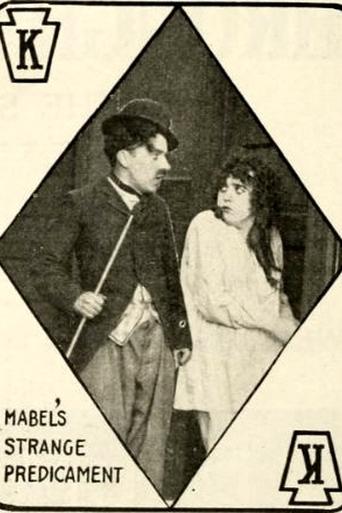
Mabel's New Hero
"Fatty Arbuckle rescues Mabel from a masher and a runaway balloon."
Keys: Space play/pause · ←/→ 10s · F fullscreen · M mute · </> speed
About this film
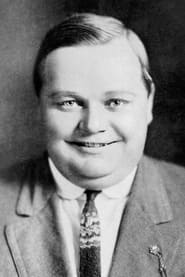
Roscoe Arbuckle saves twice: first, from the unwelcome attentions of a masher, then from a runaway observation balloon.
Cast & crew
More films like this
More Comedy films
View all →







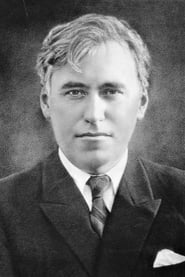
More from Mack Sennett
View all →

More about this film
About the production
Release dateJuly 1913
ProductionKeystone Studios
Filmed inEdendale, California, Los Angeles, California
This film was produced during the golden age of Keystone Studios, when they were churning out dozens of comedy shorts each month. The observation balloon sequence was particularly ambitious for its time, requiring careful coordination and posing genuine risks to the performers. The film was shot in the early California sunshine that made Keystone's outdoor scenes so distinctive, and likely utilized the studio's signature fast-paced shooting schedule, often completing scenes in just one or two takes.
Themes
Themes & topics
Historical background
By 1913, distribution networks were widening, and Mabel's New Hero reached viewers through the same short-program bills that mixed comedy, news, and spectacle.
Why this film matters
Collectors prize surviving prints of Mabel's New Hero as evidence of how 1913-era filmmakers solved storytelling problems with limited means.
Making of
The production of 'Mabel's New Hero' exemplified the chaotic but creative atmosphere of Keystone Studios under Mack Sennett's leadership. The studio operated on a factory-like system, producing short comedies at an astonishing pace. For the balloon sequences, the production team had to secure a genuine observation balloon, which was no small feat in 1913. The stunt work was performed without modern safety equipment, making the scenes both thrilling and genuinely risky. Mabel Normand and Roscoe Arbuckle developed their chemistry during this period, with Arbuckle's gentle giant persona perfectly complementing Normand's spunky character. The film was likely shot on the Keystone backlot in Edendale, with the balloon scenes possibly filmed on location in the surrounding California countryside to allow for the necessary open space.
What critics said
Audience surveys from 1913 are scarce; reception for Mabel's New Hero must be inferred from reissue patterns and how often programmers still book it.
Did you know?
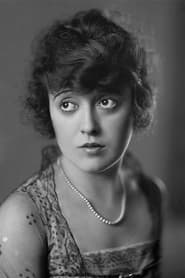
- This film was one of the early collaborations between Mabel Normand and Roscoe Arbuckle, who would become especially popular comedy teams of the silent era
- The observation balloon used in the film was a real hot air balloon, making the stunt sequences genuinely dangerous for the performers
- Mack Sennett, the director, was known as 'The King of Comedy' and pioneered many slapstick techniques used in this film
- The term 'masher' used in the plot was early 20th century slang for a man who aggressively pursued women
- Keystone Studios produced approximately 350 films in 1913 alone, with this being one of their more elaborate productions
- The film was likely shot in just one or two days, typical of Keystone's rapid production schedule
- Mabel Normand was not only the star but also one of the few women in Hollywood with creative input at the time
- The runaway balloon sequence was inspired by the popularity of aviation and ballooning spectacles in the early 1910s
Visual style
The cinematography in 'Mabel's New Hero' was typical of Keystone productions of the era, utilizing static camera positions and wide shots to capture the physical comedy and action sequences. The balloon scenes required special consideration, with the camera positioned to emphasize both the height and danger of the situation. The film was shot in black and white on 35mm film, with the bright California sunlight providing the necessary illumination for outdoor scenes. The cinematographer would have used hand-cranked cameras, allowing for slight variations in film speed that enhanced the comedic effect of the action sequences.
Innovations
The most notable technical achievement in 'Mabel's New Hero' was the successful execution of the balloon sequence, which required careful planning and coordination between the performers and the balloon operator. The film also demonstrated Keystone's mastery of rapid editing and comic timing, techniques that were still being refined in 1913. The production team's ability to combine location shooting with studio work seamlessly was also impressive for the period. The stunts performed in the film, while dangerous, were executed with a level of professionalism that set standards for future comedy productions.
Music
As a silent film, 'Mabel's New Hero' would have been accompanied by live musical performance during its theatrical run. The typical score would have included popular songs of the era, classical pieces, and specially composed incidental music to accent the action. For the balloon sequence, the music would have been particularly dramatic and suspenseful, likely featuring pieces like 'Flight of the Bumblebee' or similar virtuosic compositions. Theaters often employed small orchestras or talented pianists to provide appropriate accompaniment, with cue sheets sometimes provided by the studio to suggest musical moments.
Famous quotes
(As an intertitle) 'Help! Help! I'm being swept away!' - Mabel's cry during the balloon sequence
(As an intertitle) 'A hero at last!' - Fatty's triumphant moment
Memorable scenes
- The spectacular balloon rescue sequence where Mabel is carried high into the sky and Fatty must save her from falling, featuring breathtaking stunt work for 1913 and creating genuine tension mixed with comedy as the rotund hero attempts the daring rescue.
What audiences thought
The film was well-received by audiences of 1913, who were particularly drawn to its spectacular stunt sequences and the growing popularity of its stars. The balloon rescue sequence generated significant word-of-mouth buzz, as such large-scale stunts were still relatively rare in cinema of this period. Audiences responded enthusiastically to the chemistry between Mabel Normand and Roscoe Arbuckle, helping to cement their status as one of the screen's favorite comedy teams. The film's success contributed to the growing popularity of Keystone Studios' brand of fast-paced, physical comedy.
Film connections
Influenced by
- Earlier French comedies by Pathé Frères
- Stage melodramas
- Vaudeville routines
- Chase films by Biograph Studios
This film influenced
- Later Keystone comedies
- The 'Keystone Kops' series
- Harold Lloyd's stunt comedies
- Buster Keaton's elaborate stunt sequences
Film restoration
The film is believed to be partially preserved with some elements surviving in film archives, though complete preservation status is uncertain. Many Keystone films from this period have been lost due to the unstable nitrate film stock used in early cinema.
Where to watch
- Available on some silent film compilation DVDs
- May be found in specialized film archives
- Occasionally screened at silent film festivals
- Some portions may be available on YouTube or other public domain platforms