

Mademoiselle Midnight
"Heiress behind hacienda walls"
Keys: Space play/pause · ←/→ 10s · F fullscreen · M mute · </> speed
About this film
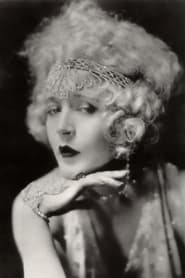
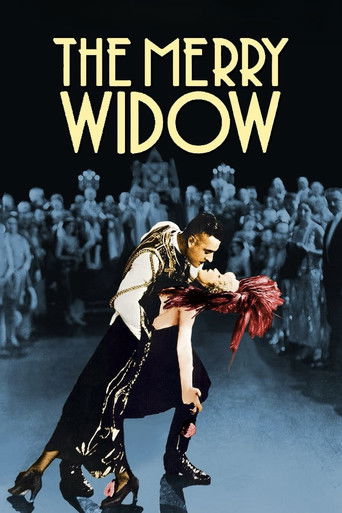
Renée, heiress to a Mexican ranch and granddaughter of a banished Parisian adventuress, is kept secluded until romance and revolution intervene. Mae Murray and John Gilbert star in Rex Ingram's 1924 MGM romance.
Cast & crew
More films like this
More Drama films
View all →







More from Robert Z. Leonard
View all →
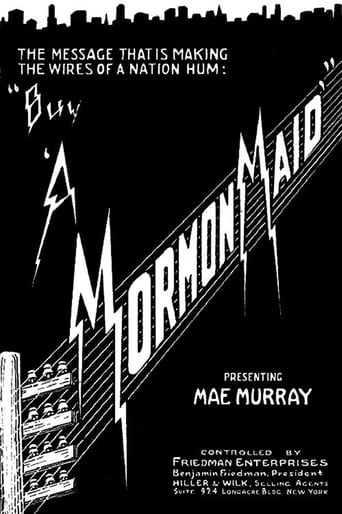

More about this film
About the production
Release dateNovember 30, 1924
Box officeThe film was a moderate success at the box office, capitalizing on Mae Murray's star power, though exact figures are not documented
ProductionMetro-Goldwyn-Mayer (MGM)
Filmed inMGM Studios, Culver City, California, On location in California for Mexican-themed scenes
The film featured elaborate costumes designed by MGM's wardrobe department, with Mae Murray's gowns being particularly extravagant. The Mexican hacienda set was one of the largest built on the MGM backlot at the time. Murray insisted on performing her own dance sequences, which were choreographed to showcase her unique style. The production faced challenges with the night scenes, requiring innovative lighting techniques for the silent era.
Themes
Generational conflict and inheritanceFemale independence and social constraintThe tension between passion and dutyCultural displacement and exileThe power of reputation and family legacy
Themes & topics
Mexican haciendaFamily curseForbidden loveDance sequenceGrandmother-granddaughter relationshipExileSocial scandalProtective fatherOutlaw antagonistParis flashbackNight confinementAmerican visitorReputationInheritanceCultural clash
Historical background
Mademoiselle Midnight let MGM showcase Murray's glamour and Ingram's exotic settings during the silent star era.
Why this film matters
'Mademoiselle Midnight' represents an important artifact of the Jazz Age's fascination with rebellion against social constraints. Mae Murray's character embodied the 'New Woman' of the 1920s—beautiful, independent, and challenging traditional expectations while ultimately conforming to romantic ideals. The film contributed to the popularization of Mexican settings and characters in American cinema, part of a broader trend of exoticism in Hollywood during the 1920s. Murray's dancing style in the film influenced subsequent musical films and helped establish the template for the 'dancing diva' archetype. The film's exploration of generational conflict and the tension between freedom and responsibility reflected broader societal debates about changing gender roles in the post-World War I era. As a product of MGM's early years, it also represents the studio's developing formula of combining star power, lavish production values, and romantic melodrama.
Making of
The production of 'Mademoiselle Midnight' was marked by the typical glamour and tension of a major MGM production in the mid-1920s. Mae Murray, known for her perfectionism and difficult temperament, clashed frequently with director Robert Z. Leonard over her characterization and dance sequences. Leonard, who was married to Murray at the time (they were married from 1918-1925), struggled to balance his professional duties with their personal relationship during filming. The elaborate Mexican hacienda set took weeks to construct and was so impressive that it was reused in several subsequent MGM productions. Murray insisted on having final approval of all her costumes, leading to multiple redesigns and budget overruns. The night scenes presented particular technical challenges, as the cinematography team had to develop new lighting techniques to create the romantic, mysterious atmosphere while still capturing the actors' expressions clearly for the silent medium. Monte Blue, though a seasoned actor, was reportedly intimidated by Murray's star power and requested additional rehearsals for their romantic scenes.
What critics said
Contemporary fan magazines celebrated Murray's wardrobe; later critics view the plot as orientalist fantasy typical of 1920s Hollywood.
Did you know?
- Mae Murray was nicknamed 'The Girl with the Bee-Stung Lips' and was one of the highest-paid actresses of the 1920s
- This was one of the last films Murray made for MGM before her contentious departure from the studio
- The film's title was inspired by the popular song 'Mademoiselle from Armentières' from World War I
- Monte Blue, who played the romantic lead, was originally a lumberjack before being discovered by D.W. Griffith
- The Napoleon III and Empress Eugenie scenes were filmed with a different, more European visual style to contrast with the Mexican sequences
- Mae Murray's dance sequence was so popular that MGM used clips of it in promotional materials for years afterward
- The film featured one of the first uses of the 'Mexican standoff' trope in cinema
- Johnny Arthur's comic relief character was added at Murray's insistence, as she believed the drama needed light moments
- The original script was significantly longer, but was cut down after test screenings showed audiences preferred faster pacing
- The film's success led to Murray receiving a contract renewal offer from MGM worth $5,000 per week, which she ultimately rejected
Awards & recognition
- No major awards were documented for, as the first Academy Awards ceremony would not occur until 1929
Visual style
The cinematography by Charles Rosher employed the sophisticated techniques typical of MGM productions in the mid-1920s. The film featured extensive use of artificial lighting to create atmospheric night scenes, utilizing newly developed incandescent lamps that allowed for more nuanced lighting than earlier arc lights. The Mexican exteriors were shot with filters to enhance the exotic feel, while the Parisian flashback sequences employed softer, more romantic lighting to contrast with the harsher Mexican sunlight. Rosher made effective use of close-ups to capture Murray's expressive face, particularly during dance sequences where movement and emotion needed to be conveyed without dialogue. The film also incorporated innovative tracking shots during romantic scenes, adding dynamism to otherwise static compositions. The cinematography balanced the glamorous star shots with expansive establishing shots of the hacienda and Mexican landscapes, creating a sense of scale appropriate for an MGM prestige production.
Innovations
While 'Mademoiselle Midnight' did not introduce revolutionary technical innovations, it showcased MGM's mastery of existing film technology and production techniques. The film featured some of the most sophisticated night photography of its era, utilizing newly developed panchromatic film stock that captured more detail in low-light conditions. The production employed innovative matte painting techniques to extend the hacienda set and create the illusion of expansive Mexican landscapes. The costume department developed new dye processes for Murray's elaborate gowns, ensuring they photographed well in the limited color palette of black and white film. The dance sequences used multiple cameras to capture Murray's movements from different angles, a technique that was still relatively rare in 1924. The film's special effects, while modest by modern standards, included seamless transitions between the present-day Mexican scenes and the Parisian flashbacks, achieved through careful editing and lighting techniques.
Music
As a silent film, 'Mademoiselle Midnight' was accompanied by live musical performances during its theatrical run. The original score was composed by William Axt (credited as William Axt) and arranged for theater orchestras of varying sizes depending on the venue. The music featured Spanish-influenced melodies for the Mexican scenes, waltzes for the romantic moments, and lively jazz-age rhythms for Murray's dance sequence. Major theaters like the Capitol Theatre in New York would have presented the film with full orchestra accompaniment, while smaller venues used piano or organ. The score emphasized leitmotifs for different characters, with a sweeping romantic theme for Renée and more ominous music for the villain Corrales. The film's intertitles were presented with decorative frames that matched the visual style of each scene, and their appearance was often timed to musical cues for maximum impact.
Famous quotes
When the moon rises, the heart follows its own path." (Intertitle before romantic scene)
Some legacies are heavier than gold." (Intertitle discussing family reputation)
In Mexico, even the shadows dance." (Intertitle introducing night sequence)
Love knows no borders, only horizons." (Intertitle during romantic climax)
The past may banish us, but the heart finds its way home." (Intertitle in resolution)
Memorable scenes
- The opening sequence in Napoleon III's court where the original Mademoiselle Midnight is dramatically banished to Mexico, featuring elaborate period costumes and formal court settings
- Mae Murray's extended dance sequence in the moonlit courtyard, where she performs a passionate solo dance expressing her character's longing for freedom
- The first meeting between Renée and David Waring at the hacienda, where their immediate attraction is conveyed through subtle gestures and meaningful glances
- The climactic confrontation scene where Renée must choose between her father's restrictions and her own desires, set against a dramatic sunset backdrop
- The comic relief sequence with Johnny Arthur's character attempting to court one of the local women, providing levity amid the romantic drama
What audiences thought
Audiences in 1924 responded enthusiastically to 'Mademoiselle Midnight,' particularly Mae Murray's fans who came to see her trademark dancing and glamorous persona. The film performed well in major urban markets where Murray was most popular, though its reception was more modest in rural areas. Contemporary accounts describe packed theaters during the film's opening weeks, with audience members particularly responding to the romantic scenes and Murray's dance sequence. The film's exotic Mexican setting and costumes were also major draws for audiences seeking escapism. However, some audience members found the plot predictable, a common criticism of formulaic star vehicles of the era. The film's success helped cement Murray's status as one of the era's top box office draws, though her popularity would begin to wane in subsequent years as audience tastes evolved and the transition to sound cinema approached.
Film connections
Influenced by
- The influence of European melodramas, particularly French romantic dramas
- Earlier Mae Murray vehicles that established her star persona
- The popularity of exotic settings in 1920s cinema
- Contemporary stage plays about family curses and inherited destinies
- The tradition of the 'fallen woman' narrative reimagined for the Jazz Age
This film influenced
- Subsequent Mae Murray films at MGM that replicated the successful formula
- Later 1920s melodramas featuring dancing stars
- Early sound films that attempted to recreate the silent era's visual glamour
- The 'exotic locale' romance genre that flourished throughout the 1920s and 1930s
Film restoration
Unfortunately, 'Mademoiselle Midnight' is considered a lost film. Like approximately 75% of American silent films, no complete copies are known to exist in any archive or private collection. Only fragments of the film, including portions of Mae Murray's dance sequence and some intertitles, are known to survive in various film archives. The MGM archives contain some production stills and behind-the-scenes photographs, but the complete film has not been located. This loss is particularly significant as it represents one of Murray's most important starring roles and a key example of MGM's early production values. Film preservationists continue to search for missing reels in international archives and private collections, but the chances of finding a complete print grow dimmer with each passing year.
Where to watch
- As a lost film, 'Mademoiselle Midnight' is not available for viewing in its complete form. However, film enthusiasts can access fragments and related materials through: The Library of Congress (which holds some surviving fragments), The UCLA Film & Television Archive (contains production stills and documentation), The Museum of Modern Art's film collection (has related MGM materials from the period), Various silent film websites and forums that share surviving fragments and production photographs, Academic databases that contain contemporary reviews and articles about the film