Malombra
"She begins to read letters written by an ancestor called Cecilia."
Keys: Space play/pause · ←/→ 10s · F fullscreen · M mute · </> speed
About this film
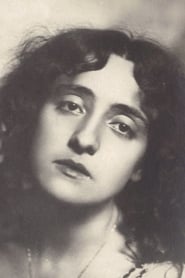
Marina di Malombra (Borelli) lives in a castle prior to her wedding. She begins to read letters written by an ancestor called Cecilia. She finds out that Cecilia was driven to her death by her uncle.
Cast & crew
More films like this
More Mystery films
View all →
More about this film
About the production
Release date1917
Box officeUnknown - but was commercially successful in Italy and internationally
ProductionCines, Film d'Arte Italiana
Filmed inRome, Italy, Castle locations in the Italian countryside
The film was adapted from Antonio Fogazzaro's 1881 novel of the same name. Production took place during World War I, which created significant challenges for the Italian film industry. Director Carmine Gallone worked closely with star Lyda Borelli to create the film's distinctive visual style, emphasizing her famous 'diva' performance style with elaborate costumes, dramatic lighting, and symbolic set designs. The castle interiors were created in studio sets with elaborate gothic architecture to enhance the film's supernatural atmosphere.
Themes
Ancestral memory and reincarnationFemale psychological interiorityRevenge and justiceMadness and obsessionThe supernatural vs. psychological reality
Themes & topics
ancestral curserevengepsychological thrillergothic romancesupernaturalcastleletterssuicidemadnessobsessionfamily secretshistorical mysteryfemale protagonistweddingmurder
Historical background
The 1917 release of Malombra belongs to its era's exhibition habits rather than today's franchise model.
Why this film matters
Reference works on 1917 cinema cite Malombra when tracing genre and regional production patterns.
Making of
The production of Malombra was marked by intense collaboration between director Carmine Gallone and star Lyda Borelli, who was not only the lead actress but also had significant creative input. Gallone, recognizing Borelli's unique screen presence, tailored the film to showcase her distinctive acting style characterized by exaggerated gestures, intense facial expressions, and a hypnotic quality that audiences found mesmerizing. The filming took place during the height of World War I, which meant the production faced shortages of materials and had to work around wartime restrictions. The castle sets were meticulously designed to create a gothic atmosphere, with heavy use of shadows and dramatic lighting techniques that would later influence German Expressionist cinema. Borelli's costumes were particularly elaborate, featuring flowing fabrics and dark colors that enhanced her ethereal presence on screen. The film's success led to increased international recognition for Italian cinema and established the 'diva film' as a significant genre in early 20th century European cinema.
What critics said
Trade papers near 1917 listed Malombra as program material rather than headline art cinema.
Did you know?
- Lyda Borelli was one of the highest-paid actresses of her time, earning the equivalent of millions in today's currency for her performances
- The film is considered a masterpiece of the Italian 'diva film' genre, which focused on strong, often tormented female protagonists
- Borelli's performance style in influenced countless later actresses, particularly in German Expressionist cinema
- The original novel by Fogazzaro was controversial for its time due to its exploration of psychological themes and female sexuality
- Director Carmine Gallone later became one of Italy's most prolific directors, with a career spanning over 50 years and more than 100 films
- The film's supernatural elements were groundbreaking for 1917, using innovative special effects and double exposure techniques
- Malombra was remade in 1942 by Mario Soldati, but the 1917 version is considered superior by film historians
- The film was a major international success, particularly in Germany where it influenced the development of Expressionist cinema
- Borelli retired from acting shortly after , making it one of her last major screen appearances
- The film's title 'Malombra' translates to 'Evil Shadow' in English, reflecting the film's themes of ancestral curses and psychological torment
Visual style
The cinematography of Malombra, credited to Alberto Chentrens and Angelo Scalenghe, was groundbreaking for its time and heavily influenced the visual language of cinema. The film made extensive use of dramatic lighting techniques, particularly chiaroscuro effects that created deep shadows and highlighted the psychological tension of the narrative. The camera work employed innovative techniques including tracking shots that followed Borelli's movements through the castle corridors, creating a sense of fluid motion and psychological immersion. The cinematographers made masterful use of the castle sets, using architectural elements like arches, staircases, and windows to create visually striking compositions that enhanced the film's gothic atmosphere. Double exposure techniques were used to create supernatural effects, particularly in scenes depicting Marina's visions of Cecilia. The film's visual style emphasized vertical compositions and used light and shadow to create a sense of psychological depth and emotional intensity. The cinematography also incorporated innovative close-up techniques that captured Borelli's expressive facial performances, helping establish the close-up as a powerful tool for conveying emotion in silent cinema.
Innovations
Malombra featured several technical innovations that were ahead of their time and influenced later developments in cinema. The film made pioneering use of double exposure techniques to create supernatural effects, particularly in scenes showing the connection between Marina and her ancestor Cecilia. The production employed sophisticated matte painting techniques to create the illusion of vast castle interiors and exteriors. The film's lighting design was particularly advanced, using multiple light sources to create complex shadow patterns that enhanced the psychological atmosphere. The camera work included innovative tracking shots and camera movements that were technically challenging for the period. The film also featured elaborate special effects sequences, including scenes of apparent supernatural phenomena that required careful coordination between actors, camera work, and post-production processing. The makeup and costume design were technically sophisticated, using techniques to create Borelli's distinctive pale, ethereal appearance that became her trademark. The film's editing was also notable for its rhythmic pacing and use of cross-cutting to build tension between parallel narrative threads.
Music
As a silent film, Malombra was originally accompanied by live musical performance, typically a piano or small orchestra in theaters. The original score has been lost, but contemporary accounts indicate that the music was specially composed to enhance the film's gothic and psychological elements. The musical accompaniment likely included romantic themes for the love scenes, dramatic motifs for the revenge sequences, and eerie, dissonant passages for the supernatural elements. Modern restorations of the film have featured newly composed scores by contemporary musicians who attempt to recreate the mood and style of the period while using modern musical techniques. These contemporary scores often blend classical elements with modern ambient music to capture the film's psychological depth and atmospheric qualities. The importance of music in silent films like Malombra cannot be overstated, as it provided emotional cues, enhanced dramatic tension, and helped guide audience interpretation of the visual narrative.
Famous quotes
Silent film - no spoken dialogue, but intertitles included key lines such as: 'The dead do not die... they live in us', 'I am Cecilia, and I will have my revenge', 'The shadows of the past reach into the present', 'Love and hate are two sides of the same coin', 'In this castle, time has no meaning'
Memorable scenes
- The scene where Marina first discovers Cecilia's letters in the castle library, with dramatic lighting emphasizing her growing obsession
- The supernatural sequence where Marina sees Cecilia's ghostly reflection in the mirror, using innovative double exposure techniques
- The climactic confrontation scene where Marina, fully identifying as Cecilia, confronts her uncle in the castle tower
- The wedding preparation scene where Marina's psychological transformation becomes visually apparent through her changing appearance and behavior
- The final scene in the castle ruins where past and present merge in a visually stunning sequence of overlapping images
What audiences thought
Malombra was enormously popular with audiences upon its release in 1917, becoming one of the biggest box office successes of the year in Italy. Audiences were particularly captivated by Lyda Borelli's performance, with many viewers reportedly attending multiple screenings to study her acting technique. The film's blend of romance, mystery, and supernatural elements appealed to a broad audience base, and its psychological complexity gave it a reputation as a 'thinking person's' film. The movie's success extended beyond Italy, with enthusiastic receptions in Germany, Austria, France, and even the United States. Contemporary accounts describe audiences being visibly moved and sometimes frightened by the film's more intense scenes. The film's popularity contributed to the international fame of Italian cinema in the 1910s and helped establish Borelli as one of the first true international film stars. Modern audiences who have seen the film at revival screenings or through restorations continue to be impressed by its atmospheric qualities and Borelli's powerful screen presence.
Film connections
Influenced by
- Antonio Fogazzaro's 1881 novel 'Malombra'
- Gothic literature tradition
- Italian verismo movement
- Early 20th century psychological theories
- Symbolist art movement
- German Romantic literature
This film influenced
- Nosferatu (1922)
- The Cabinet of Dr. Caligari (1920)
- Sunrise: A Song of Two Humans (1927)
- Rebecca (1940)
- The Haunting (1963)
- Don't Look Now (1973)
- The Others (2001)
Film restoration
Malombra is partially preserved with some elements missing. The film exists in various versions of different lengths, with the most complete version running approximately 70 minutes. Portions of the original film are believed lost, particularly some transitional scenes and the original ending. The film has been partially restored by film archives including the Cineteca Italiana and the Museum of Modern Art. Some restoration work has been done using surviving nitrate prints and duplicate negatives from various archives around the world. The visual quality varies in different preserved sections, with some scenes showing significant deterioration while others remain remarkably clear. The film is considered an important work for preservation due to its historical significance and influence on cinema history.
Where to watch
- Available on DVD from specialty distributors like Kino Lorber and Flicker Alley
- Streaming on MUBI and The Criterion Channel during special programming
- Available for viewing at film archives including the Cineteca di Bologna and the British Film Institute
- Occasionally screened at film festivals and museums specializing in silent cinema
- Some versions available on YouTube but quality varies significantly