1917 · Approximately 20 minutes

Also available on: YouTube

Masks and Faces

1917 Approximately 20 minutes United Kingdom
Deception and disguiseSocial manners and flirtationAge and vanityPerformance versus realityMarriage and domestic respectability

Plot

Masks and Faces (1917) is a short British comedy film adapted from a stage play and built around a familiar farcical premise: an aging, overly flirtatious man is brought back into line by a clever actress who pretends to be his wife. The story uses mistaken identity and social embarrassment to expose vanity, bluff, and the comic weakness of an older gentleman who is more besotted with women than he realizes. As the deception unfolds, the actress’s performance forces the man to confront his own behavior while also turning the situation to her advantage. The film plays less like a broad slapstick comedy than a genteel stage-derived drawing-room satire, with much of the humor arising from dialogue-driven situations, expressive acting, and the contrast between appearance and reality. Its compact running time means the narrative moves quickly from setup to comic reversal and resolution, emphasizing the theatrical origins of the material.

About the Production

Release Date 1917
Production British and Colonial Kinematograph Company
Filmed In United Kingdom

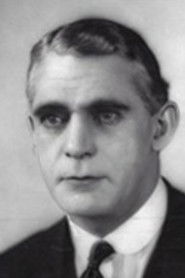
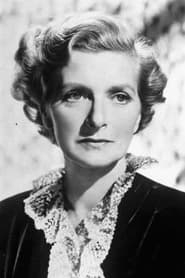
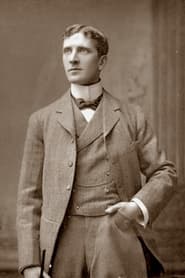
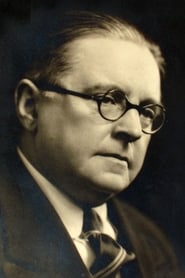
The film is a 1917 British screen adaptation associated with the stage play 'Masks and Faces', and it draws on theatrical performance traditions rather than on elaborate location shooting or spectacle. It was directed by Fred Paul, a filmmaker active in the British silent era who worked on numerous literary and stage adaptations, and it features major stage personalities Johnston Forbes-Robertson and Irene Vanbrugh, which strongly suggests the production was intended to capitalize on established theatrical prestige. Like many British films of the period, precise production records are sparse, and many contemporary trade details have not survived in easily accessible form. The surviving information indicates a compact, performance-centered production likely staged largely in studio interiors, with emphasis on acting style, décor, and the visual clarity needed for silent comedy.

Historical Background

Masks and Faces was made in 1917, in the midst of the First World War, when British filmmaking faced significant industrial strain, material shortages, and intense competition from imported films. At the same time, there was a strong appetite for respectable, familiar cultural material, especially adaptations from theatre and literature that could appeal to middle-class audiences. The film’s reliance on celebrated stage actors reflects a broader strategy in British cinema of the era: using theatrical prestige to elevate the status of film as an art form and to distinguish domestic productions from foreign imports. Its existence also illustrates how short silent comedies could be used not only for amusement but as vehicles for established performers and socially refined humor.

Why This Film Matters

Although not a widely famous title today, Masks and Faces is culturally significant as a snapshot of early British film culture, where the boundary between stage and screen remained very porous. The film represents the adaptation of theatrical comedy into cinema at a time when filmmaking was still defining its own expressive language, and it demonstrates the importance of star casting in the silent era. Because it features major stage names, it also serves as evidence of how early British film sought cultural legitimacy through association with respected theatrical institutions and performers. For historians, it is valuable less as a canonical classic than as a document of performance style, adaptation practice, and the social comedy sensibilities of wartime Britain.

Making Of

Little detailed production paperwork survives for Masks and Faces, but the available evidence points to a production shaped by stage culture. Fred Paul was known for directing adaptations and performance-driven films, and the casting of Johnston Forbes-Robertson and Irene Vanbrugh indicates that the production likely relied heavily on the actors’ reputations and stage-presence rather than on elaborate cinematic effects. The film was made in the British silent period, when many productions were short, studio-bound, and dependent on clear visual storytelling, especially for material adapted from plays. Its making likely involved careful blocking and tableau-style staging to preserve the comic timing and social nuance of the original theatrical source.

Visual Style

The film would have relied on the visual vocabulary common to British silent stage adaptations: static or gently composed camera setups, clearly framed entrances and exits, and expressive acting that could be read without sound. Because the material is comedic and theatrical, the visual style likely emphasized legibility and timing over camera movement or montage. Interiors, costume, and gesture would have carried much of the storytelling burden, especially in scenes of disguise and social embarrassment. The cinematography, insofar as can be inferred, belongs to the restrained, performance-led style typical of mid-1910s British studio filmmaking.

Innovations

The film does not appear to be associated with major technical innovations, but it is notable for its efficient silent adaptation of stage comedy. Its main achievement lies in translating a dialogue-dependent theatrical premise into a visually comprehensible silent form, relying on blocking, expression, and intertitles. The presence of acclaimed stage actors also made the film an early example of cinematic star legitimacy drawn from theater. In historical terms, its importance is more adaptive and cultural than technical.

Music

As a silent film, Masks and Faces had no synchronized recorded soundtrack. At original exhibition it would have been accompanied by live music, typically a pianist or small ensemble depending on venue, with cue selection varying by theater and region. No specific commissioned score is widely documented in surviving reference material. Any modern presentation would ordinarily use a reconstructed or newly compiled accompaniment rather than an original preserved soundtrack.

Famous Quotes

null

Memorable Scenes

  • The central comic reversal in which the actress assumes the role of the man’s wife and forces him into an embarrassing re-evaluation of his flirtatious behavior.
  • The sequence of social confusion built around the false marriage identity, where the comedy depends on the audience understanding more than the characters do.
  • The performer-driven scenes that likely foregrounded Johnston Forbes-Robertson and Irene Vanbrugh’s stage-trained expressive acting, allowing personality and gesture to carry the humor.

Did You Know?

  • The film is a silent British comedy from the First World War era, making it part of a period when the UK film industry was competing with stronger imports from the United States and continental Europe.
  • It is associated with a stage-derived tradition, and its casting of well-known theatre figures suggests the film was marketed as a prestige adaptation rather than as a purely commercial farce.
  • Johnston Forbes-Robertson was one of the most celebrated Shakespearean actors of his generation, so his presence gave the film unusual cultural cachet for a short comedy.
  • Irene Vanbrugh was a major stage actress and a respected performer in modern drama and comedy, making her participation significant for early British screen history.
  • The title can be easily confused with later or unrelated productions and with theatrical works of similar name, but this 1917 version is specifically the Fred Paul film.
  • The film belongs to a class of early British adaptations that preserved the flavor of the stage by emphasizing expressive acting and intertitles rather than fast-cut cinematic action.
  • Because it is from the silent era and appears to have limited surviving documentation, many exact details such as budget, opening dates, and reception statistics are not well preserved.
  • The story’s comic device—an actress pretending to be a man’s wife to reform him—fits the drawing-room and social-comedy tastes of the period rather than modern gag-driven comedy.
  • The film is notable today mainly for its historical interest: it preserves on-screen appearances by prominent theatrical artists in a relatively early British feature context.
  • Works like this demonstrate how early cinema often relied on established literary and stage properties to lend legitimacy and attract audiences accustomed to theatre.

What Critics Said

Contemporary critical response is not well documented in surviving accessible sources, so a precise assessment of 1917 reviews is difficult. As a stage-derived British comedy featuring eminent theatrical performers, it was likely received as a respectable and amusing minor work rather than as a major artistic breakthrough. Modern evaluation tends to treat it primarily as an archival and historical artifact, interesting for its cast, its place in Fred Paul’s body of work, and its evidence of early British adaptation practices. Because of the scarcity of surviving prints and detailed reviews, it is not a film that has generated extensive modern critical debate, but it remains of niche interest to silent-film scholars and historians of British theatre on film.

What Audiences Thought

Specific audience records are not readily available, which is common for many short silent films of the 1910s. Given its casting and source material, it likely appealed to audiences familiar with the theatrical prestige of Forbes-Robertson and Vanbrugh, as well as to viewers seeking light comedy during a difficult wartime period. Its format and content suggest a politely comic reception rather than mass sensational popularity. Today, its audience is mainly archival, scholarly, and enthusiast-based, with interest concentrated among silent-cinema researchers and collectors.

Film Connections

Influenced By

  • British stage comedy traditions
  • Edwardian drawing-room farce
  • Victorian and Edwardian theatrical adaptations

This Film Influenced

  • Later British stage-to-screen comedies and adaptation films that used prestige casting and domestic farce as a formula

Film Restoration

Preservation status is uncertain from readily accessible sources; the film is not widely reported as a commonly screened surviving title, and no major restoration is widely documented. If extant, it appears to survive only in limited archival or reference-access form rather than as a heavily circulated restored print. Researchers should verify surviving elements through national archives or specialist silent-film collections.

Themes & Topics