


Mother India
"postwar nights, but days"
Keys: Space play/pause · ←/→ 10s · F fullscreen · M mute · </> speed
About this film
With mounting tension, postwar life, a poverty-stricken woman raises her sons through many trials and tribulations. But no matter the struggles, always sticks to her own moral code.
Cast & crew
More Drama films
View all →






More from Mehboob Khan
View all →


More about this film
About the production
Release dateFebruary 14, 1957
Budget₹1.5 crore (a massive budget for its time, making it among the costliest Indian films of the 1950s)
Box officeExtremely successful, became one of the highest-grossing films of 1957 and ran in theaters for over two years in many cities
ProductionMehboob Productions
Filmed inMaharashtra, India, Mehboob Studios, Mumbai, Various rural locations in Maharashtra
The film took three years to complete, with extensive use of color cinematography which was rare for Indian cinema at the time. Director Mehboob Khan mortgaged his home to finance the production. The famous fire scene where Nargis had to run through flames was actually performed by her without a stunt double, resulting in minor burns. The production built an entire village set that was remarkably detailed and authentic, with real crops planted and grown during filming to show the passage of seasons.
Themes
Motherhood and maternal sacrificeRural poverty and economic exploitationTraditional values vs. modern challengesThe conflict between personal love and social dutyThe strength and resilience of women
Themes & topics
PovertyFamily dramaRural IndiaMother-son relationshipSacrificeMoral dilemmaDebtAgricultureTraditional valuesSocial justiceRevengeRedemptionNatural disastersEconomic hardshipFemale protagonist
Historical background
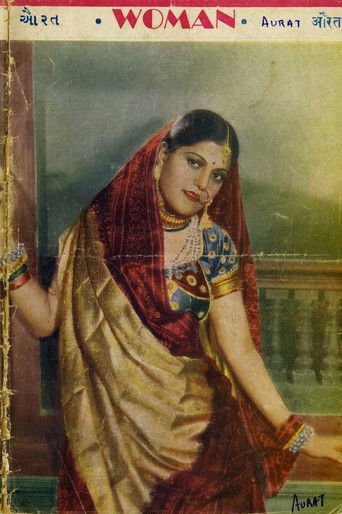
Viewers who saw Mother India in 1957 experienced it within the conventions of postwar filmmaking. A remake of Khan's earlier film Aurat (1940), it is the story of a poverty-stricken village woman named Radha (Nargis), who in the absence of her husband, struggles to raise her sons and survive against a cunning money-lender amidst many troubles. The title of the film was chosen to counter American author Katherine Mayo's 1927 polemical book Mother India, which vilified Indian culture.
Why this film matters
Film clubs and archives revisit Mother India as part of broader postwar programming.
Making of
The production of 'Mother India' was an ambitious undertaking that pushed the boundaries of Indian cinema. Director Mehboob Khan invested his personal fortune into the project, mortgaging his home to secure financing. The film was one of the first Indian productions to use Eastman Color technology, requiring specialized equipment and technicians to be brought in from abroad. The production faced numerous challenges, including difficulties in finding suitable locations that could represent rural India authentically. The cast underwent extensive preparation, with Nargis learning to handle farm equipment and Sunil Dutt spending time in villages to understand rural life. The film's most challenging sequence involved a massive fire scene that required special effects coordination and safety measures. During production, Sunil Dutt saved Nargis from a real fire on set, an incident that led to their real-life romance. The film's village set was so detailed and realistic that actual villagers would sometimes wander in, thinking it was a real settlement.
What critics said
Surviving reviews and later retrospectives treat Mother India as representative postwar fare—valued for craft even when not hailed as a masterpiece. The music by Naushad introduced global music, including Western classical music and orchestra, to Hindi cinema.
Did you know?
- The film was India's first submission for the Academy Award for Best Foreign Language Film and lost to 'Nights of Cabiria' by just one vote in the final round
- Nargis received severe burns while filming the scene where she runs through a field of fire to save her son
- Sunil Dutt, who played Nargis's son in the film, fell in love with her during production and they married in 1958
- The film was shot over three years, making it one of the longest productions in Indian cinema at that time
- The character of Radha was named after director Mehboob Khan's mother
- The film was a remake of Mehboob Khan's earlier film 'Aurat' (1940)
- The famous scene where Nargis is shown plowing the field with oxen was actually performed by her after training for weeks
- The film's title was suggested by Prime Minister Jawaharlal Nehru when he visited the set
- The moneylender Sukhilala's character was played by Kanhaiyalal, who became typecast as a villain in Indian cinema after this role
- During production, Sunil Dutt saved Nargis from a real fire on set, an incident that led to their real-life romance
- The film was one of the first Indian productions to use Eastman Color technology, requiring specialized equipment and technicians to be brought in from abroad
Awards & recognition
- Filmfare Award for Best Film (1958)
- Filmfare Award for Best Director - Mehboob Khan (1958)
- Filmfare Award for Best Actress - Nargis (1958)
- Filmfare Award for Best Cinematographer - Faredoon Irani (1958)
- Filmfare Award for Best Sound Recording - R. Kaushik (1958)
- National Film Award for Best Feature Film in Hindi (1957)
- Certificate of Merit for Best Actress - Nargis (1958)
- BFJA Award for Best Indian Film (1958)
- BFJA Award for Best Actress - Nargis (1958)
- BFJA Award for Best Supporting Actor - Kanhaiyalal (1958)
- Cannes Film Festival Nomination for Palme d'Or (1957)
Visual style
The cinematography of 'Mother India,' handled by Faredoon Irani, was revolutionary for Indian cinema. It was one of the first Indian films to be shot entirely in Eastman Color, allowing for vibrant, rich visuals that enhanced the storytelling. Irani used natural lighting extensively, particularly in outdoor scenes, to create a realistic portrayal of rural India. The film's visual language combined epic wide shots of the Indian countryside with intimate close-ups that captured the emotional journey of the characters. The famous sequence showing Radha plowing the field used innovative camera angles to emphasize her struggle and determination. The fire scene was particularly challenging to shoot, requiring multiple cameras and careful coordination to capture the drama while ensuring the actors' safety. The cinematography played a crucial role in establishing the film's mythic quality while maintaining its emotional authenticity.
Innovations
'Mother India' was a technical milestone for Indian cinema in several ways. It was one of the first Indian films to be shot entirely in color, using the expensive Eastman Color process, which required specialized equipment and processing facilities that had to be imported. The film's production design created an entire village set that was remarkably detailed and authentic. The special effects, particularly in the flood and fire sequences, were groundbreaking for Indian cinema of the time. The sound recording techniques used were advanced for the period, allowing for clear dialogue even in outdoor scenes with ambient noise. The film's editing, particularly in the montage sequences showing the passage of time and seasons, was innovative and influenced subsequent Indian films. The makeup and prosthetics used to show the aging of characters were particularly noteworthy for their realism.
Music
The soundtrack of 'Mother India' was composed by the Naushad, with lyrics by Shakeel Badayuni. The music became an integral part of the film's emotional impact and cultural legacy. The songs blended classical Indian ragas with folk melodies, creating a sound that was both traditional and accessible. Notable tracks include 'Dukh ke din' (Days of Sorrow), 'O Gadiwale' (O Cart Driver), and the iconic 'Pee ke ghar aaj pyari dulhaniya chali' (The beautiful bride has come home drunk). The song 'Matwali o meri jaan' was particularly popular for its romantic melody. Mohammed Rafi, Lata Mangeshkar, and Manna Dey provided the playback vocals, delivering performances that enhanced the emotional depth of the scenes. The background score used leitmotifs to represent different characters and themes, with Radha's theme appearing in various orchestral arrangements throughout the film.
Famous quotes
Maine aapka beta paida kiya hai, aapka baap nahi. Aur maine usey paida kiya hai, isliye maine uski maut bhi di. (I gave birth to your son, not your father. And because I gave birth to him, I gave him death too.)
Dharti mata hai, jisme hum sab paida hote hain. Aur woh humare liye sab kuch karti hai. (Mother Earth is where we are all born. And she does everything for us.)
Beta, jab tak zinda rahungi, teri maa rahungi. (Son, as long as I live, I will remain your mother.)
Is gaon ki mitti mein jaan hai, aur is jaan ko humein bachana hai. (There is life in the soil of this village, and we must save this life.)
Zameen ki kasam, main tumhare aankhon ka aansu nahi rehne doongi. (By the soil, I will not let tears remain in your eyes.)
Maine is dharti ko apna bachcha maana hai, aur woh bhi mujhe apna maan ke rakhti hai. (I have considered this earth my child, and it too considers me its own.)
Jab tak zameen rehti hai, hum rehte hain. Jab zameen jaati hai, hum bhi jaate hain. (As long as the land remains, we remain. When the land goes, we too go.)
Memorable scenes
- The opening sequence where Radha, now an old woman, is asked to inaugurate a canal and reflects on her past life
- The scene where Radha, abandoned by her husband after he loses his arms, decides to stay and work the land alone
- The powerful sequence where Radha plows the field with oxen during a drought, demonstrating her determination to survive
- The emotional scene where Radha must choose between her love for her rebellious son Birju and her duty to the community
- The climactic scene where Radha shoots her own son to prevent him from committing a terrible crime, embodying the ultimate sacrifice
- The flood sequence where the family loses everything but refuses to abandon their land
- The scene where young Birju steals grain from the moneylender's house, setting up his character's moral conflict
- The wedding scene that contrasts the family's poverty with the joy of celebration
- The final scene where Radha, having sacrificed everything, is honored by the community as a living embodiment of motherhood
What audiences thought
'Mother India' was a massive commercial success, running in theaters for over two years in many cities and becoming one of the highest-grossing films of 1957. Audiences were deeply moved by the story of Radha's sacrifices and the film's emotional core. The performances, particularly Nargis's portrayal of the mother figure, resonated strongly with viewers across India. The film's songs became immensely popular and are still remembered today. The movie's themes of family values, maternal love, and moral righteousness struck a chord with Indian audiences of all ages. The film's success at the box office demonstrated that serious, socially relevant cinema could attract mass audiences in India. Even decades after its release, the film continues to be shown in retrospectives and film festivals, attracting new generations of viewers. The character of Radha became a household name, with mothers across India being compared to her in terms of sacrifice and strength.
Film connections
Influenced by
- 'Aurat' (1940) - Mehboob Khan's earlier film that 'Mother India' remade
- Italian neorealism, particularly the works of Vittorio De Sica
- Soviet cinema's emphasis on collective struggle
- Traditional Indian epics like the Ramayana and Mahabharata
- The plays of Bertolt Brecht, particularly their social commentary
- Hollywood melodramas of the 1940s and 1950s
- Indian folk tales and traditional storytelling
This film influenced
- 'Ganga Jamuna' (1961)
- 'Upkar' (1967)
- 'Deewar' (1975)
- 'Meri Aawaz Suno' (1981)
- 'Mother' (1991)
- 'Kudiyon Ka Hai Zamana' (2006)
- 'Dabangg' (2010) - in its portrayal of mother-son dynamics
- 'Bajrangi Bhaijaan' (2015) - in its themes of moral righteousness
- Numerous other Indian films featuring strong mother characters
Film restoration
'Mother India' has been well-preserved and restored over the years. The original negatives are maintained in the National Film Archive of India. In 2017, on the film's 60th anniversary, a digitally restored version was released in theaters. The film has also been preserved in the Academy Film Archive and the British Film Institute's collection. Several DVD and Blu-ray versions are available, with varying degrees of restoration quality. The film remains accessible through various streaming platforms dedicated to classic Indian cinema.
Where to watch
- Amazon Prime Video
- Netflix (in certain regions)
- YouTube Movies
- MUBI
- Eros Now
- JioCinema
- SonyLIV
- Google Play Movies
- Apple TV/iTunes
- Various classic film streaming services specializing in Indian cinema