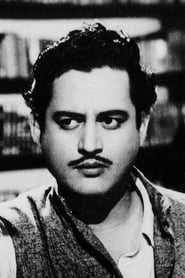

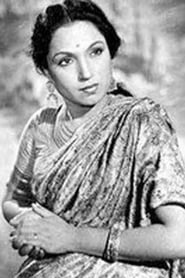
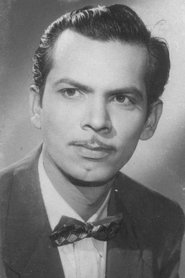

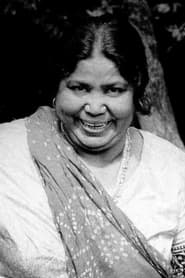

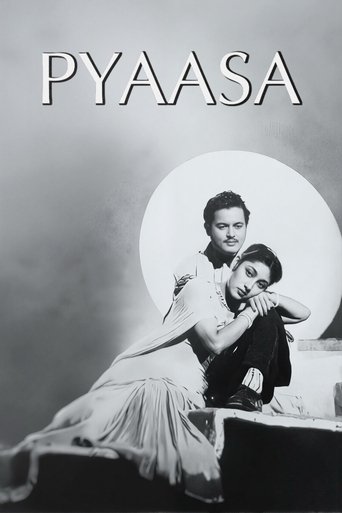
Mr. & Mrs. '55
"A fake marriage of convenience turns unexpectedly real."
Keys: Space play/pause · ←/→ 10s · F fullscreen · M mute · </> speed
About this film
In 1955, a young, naive heiress is forced into a 'marriage of convenience' with an unemployed cartoonist in an attempt to save her millions - a move orchestrated by the scheming aunt.
Cast & crew
More films like this
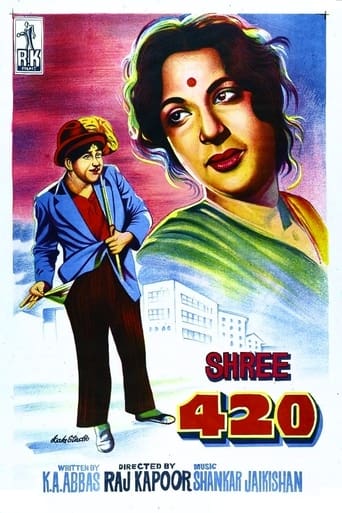
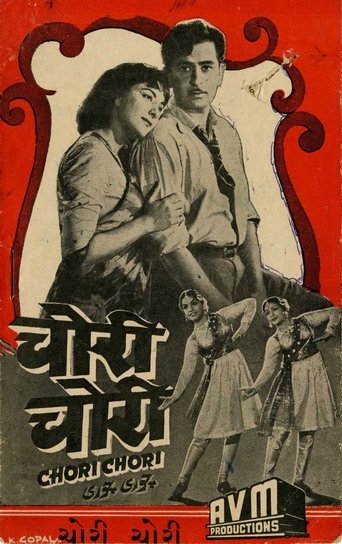
More Comedy films
View all →







More from Guru Dutt
View all →
More about this film
About the production
Release dateDecember 14, 1955
Box officeThe film was a commercial success, particularly in urban centers, though exact figures are not documented from this period
ProductionGuru Dutt Films Pvt. Ltd.
Filmed inBombay (now Mumbai), India, R.K. Studios, Filmalaya Studios
The film was shot simultaneously in Hindi and English versions, though the English version was never released. Guru Dutt faced challenges during production due to his perfectionism, often reshooting scenes multiple times. The iconic cartoon sequences were created by actual cartoonists of the era to ensure authenticity. The film's production coincided with the passing of the Hindu Marriage Act of 1955, which significantly influenced the screenplay and themes. Madhubala's scheduling was difficult to manage as she was one of the busiest actresses of the time, leading to creative shooting schedules.
Themes
Women's Independence and AutonomyMarriage and Divorce LawsTradition vs. ModernityLove and RelationshipsSocial Change in Post-Independence India
Themes & topics
Historical background
Released in 1955, Mr. & Mrs. '55 reached audiences during mid-century cinema, when exhibition and production norms differed sharply from today's.
Why this film matters
Mr. & Mrs. '55 remains viewable through digital archives, preserving 1955 screen culture for modern audiences.
Making of
The making of Mr. & Mrs. '55' was marked by Guru Dutt's characteristic perfectionism and attention to detail. He would often spend entire days setting up a single shot, particularly for the musical sequences. The relationship between Guru Dutt and Madhubala during filming was complex and emotionally charged, with rumors of a romantic involvement that added authenticity to their on-screen chemistry. Cinematographer V.K. Murthy experimented with innovative lighting techniques, especially in the song sequences, creating a visual style that would become synonymous with Guru Dutt films. The cartoon sequences required extensive pre-production work, with actual cartoonists from Bombay's newspapers consulted to ensure authenticity. The film's social commentary on women's rights and marriage laws was considered bold for its time, requiring careful handling to avoid censorship issues while still delivering the intended message.
What critics said
Trade coverage around 1955 discussed Mr. & Mrs. '55 in terms of craft and audience appeal rather than blockbuster scale.
Did you know?
- The film was initially titled 'Aar Paar' but was changed to avoid confusion with another Guru Dutt film
- Madhubala and Guru Dutt's off-screen relationship during filming created tension on set, as Guru Dutt was married to singer Geeta Dutt who sang many songs in the film
- The cartoon sequences in the film were actually drawn by famous cartoonist R.K. Laxman's brother
- The film was one of the first Indian movies to directly reference and discuss the newly passed Hindu Marriage Act of 1955
- Johnny Walker's comedic role as Pritam's friend was expanded during filming due to audience response in test screenings
- The famous song 'Udhar Tum Haseen Ho' was shot in a single take with Guru Dutt and Madhubala
- The film's English version was shot simultaneously but never released due to distribution challenges
- Guru Dutt initially considered Dilip Kumar for the lead role before deciding to play it himself
- The car used in the film was a rare imported model that Guru Dutt personally owned
- The film's premiere was attended by Prime Minister Jawaharlal Nehru, who praised its social message
Awards & recognition
- Filmfare Award for Best Actor (Guru Dutt - Nomination)
- Filmfare Award for Best Music Director (O.P. Nayyar - Nomination)
- Filmfare Award for Best Lyricist (Sahir Ludhianvi for 'Udhar Tum Haseen Ho' - Nomination)
Visual style
The cinematography by V.K. Murthy in Mr. & Mrs. '55' is considered groundbreaking for its time and exemplifies the visual style that became synonymous with Guru Dutt films. Murthy employed innovative lighting techniques, particularly in the song sequences, creating dramatic contrasts between light and shadow that enhanced the emotional impact of scenes. The film's visual composition carefully balanced the comedic and dramatic elements, with wider shots for comedic sequences and more intimate framing for emotional moments. The cartoon sequences required special photographic techniques to seamlessly integrate the animated elements with live action. Murthy's use of deep focus and carefully constructed mise-en-scène added visual depth to the storytelling. The film's black and white photography showcased Murthy's mastery of tonal variations, creating a rich visual texture that complemented the film's themes. The dance sequences, particularly 'Udhar Tum Haseen Ho,' featured innovative camera movements and lighting that influenced musical sequences in Indian cinema for years to come.
Innovations
Mr. & Mrs. '55' featured several technical innovations that were ahead of their time in Indian cinema. The seamless integration of cartoon sequences with live-action footage required pioneering work in special effects and composite photography. The film's sound recording techniques, particularly for the musical sequences, were considered advanced for the period, with careful attention to audio clarity and balance. The production team developed new methods for creating the illusion of animated drawings coming to life, techniques that would influence future Indian films incorporating animation. The film's editing, especially in the rapid-fire comedic sequences, demonstrated sophisticated understanding of pacing and rhythm. The use of location shooting in Bombay, combined with studio work, created a more realistic visual environment than was typical for Indian films of the era. The technical team also experimented with different film stocks to achieve specific visual effects, particularly in the dramatic lighting of night scenes. These technical achievements, while subtle to contemporary audiences, contributed significantly to the film's overall quality and enduring appeal.
Music
The soundtrack of Mr. & Mrs. '55' was composed by O.P. Nayyar with lyrics by Sahir Ludhianvi, creating especially memorable musical scores of 1950s Indian cinema. The music broke away from traditional classical influences, incorporating Western rhythms and jazz elements that reflected the film's modern themes. The album featured eight songs, each carefully integrated into the narrative to advance the plot or reveal character motivations. 'Udhar Tum Haseen Ho,' sung by Geeta Dutt, became an instant classic and remains among the leading romantic songs in Indian cinema history. 'Jane Kahan Mera Jigar Gaya Ji,' sung by Mohammed Rafi, showcased the playful energy of the film's comedic elements. The soundtrack also included 'Thandi Hawa Kali Ghata,' a duet by Geeta Dutt and Mohammed Rafi that captured the budding romance between the lead characters. The music's contemporary sound perfectly matched the film's modern outlook and contributed significantly to its commercial success. The album's popularity endured long after the film's release, with songs remaining popular on radio and in public performances for decades.
Famous quotes
Pritam: 'Cartoon banana ek art hai, aur main ek artist hoon!' (Cartooning is an art, and I am an artist!)
Anita: 'Main ek aazad aurat hoon, main apni zindagi khud chalaoongi!' (I am an independent woman, I will live my life on my own terms!)
Sita Devi: 'Shaadi ek samjhauta hai, rishta nahi!' (Marriage is a compromise, not a relationship!)
Pritam: 'Mohabbat mein sab kuch jaayaz hai, lekin dhoka nahi!' (In love, everything is permissible, but not betrayal!)
Anita: 'Humara yeh rishta sirf ek drama hai, na!' (This relationship of ours is just a drama, isn't it!)
Memorable scenes
- The iconic song sequence 'Udhar Tum Haseen Ho' where Guru Dutt and Madhubala dance on a rooftop at night, with innovative lighting and camera work creating a magical romantic atmosphere
- The courtroom scene where the Hindu Marriage Act is discussed, highlighting the film's social relevance
- The cartoon sequence where Pritam's drawings come to life, showcasing technical innovation and visual creativity
- The comedy scene where Anita tries to cook for the first time, resulting in kitchen chaos and humorous mishaps
- The emotional climax where Anita must choose between her independence and her love for Pritam
- Johnny Walker's drunken monologue about marriage and relationships, providing comic relief and social commentary
- The opening sequence establishing Anita's wealth and naivety through her lavish lifestyle
- The confrontation scene between Anita and her aunt Sita Devi, revealing the true motives behind the marriage arrangement
What audiences thought
Mr. & Mrs. '55' was well-received by audiences upon its release, particularly in urban centers where its themes of modernity and women's independence resonated with the educated middle class. The film ran for over 25 weeks in several theaters, qualifying it as a silver jubilee hit. The chemistry between Guru Dutt and Madhubala was widely appreciated, with their pairing becoming widely praised of the era. The film's songs became extremely popular, with 'Udhar Tum Haseen Ho' and 'Jane Kahan Mera Jigar Gaya Ji' playing on radio stations across India. Johnny Walker's comedic performance was also a major draw for audiences. Over the decades, the film has maintained its popularity through television broadcasts and film festivals, with new generations discovering its charm and social relevance. The film is now considered a classic of Indian cinema and is frequently screened at retro film festivals and special screenings.
Film connections
Influenced by
- Hollywood romantic comedies of the 1950s
- Indian social reform movements
- Contemporary debates on women's rights
- The Hindu Marriage Act of 1955
- Western popular culture and jazz music
- Bombay's urban lifestyle and modernity
- Traditional Indian family values
- Post-independence Indian nationalism
This film influenced
- Chalti Ka Naam Gaadi (1958)
- Junglee (1961)
- An Evening in Paris (1967)
- Chupke Chupke (1975)
- Maine Pyar Kiya (1989)
- Dilwale Dulhania Le Jayenge (1995)
- Jab We Met (2007)
- Band Baaja Baaraat (2010)
Film restoration
The film is preserved in the National Film Archive of India (NFAI) and has undergone digital restoration. While the original negatives have suffered some degradation over the decades, restored versions are available for viewing. The film is occasionally screened at classic film festivals and special retrospectives. Some portions of the English version of the film are believed to be lost, as it was never commercially released. The Hindi version remains largely intact and has been preserved through multiple format transfers over the years. The soundtrack has been digitally remastered and is available on various streaming platforms.
Where to watch
- Amazon Prime Video
- YouTube (Official Channels)
- MUBI (During Special Programming)
- Film Heritage Foundations (Special Screenings)
- Classic Cinema Streaming Platforms
- Netflix (Regional Availability)
- SonyLiv (During Classic Film Festivals)
- Google Play Movies (Rental/Purchase)