Panorama of Eiffel Tower
"Showing the entire height of this wonderful structure from the base of the dome and return, with the great Paris Exposition in the background, looking down Champs de Mars. A most realistic picture."
Plot
"Panorama of Eiffel Tower" is a brief actuality film presenting a sweeping view of the Eiffel Tower and its surroundings during the 1900 Paris Exposition. The camera begins low and then tilts upward to reveal the full height of the monument, moving from the base toward the dome and then back again, creating an unusually dynamic perspective for such an early film. In the background, the vast fairgrounds of the Exposition and the Champ de Mars situate the tower within the modern spectacle of turn-of-the-century Paris. Rather than telling a narrative story, the film aims to astonish viewers with scale, motion, and the immediacy of filmed reality, showcasing one of the era's most famous landmarks as a visual attraction in itself.
Director
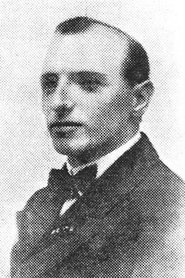
James H. WhiteAbout the Production
This film belongs to the early Edison actuality tradition, in which the company sent cameramen to document celebrated events, landmarks, and public scenes for exhibition in nickelodeons and vaudeville venues. It is notable for its camera movement: according to film historian Charles Musser, it contains the first surviving camera tilt in the Edison catalog, making it an important example of the gradual evolution from static recording toward more expressive cinematography. The film was made at the Paris Exposition of 1900, a setting that offered abundant opportunities for spectacle and modernity, and it likely relied on portable early-motion-picture equipment and natural daylight. Because surviving Edison actualities were often shot quickly and designed for immediate exhibition, precise production records such as budget, crew breakdown beyond James H. White's direction, and exact shooting conditions are not fully documented in the surviving record.
Historical Background
The film was produced in 1900, at the height of the Belle Époque and during the Paris Exposition Universelle, a world's fair that celebrated industrial progress, electrification, colonial display, and international exchange. Cinema itself was still a very new medium, only a few years removed from its public emergence in the mid-1890s, and filmmakers were still defining what motion pictures could do beyond simple recordings of events. The Eiffel Tower, completed for the 1889 Exposition, had already become an emblem of modern engineering and Parisian identity; filming it in 1900 linked motion pictures to the era's fascination with technology, urban spectacle, and global tourism. The film matters historically because it captures both a landmark and a moment in film form when camera technique was beginning to move from static observation toward more intentional visual composition.
Why This Film Matters
While not a famous title in mainstream popular culture, "Panorama of Eiffel Tower" is significant to cinema history because it demonstrates how early film makers used actuality subjects to create wonder through access and motion. The film transforms a familiar monument into an event by presenting it through a rising and descending viewpoint, helping establish the camera as more than a passive recorder. Its value lies in its place among the earliest surviving examples of camera movement, showing a step toward the visual grammar that later became standard in cinematography. Culturally, it also reflects the way early cinema circulated images of global landmarks to audiences who may never have seen them in person, turning modernity into a shareable visual commodity.
Making Of
The film was directed by James H. White for Edison during a period when the company was aggressively producing topical views, travel scenes, and scenes of public interest for the growing motion picture market. Shooting at the Paris Exposition would have placed the production in a bustling, crowded, and logistically challenging environment, but it also provided a ready-made visual showcase of modern architecture and international spectacle. The camera tilt described by Charles Musser suggests that White or the cameraman was experimenting with framing beyond the fixed, tripod-bound viewpoint that dominated much early cinema. Since no elaborate studio setup was required, the production likely depended on careful positioning, stable support, and timing to capture the Eiffel Tower against the exposition grounds in a single visually coherent shot.
Visual Style
The most notable visual feature is the camera tilt, which allows the viewer to experience the vertical scale of the Eiffel Tower in a way a static frame could not. Rather than holding a single immobile composition, the camera movement creates a sense of discovery and spatial revelation, moving from the lower structure up to the top and then back. The image also uses the backdrop of the Exposition and Champ de Mars to place the tower within a broader urban panorama, making the frame dense with contextual detail. Because the film is an actuality shot, the cinematography depends on composition, stability, and movement rather than editing or dramatic lighting.
Innovations
The film is especially notable for one of the earliest surviving camera tilts in Edison’s extant output, a key technical step in the development of motion-picture vocabulary. This movement demonstrates an early attempt to follow the vertical grandeur of a subject rather than merely recording it from one locked-off viewpoint. It also illustrates the use of actuality filmmaking as a laboratory for camera experimentation, where the goal was not just documentation but visual impact. As part of Edison’s 1900 production practices, it reflects early mastery of outdoor shooting, natural light, and on-location framing in a major public space.
Music
The film was produced in the silent era and originally had no synchronized recorded soundtrack. Like most early cinema presentations, it would have been accompanied in exhibition by live music, which might range from a piano to a small ensemble depending on the venue. Any accompanying music would have been chosen by exhibitors rather than standardized by the production. No original score is known to survive.
Famous Quotes
Showing the entire height of this wonderful structure from the base of the dome and return, with the great Paris Exposition in the background, looking down Champs de Mars.
A most realistic picture.
Memorable Scenes
- The camera’s upward tilt along the Eiffel Tower, revealing the structure’s full vertical grandeur.
- The panoramic view that places the tower against the Paris Exposition and the Champ de Mars, turning the landmark into a broader cityscape spectacle.
Did You Know?
- It is an Edison actuality film rather than a fictional narrative.
- The film is associated with the 1900 Paris Exposition, one of the most important world's fairs of the era.
- Film historian Charles Musser identified it as featuring the first camera tilt among the surviving Edison films.
- The Eiffel Tower had been built only a little over a decade earlier, so filming it in 1900 still carried strong connotations of modern engineering and technological progress.
- The film was designed to impress audiences with movement, height, and panoramic scale rather than story development.
- Early Edison travel and actuality films were often distributed as short novelty attractions, making this title part of the company’s broader strategy of selling the world to American viewers.
- Because the film is so short and so early, its significance today lies more in film history and technique than in plot or character.
- The film’s surviving description emphasizes realism, a key selling point in early cinema advertising.
- The title sometimes appears in archive and catalog contexts as a documentary or actuality subject rather than a documentary in the modern feature-length sense.
- Its importance is often discussed in relation to the development of camera movement, not just as a view of Paris.
What Critics Said
Contemporary critical reviews specific to this short are not widely preserved, which is common for many early Edison actualities. At the time, such films were generally judged by their clarity, novelty, and ability to attract audiences with recognizable scenes or technical tricks rather than by narrative or acting. Modern historians value the film as an important transitional object in the history of camera movement and early documentary-style filming. Its reputation today rests less on criticism in the conventional sense than on scholarly recognition of its technique, its place in the Edison catalog, and its documentation of the 1900 Paris Exposition.
What Audiences Thought
Direct audience records are scarce, but films like this were typically well suited to the tastes of early cinema spectators, who sought brief, sensational views of famous places and current events. The Eiffel Tower and Paris Exposition would have been especially attractive subjects because they signaled modernity, international prestige, and visual splendor. The film likely appealed both to viewers who wanted to see a famous world landmark and to those fascinated by the apparent realism of motion pictures. As with many Edison travel and actuality films, its audience appeal probably came from novelty, recognition, and the pleasure of seeing the world move on screen.
Film Connections
Influenced By
- Actuality films and travel views popular in the late 1890s
- The visual culture of world's fairs and expositions
- Edison Manufacturing Company documentary-style shorts
This Film Influenced
- Later travelogues and city views that relied on camera movement
- Early panoramic and scenic documentaries
- Subsequent actuality films exploring famous landmarks
You Might Also Like
More Documentary Films
View allMore from James H. White
View allFilm Restoration
The film is extant and cataloged in film archives and historical databases; it is not generally regarded as lost. As an early Edison actuality, it survives as an important archival and scholarly object, though available copies may be in differing states of restoration or print quality depending on source. Its historical significance is enhanced by the fact that it is one of the surviving Edison titles used by scholars to study early camera movement.