Peter the First, Part I
"Throne, ships, and reform"
Keys: Space play/pause · ←/→ 10s · F fullscreen · M mute · </> speed
About this film
Vladimir Petrov's 1937 Soviet epic depicts young Peter the Great modernizing Russia against boyar resistance and foreign threats. Nikolai Cherkasov later played Peter again in Eisenstein's Ivan films.
Cast & crew
More films like this
More Drama films
View all →







More from Vladimir Petrov
View all →

More about this film
About the production
Release date1937-12-25
ProductionMosfilm Studios, Lenfilm Studios
Filmed inMoscow, Soviet Union, Leningrad (St. Petersburg), Soviet Union
The film was commissioned as part of Stalin's campaign to rehabilitate certain Russian historical figures as precursors to Soviet leadership. Massive sets were constructed to recreate 17th-18th century Moscow and the early St. Petersburg construction sites. The production employed thousands of extras for battle scenes and crowd sequences, making it expensive Soviet productions of its time. Director Vladimir Petrov worked closely with historical consultants to ensure accuracy in costumes and settings, though the interpretation of Peter's character was heavily influenced by contemporary Soviet ideology.
Themes
The necessity of strong leadership for national progressThe conflict between tradition and modernizationThe use of absolute power for national transformationRussia's destiny as a great European powerThe individual's role in shaping history
Themes & topics
Peter the GreatRussian EmpireModernizationMilitary reformNaval warfareStreltsy rebellionGreat Northern WarSt. Petersburg foundingWesternizationAbsolute monarchyHistorical epicNational transformation
Historical background
Peter the First, Part I aligned with Stalinist praise of strong state builders; historical spectacle justified industrial ambition.
Why this film matters
'Peter the First, Part I' established the template for how Soviet cinema would handle controversial Russian historical figures, creating a model that would be followed for decades. The film's success demonstrated that historical epics could serve both artistic and ideological purposes, paving the way for other Soviet historical productions like 'Alexander Nevsky' and 'Ivan the Terrible.' The portrayal of Peter as a progressive force against backward aristocracy resonated with Soviet audiences and reinforced the official narrative about the historical necessity of strong, centralized leadership. The film also marked a significant technical achievement for Soviet cinema, demonstrating that the USSR could produce historical epics on par with those from Hollywood or European studios. Its influence extended beyond cinema, affecting how Peter the Great was taught in Soviet schools and depicted in other media. The film's rehabilitation of Peter as a positive historical figure represented a major shift in Soviet historiography and cultural policy, showing how even controversial pre-revolutionary figures could be incorporated into the Soviet historical narrative when portrayed as builders of Russian state power.
Making of
The production of 'Peter the First, Part I' was a massive undertaking that reflected the Soviet Union's growing cinematic ambitions in the 1930s. Director Vladimir Petrov, known for his adaptations of Russian classics, was chosen for his ability to handle large-scale historical subjects. The film was made during a period when Stalin was actively encouraging the rehabilitation of certain Russian historical figures who could be portrayed as builders of Russian state power. The casting process was rigorous, with Nikolai Simonov eventually winning the role of Peter after extensive screen tests. Simonov reportedly studied Peter's character for six months, working with historians and even visiting the Peterhof Palace to better understand the ruler's environment. The production faced significant challenges in recreating 17th-century Russia, as many historical buildings had been destroyed or altered over the centuries. The film's battle sequences were filmed on location outside Moscow with the cooperation of the Soviet military, providing both authenticity and scale. The relationship between Petrov and Stalin was particularly notable - Stalin took personal interest in the project and reportedly viewed early cuts, offering suggestions that emphasized Peter's role as a nation-builder rather than a tyrant.
What critics said
Soviet audiences saw a flagship prestige production; scholars analyze its mythmaking about imperial modernization.
Did you know?
- This was the first major Soviet film depiction of Peter the Great, establishing the template for how Soviet cinema would portray the controversial ruler
- Nikolai Simonov spent months studying Peter's portraits and historical documents to perfect his portrayal, even learning basic shipbuilding techniques
- The film's production coincided with the height of Stalin's Great Purge, making the portrayal of an absolute ruler who used terror to achieve his aims particularly resonant
- A full-scale replica of an 18th-century Russian warship was built for the naval sequences, expensive props in Soviet cinema history
- The film was initially criticized by some party officials for showing too much of Peter's cruelty, but Stalin personally approved the final cut
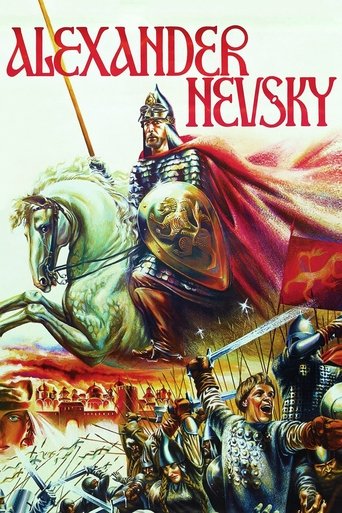
- Nikolai Cherkasov, who plays Menshikov, would later achieve immortality as Alexander Nevsky in Eisenstein's 1938 film
- The battle sequences used real soldiers from the Red Army as extras, with actual military maneuvers choreographed for the camera
- The film's success led to an immediate commission for Part II, which was released the following year
- Many of the costumes and props from were reused in later Soviet historical productions for decades
- The film was temporarily withdrawn from circulation during World War II when the Soviet Union allied with Western powers, as Peter's anti-Swedish stance was deemed diplomatically sensitive
Awards & recognition
- Stalin Prize (First Class) - 1941 (awarded to both Part I and Part II)
- Order of Lenin - awarded to director Vladimir Petrov and lead actor Nikolai Simonov
Visual style
The cinematography by Yuri Volchek and Vladimir Rapoport was notable for its grand scale and technical sophistication. The filmmakers used wide-angle lenses and sweeping camera movements to emphasize the epic nature of Peter's undertakings, particularly in the battle sequences and scenes of St. Petersburg's construction. The black-and-white photography employed dramatic lighting techniques to create contrast between the 'dark' forces of reaction and the 'light' of Peter's progressive vision. The naval sequences were particularly impressive for their time, using innovative camera techniques to convey the scale of Peter's new fleet. The cinematography also paid careful attention to historical detail in the composition of shots, using authentic period architecture and costumes to create a convincing 17th-century atmosphere. The film's visual style influenced subsequent Soviet historical epics, establishing a visual language for depicting Russia's imperial past that would be emulated for decades.
Innovations
The film represented a major technical achievement for Soviet cinema in the late 1930s. The production utilized newly developed camera cranes and dollies to create sweeping movements in the large-scale battle scenes and crowd sequences. The naval sequences involved innovative underwater photography techniques to show the construction of Peter's fleet. The film's sound recording was particularly advanced, using multiple microphones to capture dialogue in large crowd scenes without sacrificing clarity. The special effects team developed new techniques for creating convincing ship battles and siege sequences, using miniatures and matte paintings that were remarkably sophisticated for the period. The film's editing, handled by a team led by Vera Popova, employed rapid cutting techniques in action sequences while maintaining classical continuity in dramatic scenes. The production also pioneered new methods for historical costume and prop construction, creating thousands of period-accurate uniforms and weapons. These technical innovations helped establish Soviet cinema's ability to produce films on par with international standards.
Music
The musical score was composed by Vladimir Shcherbachov, one of the leading Soviet composers of the period. Shcherbachov created a grand, symphonic score that blended traditional Russian musical themes with modern orchestral techniques, reflecting the film's theme of Russia's transformation. The music prominently featured folk melodies and Orthodox church chants, reworked in a symphonic style to emphasize Peter's connection to Russian tradition while also suggesting his modernizing vision. The score was particularly effective in the battle sequences, where Shcherbachov used powerful brass and percussion to create a sense of epic struggle. The film also included period songs and dances, carefully reconstructed from historical sources to add authenticity to the court scenes. The soundtrack was recorded using the latest Soviet sound technology, and the quality of the audio was considered exceptional for its time. Shcherbachov's music was later published as a concert suite and performed by Soviet orchestras, demonstrating its artistic merit beyond the film context.
Famous quotes
Russia will not be dragged into the future by prayer, but by the axe and the hammer! - Peter the Great
I am not the first to use terror, but I will be the last to need it! - Peter the Great
The sea is Russia's future. Whoever controls the sea controls the world! - Peter the Great
We cannot wait for history to make us great - we must make history ourselves! - Peter the Great
The old ways will drown us. We must learn to swim in new waters! - Peter the Great
Memorable scenes
- The dramatic opening sequence showing the streltsy rebellion and young Peter's decisive response, establishing his character as a ruler willing to use force
- Peter's famous working incognito in Dutch shipyards, showing his dedication to learning Western technology firsthand
- The massive battle sequence against the Swedish forces at Narva, demonstrating the scale of Soviet filmmaking capabilities
- The founding of St. Petersburg scene, with thousands of workers building the new capital on conquered swamp land
- Peter's confrontation with the boyar aristocracy, where he forces them to adopt Western dress and customs
What audiences thought
The film was enormously popular with Soviet audiences upon its release, drawing massive crowds in major cities and becoming one of the highest-grossing Soviet films of 1937-1938. Audiences were particularly impressed by the scale of the production and Simonov's charismatic performance as Peter. The film's patriotic themes and portrayal of Russian strength resonated strongly with viewers at a time when international tensions were rising. Many Soviet viewers saw parallels between Peter's struggle to modernize Russia and contemporary Soviet efforts to industrialize the country. The film's success led to long lines at theaters and multiple re-releases throughout the late 1930s. Despite its propaganda elements, audiences genuinely appreciated the film as entertainment and as a source of national pride. The film's popularity helped establish the historical epic as a respected genre in Soviet cinema, encouraging the production of similar films in subsequent years.
Film connections
Influenced by
- Sergei Eisenstein's historical films (particularly 'Alexander Nevsky')
- Traditional Russian historical literature
- Soviet socialist realist aesthetic
- Hollywood historical epics of the 1930s
- Russian academic painting of the 19th century
This film influenced
- Peter the First, Part II (1938)
- Alexander Nevsky (1938)
- Ivan the Terrible (Part I, 1944; Part II, 1958)
- Suvorov (1941)
- Kutuzov (1943)
- Later Soviet historical epics of the 1940s-1950s
Film restoration
The film is well-preserved in the Russian State Film Archive (Gosfilmofond). A digital restoration was completed in 2005 as part of a major project to preserve classic Soviet cinema. The restored version has been shown at various international film festivals and is available on DVD and streaming platforms. The original negative survived World War II, having been evacuated from Moscow along with other valuable cultural artifacts. Some minor damage from age is visible in certain scenes, but the film is generally in excellent condition for its age. Both Part I and Part II are preserved as important examples of Soviet cinematic heritage.
Where to watch
- Available on DVD from Russian Cinema Council (RUSCICO) with English subtitles
- Streaming on Mosfilm's official YouTube channel with English subtitles
- Available on various classic film streaming platforms specializing in Soviet cinema
- Can be viewed at film archives and cinematheques specializing in classic Russian/Soviet films
- Available on Amazon Prime Video in some regions